

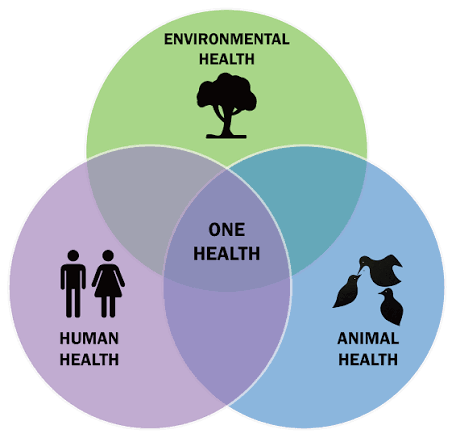
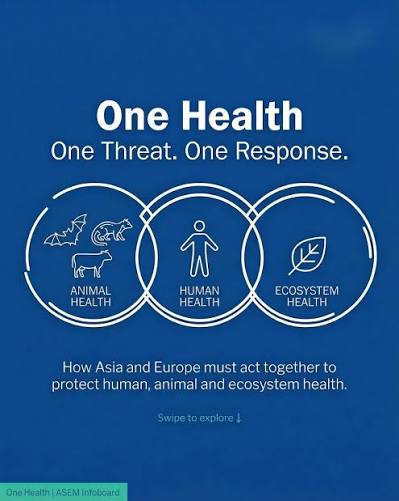
This World Zoonoses Day July 6, 2026 brought together 4 global orgnaisations in a true spirit of ‘One Health”.
In a coordinated and transcontinental response to escalating biosecurity and zoonotic diseases’ threats, four of the world’s leading international bodies officially finalised a comprehensive joint declaration.
The landmark agreement, signed by the Food and Agriculture Organisation (FAO), the World Organisation for Animal Health (WOAH), the Pan American Health Organisation (PAHO), and the United Nations Environment Programme (UNEP)—collectively known as the “One Health” Quadripartite Pact—establishes a unified financial and structural roadmap to significantly increase funding for global animal health infrastructure.
Executing synchronous signings across its Washington headquarters and key regional hubs, the alliance explicitly designated frontline veterinary support as the primary line of defence against upcoming global health crises.
75% Threat Vector: The Case for Frontline Funding
The declaration underscores a critical scientific benchmark in global epidemiology: approximately 60% of known human infectious diseases are zoonotic, while nearly 75% of newly emerging human infectious pathogens trace their origin directly to domestic or wild animals.
Despite this overwhelming biological correlation, global health budgets have historically funneled capital into reactive, human-centric clinical networks after spillover has occurred.
The Quadripartite Pact challenges this approach, presenting data that proves investing in veterinary infrastructure—such as local livestock surveillance, advanced diagnostic tools, and border biosafety measures—is far more cost-effective than managing a full-scale human pandemic.
Strategic Framework and Operational Mandates
The joint declaration establishes clear operational mandates across four primary pillars:
I. Upgrading Diagnostics at the Source
The initiative deploys capital directly to field-level veterinary clinics and regional agricultural screening hubs. By providing rural practitioners with real-time molecular assays and genetic sequencing tools, the pact seeks to identify evolving viral strains within animal populations long before they adapt to human hosts.
II. Climate-Driven Surveillance Mapping
Led by the UNEP, the coalition is integrating environmental data grids with livestock tracking systems. As deforestation, shifting weather patterns, and land degradation alter wildlife migration routes, automated modeling tools will map high-risk collision zones where wild fauna interact with commercial livestock.
III. Mitigating Antimicrobial Resistance (AMR)
The agreement introduces strict international tracking rules to curb the systematic misuse of critical antibiotics in commercial farming, closing the legal loopholes that allow drug-resistant superbugs to evolve in animal intestinal tracts and cross into the human food supply.
ONE HEALTH GLOBAL INFRASTRUCTURE
The strategic rollout details specific operational responsibilities designed to unify the tracking pipeline:
Collaborating Entity |
Primary Functional Mandate |
Systemic Infrastructure Target |
FAO |
Agrifood System Infiltration |
Biosecurity enforcement across intensive commercial livestock farms and regional markets. |
WOAH |
Animal Disease Vector Tracking |
Standardizing diagnostic methodologies and reporting criteria across global veterinary bodies. |
PAHO / WHO |
Human Interface & Triage |
Synchronizing data networks between veterinary field offices and human emergency rooms. |
UNEP |
Environmental Driver Integration |
Mapping ecosystem degradation and wildlife disruptions that trigger pathogen spillovers. |

