


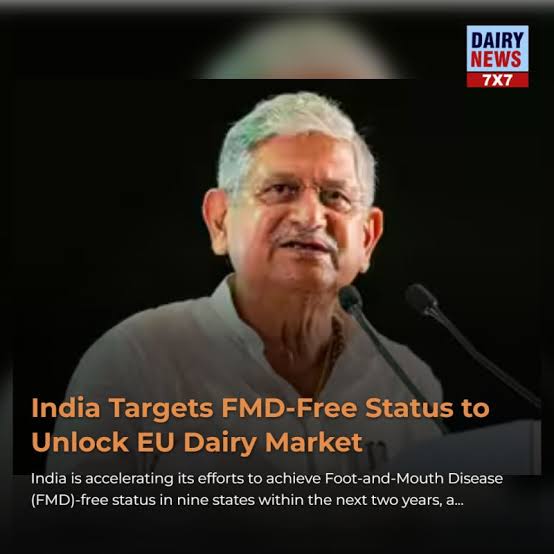
Strategic two-year initiative aims to strengthen animal health, improve livestock productivity and open access to premium international dairy markets.
ndia has announced an ambitious plan to achieve Foot-and-Mouth Disease (FMD)-free status in nine states within the next two years, marking a major step in the country’s strategy to expand dairy exports and strengthen its position in the global livestock market. The initiative is expected to improve access to premium international markets, particularly in Europe, where stringent animal health standards are required for dairy imports.
The programme builds on India’s ongoing efforts under the National Animal Disease Control Programme (NADCP), which focuses on large-scale vaccination, disease surveillance and livestock identification to reduce the incidence of FMD across the country.
Why Foot-and-Mouth Disease Matters
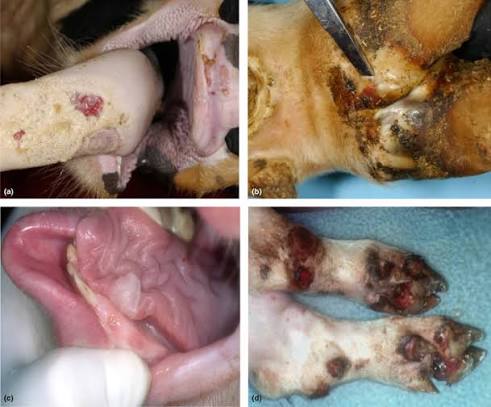
Foot-and-Mouth Disease is one of the world’s most contagious viral diseases affecting cattle, buffaloes, sheep, goats and pigs. Although adult animals usually recover, the disease causes severe economic losses through:
-
Reduced milk production
-
Weight loss
-
Lower fertility
-
Reduced draught power
-
Restrictions on livestock and dairy trade
-
Increased veterinary and disease-control costs
For dairy-producing nations, achieving internationally recognised FMD-free status is often a prerequisite for exporting milk and dairy products to high-value markets.
Despite being the world’s largest milk producer, India’s participation in global dairy trade remains relatively small, partly because many importing countries require internationally recognised disease-free status before approving imports.
Nine States Identified for Disease-Free Recognition
The government plans to establish internationally compliant FMD-free zones across nine major agricultural states, creating disease-controlled regions capable of meeting export certification requirements.
Officials believe this phased approach will enable India to demonstrate effective disease control while creating export-ready dairy production clusters that comply with international sanitary standards.
Although the complete list of states has not yet been formally released in the announcement, the strategy aligns with earlier government proposals to create geographically defined FMD-free zones before expanding the programme nationwide.
Vaccination Programme Showing Results
The initiative follows several years of nationwide vaccination campaigns under the National Animal Disease Control Programme. According to government officials, sustained vaccination has significantly reduced reported FMD outbreaks compared with previous years. The programme combines:
-
Mass vaccination of susceptible livestock
-
Digital animal identification and traceability
-
Enhanced disease surveillance
-
Laboratory diagnosis
-
Rapid outbreak response
-
Improved veterinary infrastructure
These measures are designed not only to control disease but also to establish confidence among international trading partners regarding India’s animal health systems.
Boosting India’s Dairy Export Potential
India produces nearly one-quarter of the world’s milk, yet its dairy exports remain modest relative to its production capacity. Achieving FMD-free recognition could significantly improve market access for value-added dairy products including:
-
Milk powder
-
Butter
-
Ghee
-
Cheese
-
Casein
-
Specialty dairy ingredients
European and several other premium export markets require strict compliance with animal health standards, making FMD control a critical factor for expanding international trade.
Industry experts believe improved disease status could strengthen India’s competitiveness while creating new opportunities for dairy cooperatives, private processors and milk producers.
Economic Benefits Beyond Exports
The advantages of controlling Foot-and-Mouth Disease extend beyond international trade. Reducing FMD can improve:
-
Milk yield
-
Animal productivity
-
Reproductive performance
-
Farm profitability
-
Livestock welfare
-
Rural household income
Lower disease incidence also reduces veterinary treatment costs and production losses, benefiting millions of smallholder dairy farmers who form the backbone of India’s milk industry.
Indigenous Vaccine Development Continues
Alongside disease control efforts, the government is also investing in the development of indigenous vaccines and strengthening veterinary research for major livestock diseases.
Expanding domestic vaccine production supports India’s long-term animal health strategy while reducing dependence on imported technologies and improving preparedness against emerging livestock diseases.
Global Competition Highlights the Importance of Disease-Free Status
India’s latest initiative comes as several livestock-exporting nations continue strengthening their animal disease control programmes.
Countries such as Brazil and Kazakhstan have recently advanced their international recognition for FMD-free status, demonstrating how disease eradication can improve livestock export opportunities and enhance confidence among global trading partners.
As international markets increasingly emphasize animal health certification, traceability and biosecurity, disease-free status is becoming an important competitive advantage for livestock-exporting nations.
Outlook
India’s decision to pursue Foot-and-Mouth Disease-free status across nine states represents one of the country’s most significant recent animal health initiatives. If successfully implemented, the programme could strengthen livestock productivity, improve rural incomes and position Indian dairy products for greater access to premium global markets.
While achieving internationally recognised disease-free status requires sustained vaccination, surveillance, traceability and regulatory oversight, the initiative reflects India’s broader commitment to modernising its livestock sector and enhancing the global competitiveness of its dairy industry.

-free status in nine states within two years)