


Regulatory action highlights the importance of quality certification and compliance in the poultry and aquaculture feed industry
Bangladesh’s food and feed regulatory authorities have taken enforcement action against two major animal nutrition companies after identifying alleged violations of mandatory quality certification requirements.
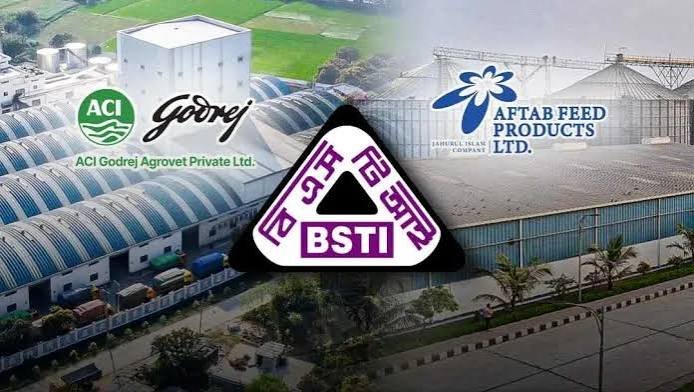
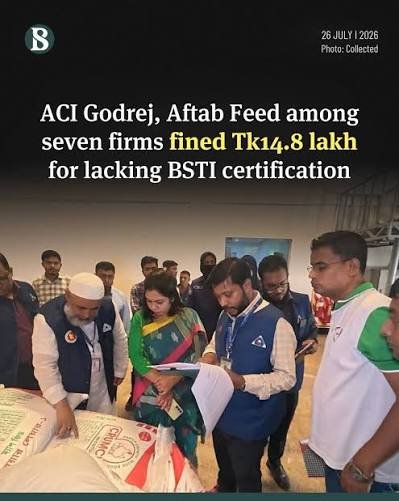
The Bangladesh Standards and Testing Institution (BSTI) has imposed financial penalties on ACI Godrej Agrovet Private Limited and Aftab Feed Products Limited for producing and marketing poultry and fish feed without obtaining the required BSTI quality certification and packaging registration, according to official reports.
The case has attracted attention across South Asia’s animal feed industry, where regulators continue to strengthen oversight of feed quality, manufacturing standards and product traceability.
Two Leading Feed Companies Penalised
During mobile court inspections conducted in Rupganj, Narayanganj, BSTI found that both companies had been manufacturing, selling and distributing poultry and fish feed without the mandatory certification and packaging registration required under Bangladeshi regulations.
Each company was fined Tk 400,000 (4 lakh), comprising:
-
Tk 200,000 under the BSTI Act, 2018
-
Tk 200,000 under the Standards of Weights and Measures Act, 2018
The inspections formed part of broader enforcement operations targeting certification, product quality and packaging compliance across multiple industries.
Companies Respond
According to local media reports, Aftab Feed Products stated that it had not obtained a BSTI licence because it was awaiting implementation of a government decision reportedly discussed at an inter-ministerial meeting on 9 July, which the company says would remove the mandatory certification requirement for poultry and fish feed.
Representatives of ACI Godrej Agrovet did not provide detailed comments on the enforcement action at the time of reporting. Separate reporting also noted that the company referred to existing licensing from the Department of Livestock Services and indicated that the regulatory position would be discussed with the relevant ministries.
Part of a Wider Compliance Drive
The action against the two feed manufacturers was part of coordinated BSTI mobile court operations carried out in Narayanganj and Dhaka, where authorities fined seven establishments for various certification, laboratory testing and packaging registration violations. Other enforcement actions included:
-
A battery manufacturer penalised for operating without required certification.
-
Consumer goods manufacturers fined for marketing products with branding similar to established brands.
-
Food businesses penalised for selling products without mandatory BSTI certification.
Why Feed Certification Matters
Quality certification plays a critical role in the livestock and aquaculture sectors by helping ensure that manufactured feed meets regulatory standards for:
-
Nutritional composition
-
Manufacturing quality
-
Product safety
-
Packaging compliance
-
Consumer confidence
-
Market traceability
For commercial poultry and aquaculture producers, consistent feed quality is directly linked to animal health, production efficiency and food safety outcomes.
Growing Regulatory Focus Across Asia
Across Asia, veterinary and feed regulators are placing greater emphasis on:
-
Good Manufacturing Practices (GMP)
-
Quality assurance systems
-
Feed traceability
-
Product registration
-
Labelling compliance
-
Risk-based inspections
The latest BSTI enforcement action reflects this broader regional trend toward tighter regulatory oversight of the animal feed supply chain.
Industry Implications
Although the financial penalties are relatively modest for large manufacturers, the case serves as a reminder that compliance with certification and registration requirements is becoming increasingly important.
For feed manufacturers operating in Bangladesh and neighbouring markets, the incident highlights the need to:
-
Maintain current regulatory approvals.
-
Ensure product certification is up to date.
-
Verify packaging registration requirements.
-
Monitor evolving regulatory changes affecting feed manufacturing.

