


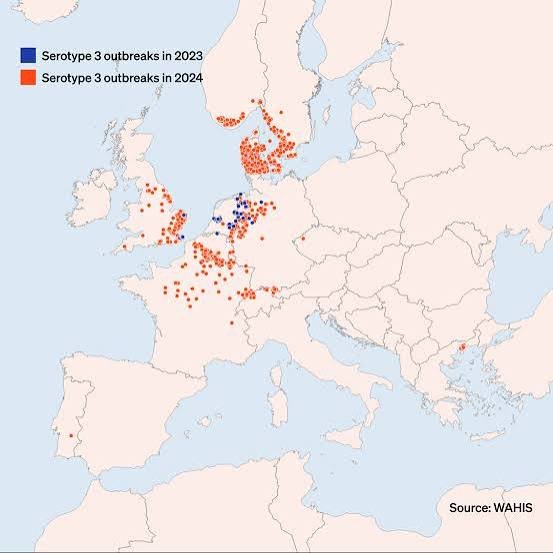
Warmer weather fuels Culicoides midge activity as livestock veterinarians urge heightened surveillance, vector control and rapid reporting
Veterinary authorities and livestock practitioners across the United Kingdom and Continental Europe are warning farmers to prepare for a significant seasonal increase in Bluetongue virus (BTV) transmission, as warmer summer temperatures create ideal conditions for the Culicoides biting midges that spread the disease.
With midge populations expanding rapidly during the summer months, veterinarians are reporting increased concern over the risk of new infections in sheep, cattle and goats, prompting renewed calls for enhanced farm biosecurity, vigilant disease surveillance and immediate reporting of suspected cases to veterinary authorities.
Although Bluetongue virus does not infect humans and does not pose a food safety risk, it remains one of Europe’s most economically important vector-borne livestock diseases because of its impact on animal health, productivity and international trade.
Why Bluetongue Cases Increase During Summer
Unlike many contagious livestock diseases that spread directly between animals, Bluetongue virus is transmitted primarily through the bites of infected Culicoides midges, tiny blood-feeding insects that thrive during warm, humid weather. Higher summer temperatures accelerate:
-
Midge breeding cycles
-
Virus replication within the insect
-
Midge survival
-
Geographic spread of vector populations
-
Frequency of livestock exposure
As a result, late summer and early autumn traditionally represent the highest-risk period for Bluetongue transmission across much of Europe.
Veterinary epidemiologists note that changing climatic conditions are extending the seasonal activity of Culicoides vectors, allowing transmission to occur over longer periods than previously observed.
Sheep Remain the Most Severely Affected
While Bluetongue virus can infect several ruminant species, sheep generally develop the most severe clinical disease. Affected animals may exhibit:
-
High fever
-
Depression and lethargy
-
Swelling of the face and muzzle
-
Excessive salivation
-
Nasal discharge
-
Ulceration of the mouth and tongue
-
Mucosal lesions
-
Coronitis (inflammation of the coronary band above the hoof)
-
Lameness
-
Reduced appetite
-
Weight loss
Severely affected sheep may experience significant welfare problems and, in some outbreaks, increased mortality.
Cattle Often Act as Silent Reservoirs
Cattle frequently develop milder or even subclinical infections, yet they play an important epidemiological role. Infected cattle may:
-
Carry the virus for several weeks
-
Serve as reservoirs for biting midges
-
Contribute to ongoing transmission within livestock populations
Some infected cattle may develop:
-
Fever
-
Reduced milk production
-
Oral lesions
-
Reproductive losses
-
Reduced fertility
Because clinical signs can be subtle, veterinary authorities encourage producers not to rely solely on visible illness when assessing herd health.
Culicoides Midges: The Driving Force Behind Transmission
The Culicoides midge is the only significant biological vector of Bluetongue virus. These insects:
-
Are only 1–3 mm long
-
Feed primarily at dawn and dusk
-
Breed in moist organic matter
-
Are easily dispersed by wind over considerable distances
Once infected, the midge can transmit the virus to multiple susceptible animals throughout its lifespan. Because transmission depends on vector activity rather than direct animal-to-animal contact, controlling the disease requires integrated vector management rather than isolation alone.
Veterinarians Recommend Immediate Preventive Measures
Livestock veterinarians across Europe are urging producers to strengthen preventive measures before infection pressure reaches its seasonal peak. Recommended actions include: Reduce Exposure to Midges
-
House susceptible animals during peak midge activity where practical.
-
Improve drainage around livestock housing.
-
Remove standing water where feasible.
-
Maintain clean animal housing and manure management.
Strengthen Vector Control
-
Use approved insecticides and repellents where appropriate.
-
Install insect screens in high-value breeding facilities when feasible.
-
Monitor midge populations during high-risk periods.
Monitor Animals Daily – Farmers should watch carefully for:
-
Fever
-
Mouth ulcers
-
Excessive salivation
-
Facial swelling
-
Nasal discharge
-
Lameness
-
Coronitis
-
Sudden reductions in milk yield
Early recognition allows veterinary authorities to investigate quickly and implement disease-control measures if necessary.
Rapid Reporting Is Essential
Veterinary authorities are emphasising that early reporting remains one of the most effective disease-control tools. Producers observing compatible clinical signs should immediately contact:
-
Private veterinarians
-
Official veterinary services
-
Regional agricultural authorities
Prompt laboratory confirmation enables rapid epidemiological investigations, movement controls and targeted surveillance.
Economic Consequences Extend Beyond Animal Health
Bluetongue outbreaks can have substantial economic consequences for livestock producers. Potential impacts include:
-
Reduced weight gain
-
Lower milk production
-
Reproductive losses
-
Increased veterinary treatment costs
-
Animal deaths in severe cases
-
Restrictions on animal movement
-
Export limitations
-
Increased surveillance expenses
International trade may also be affected, as importing countries often impose health certification requirements or movement restrictions following confirmed outbreaks.
Vaccination Remains an Important Control Tool
Where authorised vaccines are available for circulating Bluetongue virus serotypes, vaccination remains one of the most effective preventive measures. However, vaccine selection must match the specific BTV serotype circulating within a region, as protection is generally serotype-specific.
Veterinary authorities continue to assess vaccination strategies alongside surveillance and vector control to reduce disease spread.
Climate Change Is Expanding Disease Risk
Scientists increasingly recognise that climate change may influence the future epidemiology of Bluetongue virus. Warmer temperatures and altered rainfall patterns can:
-
Extend midge breeding seasons
-
Expand vector habitats northwards
-
Increase opportunities for virus transmission
-
Lengthen annual transmission periods
These environmental changes have contributed to Bluetongue becoming an increasingly important animal health concern across Europe over the past two decades.
Implications for the Animal Health Industry
The current seasonal surge highlights growing demand for:
-
Veterinary diagnostics
-
Livestock vaccines
-
Vector-control products
-
Farm biosecurity solutions
-
Disease surveillance technologies
-
Digital livestock monitoring systems
For veterinarians, producers and regulators alike, continued vigilance will be essential throughout the remainder of the high-risk vector season.
Outlook
With Culicoides activity expected to remain elevated through late summer and early autumn, European veterinary experts are urging livestock producers not to become complacent. Early recognition of clinical signs, effective vector control, responsible animal movement and rapid reporting remain the cornerstones of Bluetongue prevention.
As climate conditions continue to influence the distribution of insect vectors, integrated surveillance and international cooperation will play an increasingly important role in protecting Europe’s livestock industries from this economically significant disease.
Key Takeaways
-
European veterinarians are reporting a seasonal increase in Bluetongue virus (BTV) risk as warmer weather accelerates Culicoides midge activity
-
Sheep are the most severely affected species, while cattle often serve as important reservoirs for virus transmission
-
Farmers are advised to strengthen vector control, monitor livestock daily and report suspected cases immediately
-
Bluetongue does not infect humans, but it causes significant economic losses through reduced productivity, movement restrictions and trade impacts
-
Continued surveillance, vaccination where appropriate and integrated vector management remain critical for controlling seasonal outbreaks

