


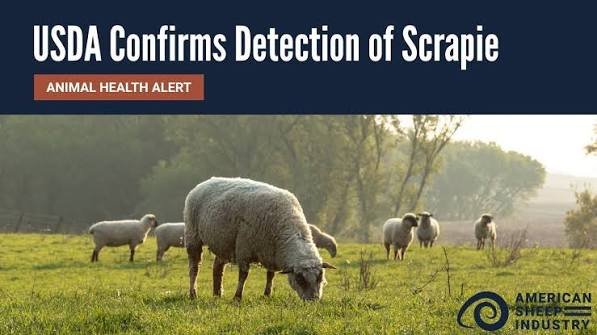
Oregon Detection Ends Five-Year Disease-Free Period, Triggers National Traceback Investigation and Resets WOAH Recognition Timeline
The United States Department of Agriculture’s (USDA) Animal and Plant Health Inspection Service (APHIS) has confirmed the first case of classical scrapie in the United States since January 2021, marking a significant development for the country’s sheep industry and national animal disease eradication programme. The infected animal, an adult sheep, was identified during routine slaughter surveillance at a processing facility in Oregon, ending a five-year period without a confirmed case of the fatal prion disease.
The detection has important regulatory implications. Under current World Organisation for Animal Health (WOAH) standards, countries seeking official “scrapie-free” recognition must demonstrate seven consecutive years without a confirmed classical scrapie case while maintaining robust surveillance. As a result of this newly confirmed case, the United States’ earliest opportunity to obtain official national scrapie-free status has effectively been pushed back from the previously anticipated timeline to 2033 at the earliest, assuming no additional cases are detected.
What Is Classical Scrapie?
Classical scrapie is a fatal transmissible spongiform encephalopathy (TSE) affecting sheep and goats. Like bovine spongiform encephalopathy (BSE or “mad cow disease”) in cattle and chronic wasting disease (CWD) in deer, scrapie is caused by misfolded prion proteins, not bacteria, viruses or parasites.
The disease attacks the central nervous system, progressively damaging the brain and spinal cord. Once clinical signs appear, affected animals inevitably deteriorate and die. There is no treatment, vaccine or cure.
Unlike many infectious diseases, scrapie has an unusually long incubation period. Infected sheep may remain clinically normal for two to five years, allowing silent spread within breeding flocks before the disease becomes apparent.
Why This Case Matters
Although only one infected animal has been confirmed, the finding carries national significance.
For more than two decades, the USDA has invested heavily in the National Scrapie Eradication Program, combining surveillance, animal identification, movement controls, laboratory testing and flock traceability.
The United States had not reported a confirmed case of classical scrapie since January 2021, raising expectations that the country was progressing steadily toward international recognition as scrapie-free. This latest confirmation interrupts that progress. Beyond domestic disease control, official scrapie-free recognition influences:
-
International sheep and goat trade
-
Export certification
-
Breeding stock movements
-
Genetic material exports
-
International confidence in U.S. animal health systems
Detection During Routine Surveillance Demonstrates Program Effectiveness
Importantly, the infected sheep was not identified because of clinical illness on a farm, but through routine surveillance at slaughter. This illustrates one of the strengths of the U.S. surveillance system.
APHIS routinely monitors higher-risk sheep populations through slaughter surveillance, collecting tissues suitable for laboratory diagnosis by the National Veterinary Services Laboratories (NVSL).
Because scrapie often remains clinically silent for years, surveillance at slaughter remains one of the most effective methods of identifying infected animals before additional spread occurs.
Traceability Challenge: Missing Official Ear Tag
One aspect of the Oregon case has complicated the investigation. According to USDA, the infected sheep did not carry an official scrapie identification ear tag, making immediate traceback to the flock of origin impossible.
Investigators from APHIS, the National Veterinary Services Laboratories and Oregon animal health authorities are therefore using:
-
DNA parentage analysis
-
Tissue matching
-
Production records
-
Slaughter documentation
-
Animal movement records
to identify the flock from which the sheep originated. Rapid traceback is essential because additional exposed sheep may still be alive within the source flock.
How Scrapie Spreads
Classical scrapie spreads primarily during lambing. The infectious prion accumulates in:
-
Placenta
-
Placental fluids
-
Birth membranes
Young lambs are believed to become infected through close contact with contaminated lambing environments. Genetics also play a major role.
Certain PRNP gene variants make sheep substantially more resistant to classical scrapie, allowing selective breeding programmes to reduce disease susceptibility over time. This genetic selection strategy has been an important component of eradication programmes in several countries.
Clinical Signs Often Appear Late
Because incubation commonly lasts 2–5 years, infected animals may appear healthy for years. Typical clinical signs include:
-
Progressive weight loss
-
Behavioural changes
-
Tremors
-
Incoordination (ataxia)
-
Difficulty standing
-
Excessive rubbing or scratching (“scrapie”)
-
Wool loss
-
Weakness
Once neurological signs develop, disease progression is irreversible.
Human Health Risk Remains Extremely Low
Classical scrapie has affected sheep for centuries, yet there is no confirmed evidence that it naturally infects humans. This distinguishes scrapie from bovine spongiform encephalopathy (BSE), which was linked to variant Creutzfeldt-Jakob disease (vCJD) in people.
Current scientific evidence continues to support that classical scrapie is primarily an animal health and livestock production disease, although surveillance for all prion diseases remains important.
Economic Implications for the Sheep Industry
While a single case does not threaten the overall U.S. sheep industry, it has several important consequences. Potential impacts include:
-
Extended surveillance requirements
-
Additional traceback investigations
-
Flock testing
-
Breeding restrictions where necessary
-
Delayed international disease-free recognition
-
Continued export limitations in some markets
The longer-term economic effect will depend on whether investigators identify this as an isolated event or evidence of additional infected flocks.
Why Animal Identification Matters
This investigation also highlights the importance of official animal identification systems. Official ear tags enable authorities to:
-
Trace infected animals rapidly
-
Identify exposed flocks
-
Limit unnecessary movement restrictions
-
Reduce outbreak investigation costs
-
Strengthen international confidence in disease surveillance
Without official identification, disease investigations become considerably more complex and time-consuming.
USDA’s Next Steps
APHIS has indicated that investigators will continue:
-
Laboratory confirmation through NVSL
-
DNA parentage testing
-
Traceback investigations
-
Flock identification
-
Epidemiological analysis
-
Enhanced surveillance where necessary
The objective is to determine whether the Oregon sheep represents an isolated infection or part of a larger, previously undetected transmission chain.
Industry Perspective
Although disappointing from a disease-eradication standpoint, many veterinary epidemiologists view the detection as evidence that the national surveillance programme is functioning as intended.
Identifying a rare infected animal through routine slaughter surveillance demonstrates that monitoring systems remain capable of detecting disease even after several years without confirmed cases. Early detection remains the cornerstone of controlling slowly developing prion diseases such as scrapie.
Key Takeaways
-
USDA has confirmed the first U.S. classical scrapie case since January 2021 in an adult sheep processed in Oregon
-
The finding ends a five-year disease-free period and resets the timeline for official WOAH scrapie-free recognition
-
The infected sheep lacked an official identification tag, requiring DNA-based traceback investigations to locate the source flock
-
Classical scrapie is a fatal prion disease affecting sheep and goats, with an incubation period of 2–5 years
-
There is no confirmed evidence of natural transmission of classical scrapie to humans
-
APHIS, NVSL and state animal health officials are conducting an extensive epidemiological investigation to determine the origin of the infection and prevent further spread

