


A landmark quantitative study published by the Federation of Veterinarians of Europe (FVE) reveals a stark contradiction at the heart of aquatic animal healthcare across the European Union (EU) and European Free Trade Association (EFTA).
Titled “The Paradox of Availability: A Quantitative Analysis of Veterinary Medicinal Products for Aquaculture in Europe Between 2018 and 2026,” the peer-reviewed research highlights that while nominal marketing authorizations for fish pharmaceuticals have increased over the past eight years, active market availability has sharply contracted. The result is a regulatory “paper market” masking severe therapeutic shortages across major European aquaculture sectors, including seabass, seabream, carp, and trout.
Key Study Takeaways & Quantitative Findings
Data compiled from the Heads of Medicines Agencies (HMA), the FishMedPlus Coalition, and the European Medicines Agency (EMA) Union Product Database (UPD) demonstrates a widening gap between paper approvals and farmgate realities:
-
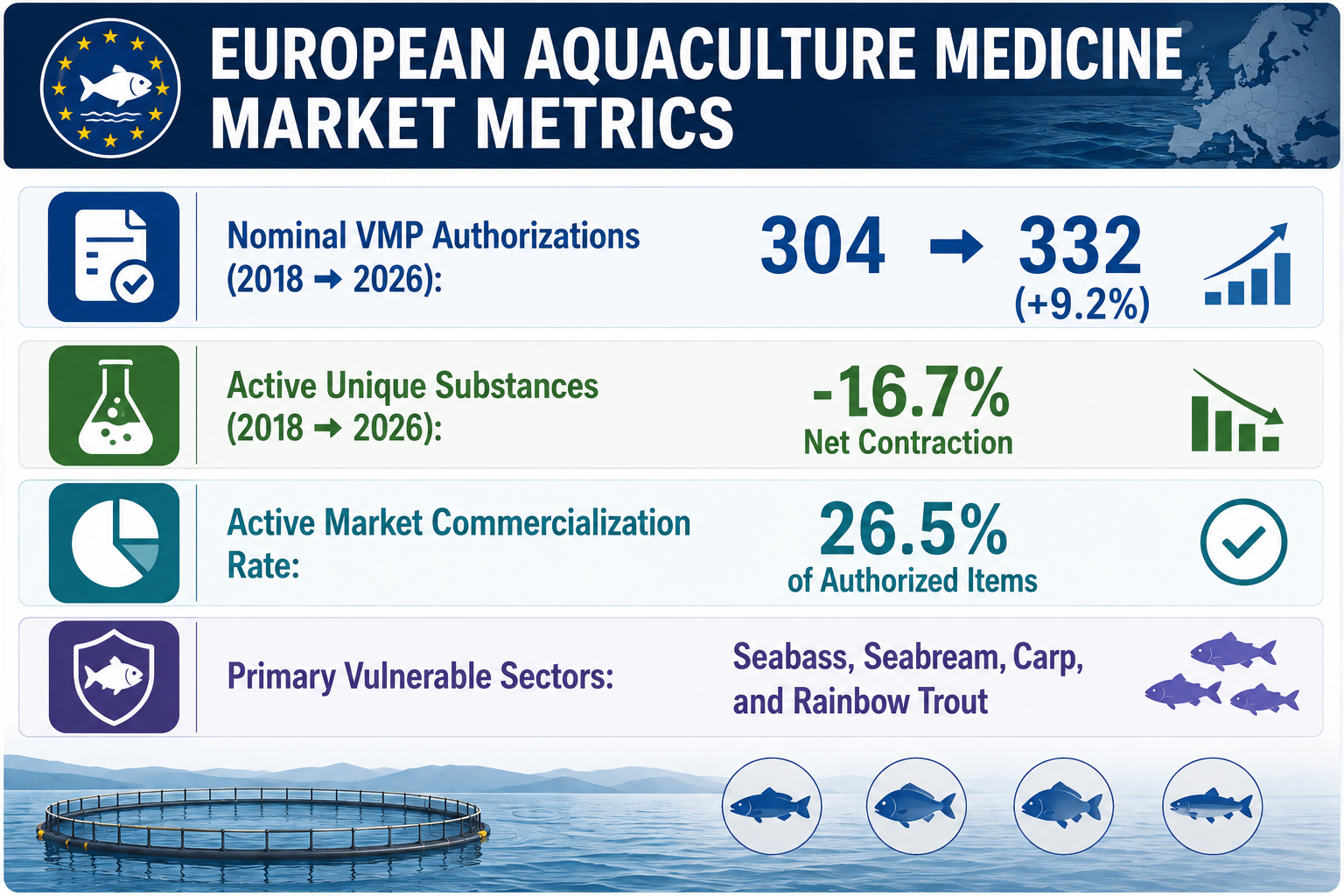
Nominal Authorization Growth: Total authorized Veterinary Medicinal Products (VMPs) for finfish rose +9.2%, increasing from 304 products in 2018 to 332.
-
Active Ingredient Contraction: The number of unique active chemical substances actively commercialized declined by -16.7% over the same period.
-
The 26.5% Availability Gap: Only 26.5% of nominally authorized aquatic medicines are actively commercialized and stocked across EU/EFTA member states.
-
Most Vulnerable Sectors: Mediterranean marine finfish (gilt-head seabream, European seabass) and freshwater species (rainbow trout, common carp) face acute therapeutic vacuums for antiparasiticals, antimicrobials, and specialized vaccines.
European Aquatic VMP Availability Trends (2018 vs. 2026)
Metric / Indicator |
2018 Baseline |
2026 Status |
Net Percentage Change |
Total Authorized Finfish VMPs |
304 |
332 |
+9.2% |
Unique Active Substances Available |
Baseline High |
Decreased |
-16.7% |
Reported Commercial Market Availability |
~40%–45% |
26.5% |
Severe Contraction |
Primary Regulatory Mechanism |
National Approvals |
EMA UPD Tracking |
Shifts toward Cascade Use |
Unpacking the “Paper Market”: Underlying Drivers
The FVE study identifies four structural barriers discouraging pharmaceutical manufacturers from maintaining active commercial supply chains for aquatic medicines in Europe:
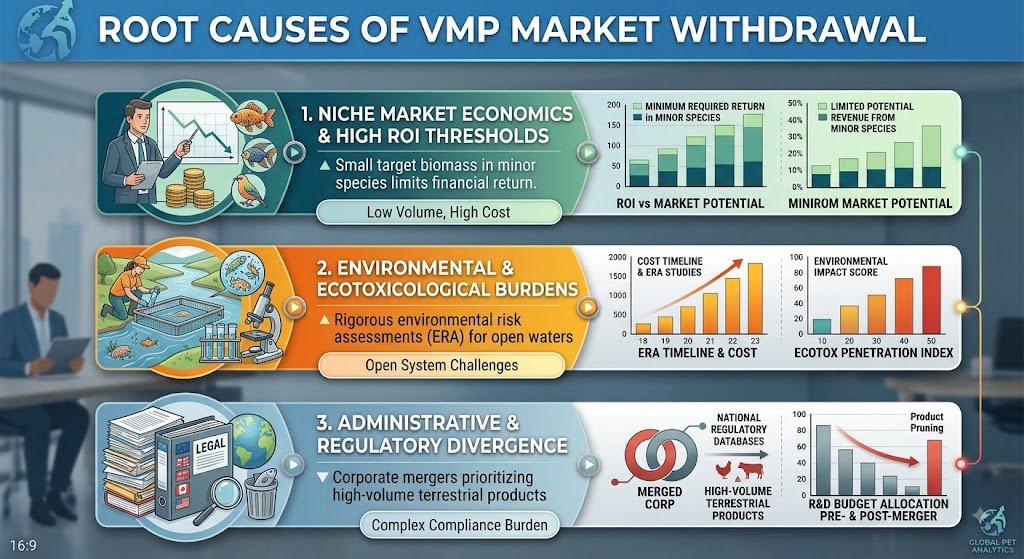
1. Niche Market Size vs. Regulatory Compliance Costs
Unlike salmon production in Northern Europe, which commands sufficient scale to attract pharmaceutical R&D, Mediterranean marine and freshwater finfish sectors represent “limited markets.” High post-authorization maintenance fees often outweigh expected commercial profits for animal health companies.
2. Environmental Risk Assessment (ERA) Hurdles
Aquatic veterinary medicines face stringent environmental safety scrutiny regarding residue accumulation in aquatic ecosystems, sediment persistence, and non-target species toxicity. Meeting updated EU ecotoxicological thresholds demands substantial capital reinvestment for mature products, leading manufacturers to voluntarily allow authorizations to lapse.
3. Reliance on Off-Label “Cascade” Prescribing
Because nearly three-quarters of authorized treatments are unavailable in practice, aquatic veterinarians are forced to rely heavily on the Cascade principle (prescribing medicines off-label, using products licensed for terrestrial animals, or importing medicines under special permits). While legally permissible, off-label use increases treatment uncertainty, complicates withdrawal period calculations, and elevates operational risk for farm operators.
Implications for Animal Health, Welfare, and One Health
The FVE warns that persistent therapeutic gaps jeopardize European aquaculture sustainability and public health frameworks:
-
Animal Welfare Degradation: Without targeted, species-specific antiparasiticals or vaccines, fish health management relies on reactive husbandry adjustments rather than prompt therapeutic interventions.
-
Antimicrobial Resistance (AMR) Risks: Limited access to narrow-spectrum, targeted treatments increases pressure to utilize broader-spectrum antimicrobials, conflicting with the EU’s Farm to Fork initiative to cut agricultural antibiotic footprint.
“The existence of a ‘paper market’ creates a dangerous illusion of security. Regulators point to hundreds of authorized products, but aquatic veterinarians on the ground cannot source three-quarters of them. Without dedicated incentives for minor species, fish welfare and European aquaculture resilience remain exposed.”
— Federation of Veterinarians of Europe (FVE) Position Statement

