


In a significant regulatory shift for the agricultural and pet food sectors, the U.S. Food and Drug Administration (FDA) has issued a proposed rule transitioning the long-standing voluntary “Generally Recognized as Safe” (GRAS) notification framework into a mandatory pre-market reporting requirement for both human food and animal feed ingredients.
The proposed policy overhaul ends a decade-long era of voluntary GRAS self-determinations without agency filing. Once finalized, animal feed producers, pet food manufacturers, and ingredient biotech firms will be legally required to notify the FDA prior to marketing any novel animal food substance marketed under GRAS status.
1. Executive Summary: What Is Changing?
Under Section 201(s) of the Federal Food, Drug, and Cosmetic Act (FD&C Act), any substance added to food or animal feed is considered a food additive unless its safety is recognized among qualified experts through scientific procedures—qualifying it as GRAS.
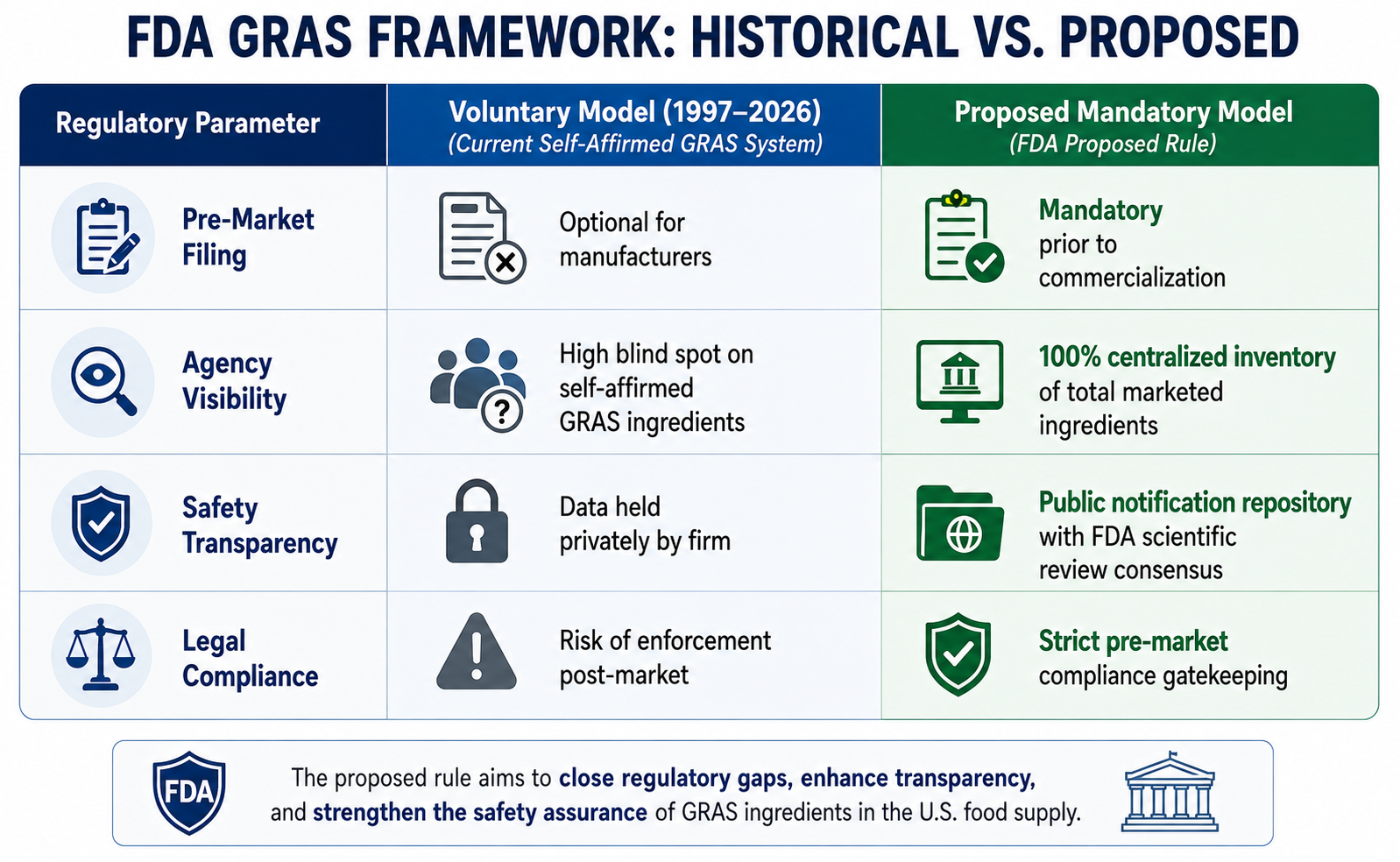
Historically, companies could make an independent GRAS determination without submitting their safety dossiers to the FDA Center for Veterinary Medicine (CVM). The proposed rule eliminates this pathway:
2. Regulatory Drivers Behind the Mandatory Mandate
The FDA’s push toward mandatory notification stems from several structural pressures in food safety oversight:
A. Closing the “Secret GRAS” Blind Spot
Consumer advocacy groups, public health organizations, and veterinary toxicologists have long criticized the voluntary notification system. Under the self-affirmation loop, manufacturers could introduce novel enzymes, direct-fed microbials, and novel protein sources into animal feed supply chains without public disclosure or federal review.
B. Supply Chain Traceability in Animal Nutrition
In livestock production and companion animal health, feed additives directly affect the human food chain (via meat, milk, and eggs) and domestic pet safety. The FDA CVM emphasized that standardizing animal feed ingredient notifications is vital for tracking potential toxicological cumulative effects across species lines
3. Industry Impact: Pet Food, Feed Biotech, and Supply Chains
The transition to mandatory reporting will reshape operational strategies across the animal health manufacturing spectrum:
1. Higher Pre-Market Scientific Rigor
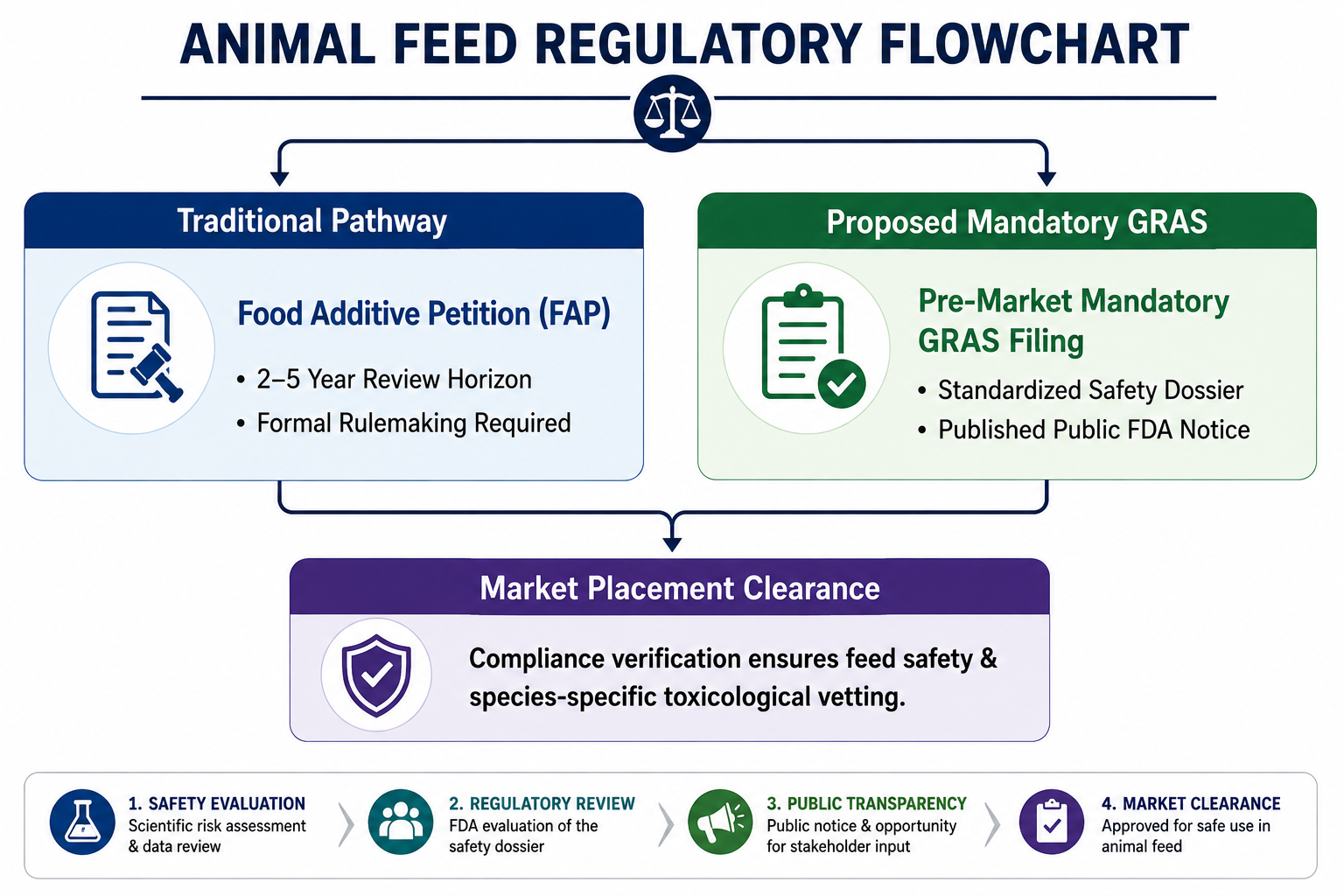
Ingredient manufacturers must compile comprehensive toxicological packets, including target species safety studies, manufacturing process data, environmental impact assessments, and contaminant profiles (e.g., heavy metals, mycotoxins) before submission.
2. Timeline and Commercialization Bottlenecks
While mandatory GRAS notifications remain faster than formal Food Additive Petitions (FAP), mandatory FDA intake queues will lengthen product development timelines for innovative animal nutrition start-ups—particularly those working in precision fermentation, insect proteins, and enzyme technologies.
3. Grace Periods and Existing Formulations
The agency’s proposed rule details transitional provisions for ingredients previously marketed under self-affirmed GRAS status, providing compliance windows for manufacturers to file retroactive notifications without immediate market withdrawal.
4. Expert Commentary & Next Steps
Industry associations, including the American Feed Industry Association (AFIA) and pet food safety groups, are evaluating the rule’s technical parameters during the public comment period.
Public hearings and a formal 90-day public comment window will open via the Federal Register. Stakeholders across veterinary medicine, commercial feed mills, and nutritional biotechnology are encouraged to submit technical feedback on submission templates and transition timelines.

