

A Strategic Analysis of Looming Expirations, Generic Threats, and Next-Generation Product Lifecycle Management in Animal Health
Executive Summary
The animal health industry is quietly bracing for its own historic “veterinary patent cliff,” opening up a massive $15 billion windfall for generic animal health manufacturers. While human pharma’s patent cliff dominates the headlines, blockbuster companion animal and livestock medications are losing exclusivity, shifting the dynamics of the global animal health sector.
The global animal health industry is entering an unprecedented structural shift. Between 2024 and 2030, an estimated $15 billion in annual product revenues across companion animal and livestock pharmaceuticals will lose primary patent protection or market exclusivity.
Unlike human pharma, where the “patent cliff” is a well-trodden, highly formalized regulatory process (via Hatch-Waxman and Abbreviated New Drug Applications), animal health has historically operated under slower price-erosion curves.
However, changes in regulatory pathways (such as the FDA’s generic animal drug approval framework under ADAA/GADUFA), corporate consolidation, and contract manufacturing access have accelerated generic entry.
To defend their market positions, major animal health originators—including Zoetis, Boehringer Ingelheim, Elanco, and Merck Animal Health—are pivoting from single-molecule exclusivity to secondary IP protection, complex combo-formulations, novel drug delivery technologies, and species-specific biologics.
The Macro Dynamics of the $15B Expirations
Historically, the animal health market was highly fragmented and dominated by low-cost, unbranded products. However, the last decade saw the rise of veterinary blockbusters—highly advanced, multi-billion-dollar blockbusters mirroring human pharma.
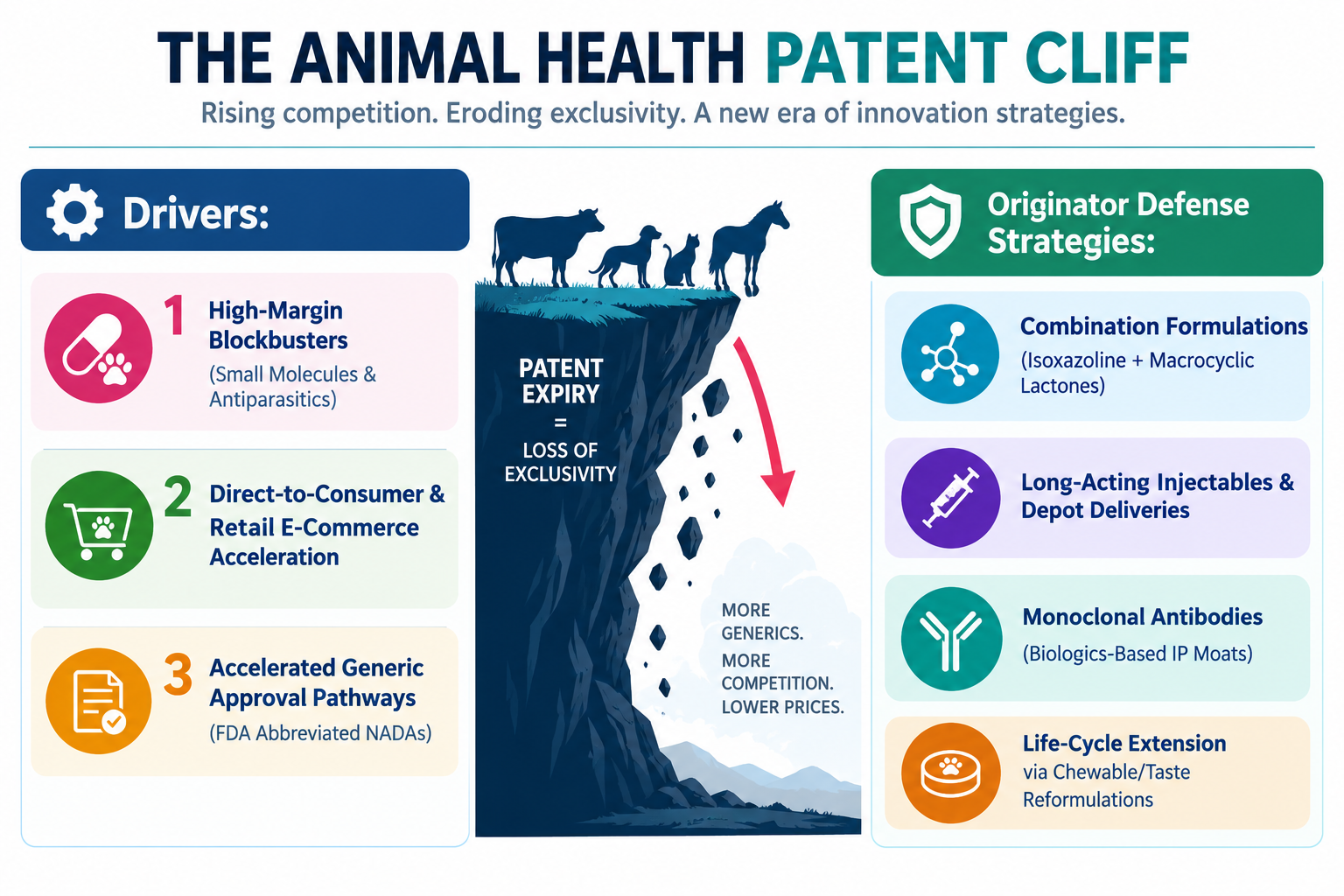
As these premium active pharmaceutical ingredients (APIs) lose patent protection, generic players can aggressively capture market share at significantly lower price points. Several market drivers are magnifying the impact of the current patent cycle:
-
Concentration of Blockbuster Small Molecules: The animal health market is disproportionately reliant on a handful of mega-blockbusters—particularly oral companion-animal parasiticides and anti-itch therapeutics generating $500M to over $1.5B annually per brand.
-
Channel Shifts to E-Commerce & Retail: Historically, veterinary clinics acted as exclusive distribution gatekeepers. Today, direct-to-consumer pharmacy channels (Chewy, 1-800-PetMeds, Amazon) have lowered barriers for generic adoption, enabling pet owners to switch to generic alternatives without clinic friction.
-
Shortened R&D Pipelines: Developing a new chemical entity (NCE) in animal health now costs upwards of $100M–$150M. As R&D yields slow down, originators are forced to extract maximum lifetime value from existing active pharmaceutical ingredients (APIs).
Deep-Dive Molecules & Brands Coming Off-Patent
The following granular table breaks down the primary molecules, originator brands, therapeutic indications, key loss of exclusivity (LOE) windows, and associated generic/originator strategies across the $15 billion exposure pool.
Molecule (INN) |
Brand Name(s) |
Originator Company |
Primary Therapeutic Class |
Target Species |
Estimated Peak Global Revenue |
Primary Patent Expiry / LOE Window |
Primary Defense / Lifecycle Strategy |
Afoxolaner |
NexGard® |
Boehringer Ingelheim |
Parasiticide (Isoxazoline) |
Dogs |
~$1.2 Billion |
2024–2026 (EU/US) |
Combination conversion to NexGard Spectra® (+ milbemycin oxime) & NexGard PLUS® (+ moxidectin/pyrantel). |
Fluralaner |
Bravecto® |
Merck Animal Health |
Parasiticide (Isoxazoline) |
Dogs, Cats, Poultry |
~$1.1 Billion |
2025–2028 |
Extension into extended-duration topical solutions, Bravecto Quantum® (injectable depot), and poultry parasite control (Exzolt®). |
Sarolaner |
Simparica® |
Zoetis |
Parasiticide (Isoxazoline) |
Dogs |
~$800 Million |
2027–2029 |
Strategic push into triple-combination Simparica Trio® (sarolaner + moxidectin + pyrantel) to lock out monotherapy generics. |
Oclacitinib |
Apoquel® |
Zoetis |
Anti-pruritic (JAK Inhibitor) |
Dogs |
~$900 Million |
2026–2028 |
Launch of Apoquel Chewable®, reformulations, and co-positioning with injectable monoclonal biologic Cytopoint®. |
Tulathromycin |
Draxxin® |
Zoetis |
Antimicrobial (Macrolide) |
Cattle, Swine |
~$350 Million |
Expired (2021) / Generic Phase (2024–2026+) |
Price adjustments, bulk producer contracting, and combination antibiotic solutions (e.g., Draxxin KP with ketoprofen). |
Maropitant |
Cerenia® |
Zoetis |
Antiemetic (NK1 Receptor Antagonist) |
Dogs, Cats |
~$250 Million |
Expired / Active Generic Erosion |
Transitioning to cost-optimized injectable formulations and pre-filled clinical delivery devices. |
Robenacoxib |
Onsior® |
Elanco |
NSAID (COX-2 Selective) |
Dogs, Cats |
~$180 Million |
2025–2027 |
Expanding feline-specific chronic pain indications and bundled hospital agreements. |
Pimobendan |
Vetmedin® |
Boehringer Ingelheim |
Inodilator (Cardiology) |
Dogs |
~$300 Million |
Expired (EU) / 2025–2027 (US Extension Formulations) |
Introduction of liquid formulations (Vetmedin® Solution), chewable flavor profiles, and early-stage heart disease screening protocols. |
Moxidectin (Targeted Delivery) |
Advantage Multi® / ProHeart® |
Elanco / Zoetis |
Antiparasitic (Macrocyclic Lactone) |
Dogs, Cats, Cattle |
~$500 Million |
Staggered (2024–2028 depending on formulation) |
Pairing moxidectin as an active companion agent inside protected multi-spectrum Isoxazoline chewables. |
Grapiprant |
Galliprant® |
Elanco / Aratana |
NSAID (EP4 Receptor Antagonist) |
Dogs |
~$150 Million |
2026–2028 |
Targeted safety positioning for early-stage OA; bundling with diagnostic screening platforms. |
Detailed Select Molecules’ Profiles
1. Isoxazoline Parasiticides (Afoxolaner, Fluralaner, Sarolaner)
-
The Molecule Family: Isoxazolines altered companion-animal parasiticides by selectively targeting insect and acarine GABA-gated chloride channels.
-
The Patent Exposure: Primary active ingredient compound patents filed in the mid-2000s are reaching their 20-year term limit. Afoxolaner (NexGard®) faces loss of exclusivity first across key regions, followed by Fluralaner and Sarolaner.
-
Originator Defense Blueprint:
-
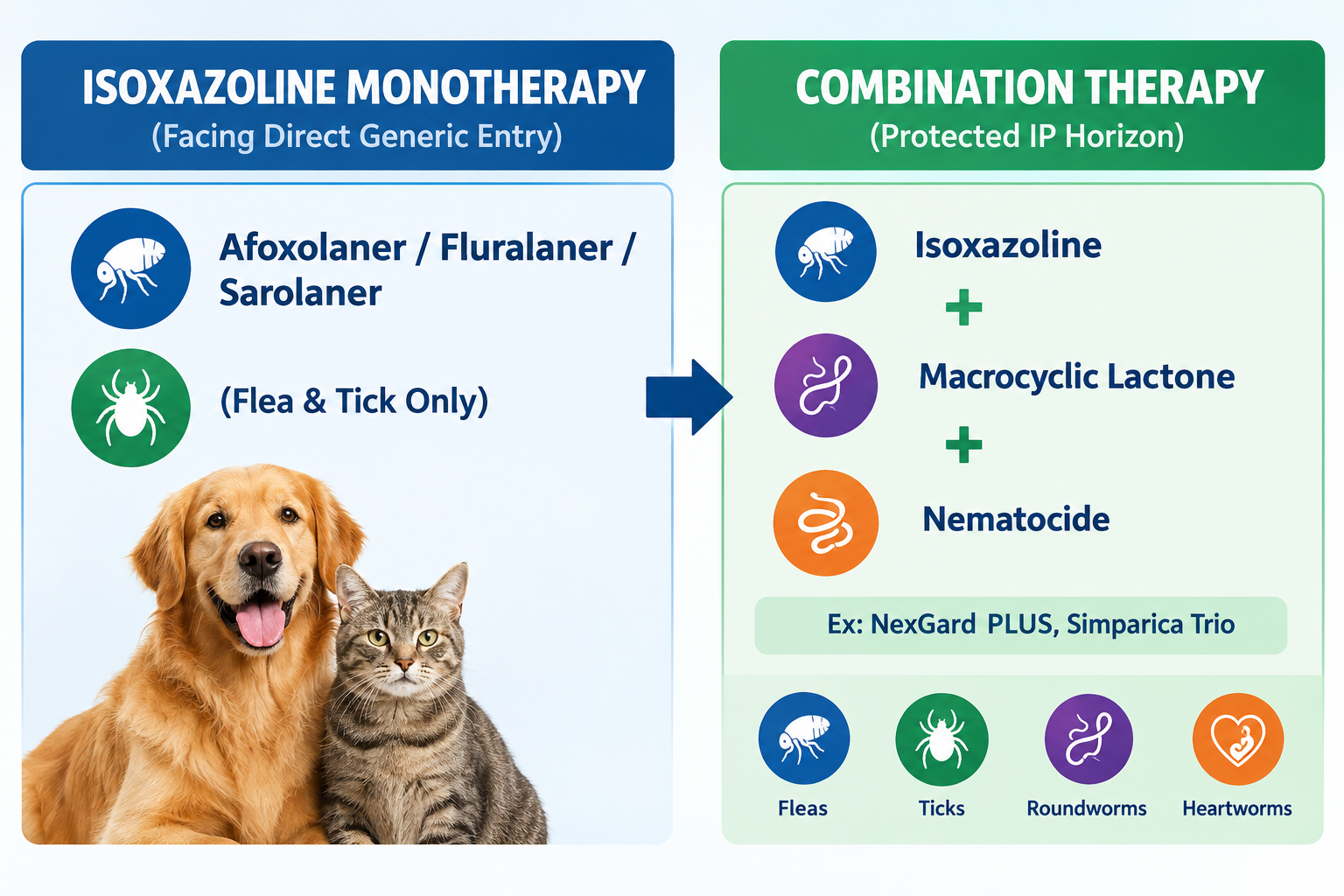
The “Triple Combo” Pivot: Originators have aggressively transitioned clinical preference from monotherapies (flea/tick only) to broad-spectrum combination chews that handle ectoparasites, heartworm, and intestinal worms simultaneously (e.g., Simparica Trio®, NexGard PLUS®).
-
Extended Delivery Platforms: Merck’s launch of long-acting depot technology (Bravecto Quantum®) creates a structural barrier to generic entry that simple oral tablet manufacturers cannot easily replicate.
-
2. Oclacitinib (Apoquel®) & Janus Kinase (JAK) Inhibitors
-
The Molecule: Oclacitinib maleate revolutionized veterinary dermatology by selectively inhibiting JAK-1 enzymes, effectively shutting down the pruritic cytokine cascade associated with allergic dermatitis in canine patients.
-
The Patent Exposure: Key molecule patents are approaching the end of their primary term. Because Apoquel generates near-blockbuster revenues for Zoetis, it represents a primary target for generic manufacturers in India, China, and Europe.
-
Originator Defense Blueprint:
-
Formulation Iteration: Zoetis launched Apoquel Chewable®, leveraging palatability patents to retain pet-owner adherence.
-
Biological Synergy: Shifting severe cases toward Cytopoint® (bedinvetmab), an injectable monoclonal antibody whose biologic manufacturing complexity acts as a natural moat against rapid generic/biosimilar adoption.
-
3. Tulathromycin (Draxxin®) & Food-Animal Antimicrobials
-
The Molecule: A macrolide antibiotic indicated for Bovine Respiratory Disease (BRD) and Swine Respiratory Disease (SRD).
-
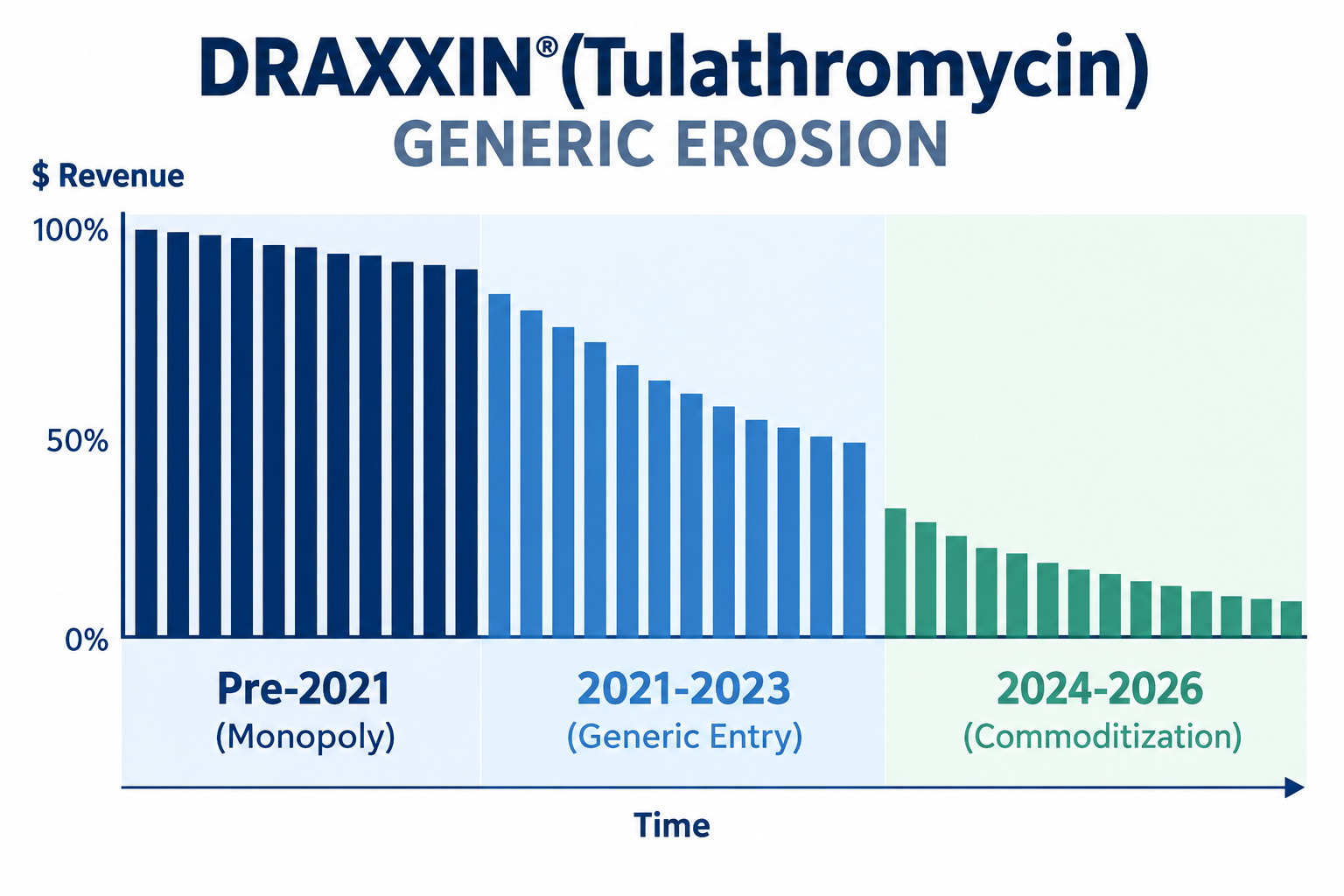
The Generic Reality: Tulathromycin lost primary patent protection in 2021. Between 2022 and 2026, over a dozen generic formulations entered global markets (e.g., MacroSyn®, Increxxa®).
-
Market Impact: Prices for generic tulathromycin dropped by 40%–60% within 36 months of entry. Zoetis countered by introducing Draxxin KP® (adding ketoprofen for fever reduction), preserving market share by combining antibiotic and anti-inflammatory action into a single dose.
Originators’ / Innvators’ Defense Playbooks
When facing a $15B revenue exposure, top-tier animal health organizations employ four distinct lifecycle management frameworks:
Strategy A: Fixed-Dose Combination (FDC) Conversion
By combining an off-patent API with an active molecule holding longer patent protection, originators move clinic demand away from the expiring single agent:
Single Agent (Expiring)} + Secondary API (Protected) = Novel Patent Blockade
Example: Converting afoxolaner (NexGard®) users to afoxolaner + moxidectin + pyrantel (NexGard PLUS®)
Strategy B: Biologic & Monoclonal Antibody Shift
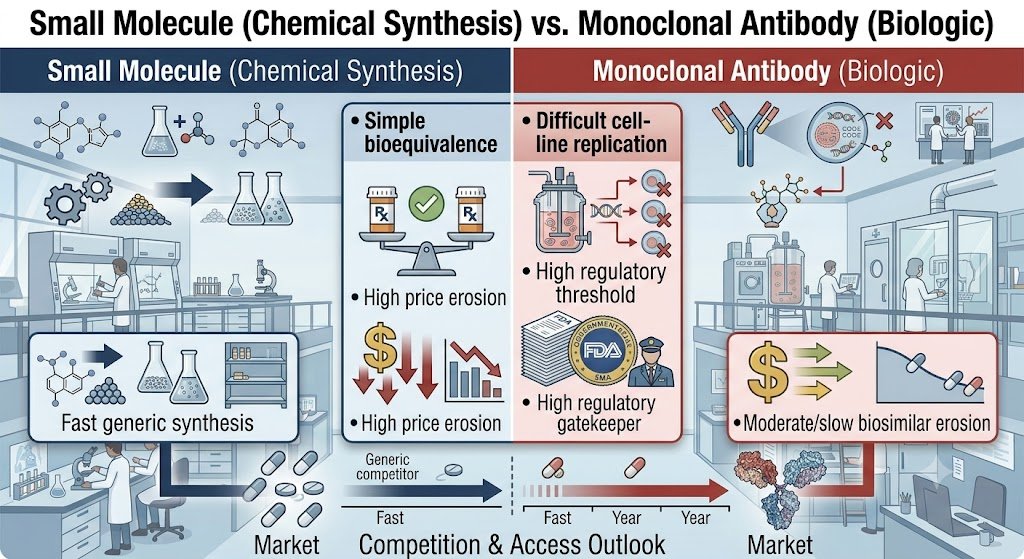
Unlike small molecules, veterinary biologics and monoclonal antibodies (mAbs) benefit from two primary defensive advantages:
-
Regulatory Moats: Biologics face stringent approval pathways that do not easily allow simple “generic” equivalent substitutions.
-
Manufacturing Barriers: Recombinant protein production requires specialized bioreactor capacity and cell-line development, discouraging lower-margin generic players
Strategy C: Delivery System & Device Innovation
-
Long-Acting Depots: Transforming monthly or daily oral pills into 6-month or 12-month injectable formulations
-
Palatability Moats: Securing patents around specific chewable matrices, taste-masking agents, and soft-chew textures that improve compliance over generic hard tablets
Strategy D: Strategic Contracting & Clinic Loyalty Bundling
Originators leverage broad product portfolios to offer veterinary corporate groups volume rebates across non-expiring lines (e.g., vaccines, diagnostics) if they maintain compliance on off-patent pharmaceuticals.
Generic Manufacturers Strategy & India/China Supply Chains
As $15 billion in market value transitions out of exclusivity, generic veterinary manufacturers are rapidly scaling production capacity.
Key Generic Market Dynamics:
-
API Sourcing Concentration: Over 65% of generic veterinary APIs (including tulathromycin, meloxicam, and imidacloprid) originate from chemical manufacturing hubs in India (e.g., Hyderabad, Gujarat) and China.
-
First-to-File Competitions: Companies like Dechra, Virbac, Norbrook, Bimeda and Cronus Pharma actively target Abbreviated New Animal Drug Applications (ANADAs) to launch within 24 hours of primary patent expiration.
-
Channel Aggression: Generic competitors are increasingly bypassing traditional clinic sales reps to market directly to veterinary corporate consolidators and retail e-commerce channels.
Strategic Implications for the Veterinary Sector