


Bluetongue Restricted Zone Comes Into Force in South-West Scotland as Scotland Moves into Low-Transmission Period
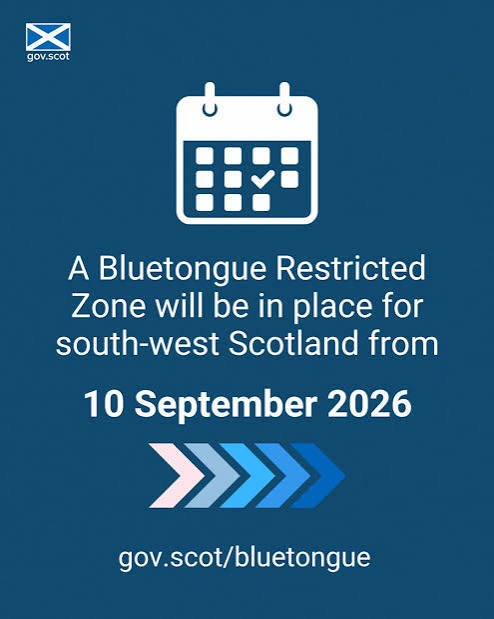
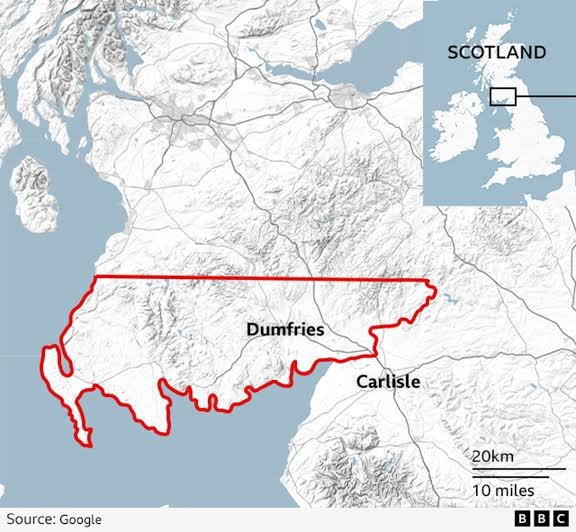
Edinburgh, September 10, 2026 — A new Bluetongue Restricted Zone (RZ) has come into force across south-west Scotland, replacing the existing Temporary Control Zone as authorities strengthen disease-management measures for bluetongue virus.
The Scottish Government’s current disease information confirms that Scotland entered its seasonal low-transmission period on September 10, 2026, with the period expected to continue until before summer 2027.
The south-west Scotland Restricted Zone was announced as replacing the previous Temporary Control Zone from September 10.
Why the change matters
Bluetongue is a vector-borne viral disease of ruminants, including cattle, sheep and goats. Transmission occurs primarily through biting midges, meaning disease-control strategies are closely linked to vector activity, animal movements and seasonal conditions.
The introduction of the Restricted Zone represents a shift from temporary emergency controls toward a more structured regional disease-management framework.
The timing is particularly relevant because bluetongue epidemiology is strongly influenced by seasonal vector activity. The Scottish Government’s identification of September 10 as the beginning of the low-transmission period therefore provides an important epidemiological context for the new regulatory framework.
From temporary control to restricted-zone management
The replacement of a Temporary Control Zone with a Restricted Zone is important for livestock operators because disease-control systems must balance two competing objectives:
-
preventing onward transmission;
-
maintaining practical livestock movement and agricultural trade.
For livestock producers, restrictions can affect animal movements, market access, breeding programmes, transport and regional trading patterns.
For veterinary authorities, the objective is to maintain sufficient control over potential disease spread while recognising the reduced seasonal transmission risk.
Commercial implications for the livestock sector
The development has implications beyond veterinary disease control. Bluetongue creates costs through:
-
animal movement restrictions;
-
vaccination requirements;
-
surveillance;
-
diagnostic testing;
-
productivity losses;
-
reproductive impacts;
-
mortality in severe cases;
-
trade disruption.
The economic effect can therefore extend across veterinary services, diagnostics, vaccines, livestock markets, breeding operations and animal transportation.
For veterinary pharmaceutical companies, disease-control periods can also alter demand for vaccines, diagnostics and veterinary advisory services.
Why Scotland remains strategically important
Bluetongue has become an increasingly important European livestock-health issue because of changing geographic and seasonal disease patterns. The disease is particularly challenging because it is not controlled simply by treating infected animals. Control requires a combination of:
Surveillance + vaccination + movement controls + vector monitoring + farmer awareness.
This makes bluetongue an important example of the increasing importance of One Health and climate-linked animal-health surveillance.
Analyst view
The most important feature of today’s development is not simply the creation of another disease-control zone. It is the move toward seasonally differentiated disease management.
The September 10 transition coincides with Scotland’s identified low-transmission period, suggesting that regulatory authorities are increasingly integrating epidemiological conditions into livestock-movement and disease-control frameworks. For animal-health companies, the key monitoring variables will be:
-
geographic expansion or contraction of restricted zones;
-
confirmed livestock cases;
-
vaccination uptake;
-
vector activity;
-
livestock movement restrictions;
-
cross-border implications with England and other European markets.

