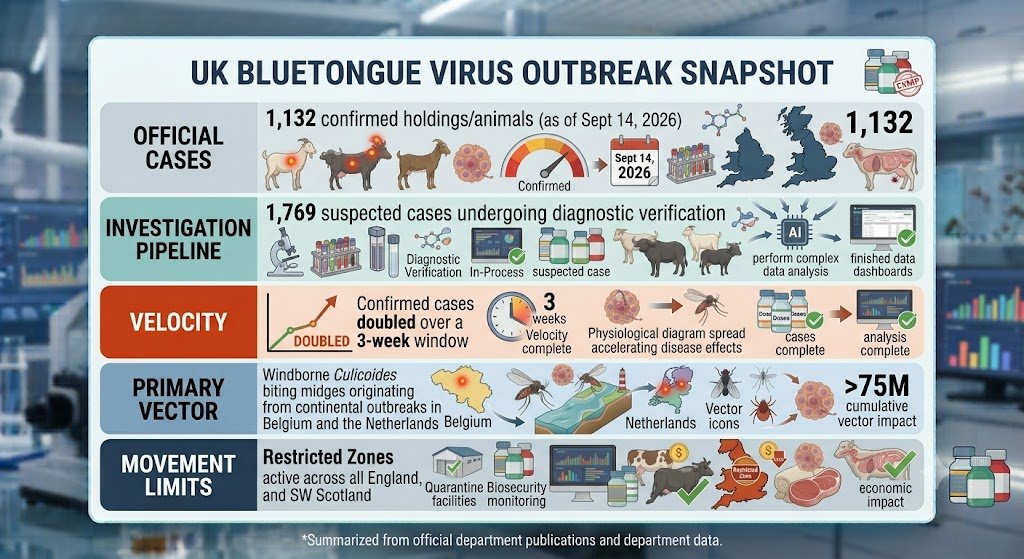
The Department for Environment, Food & Rural Affairs (Defra) confirmed that official cases of bluetongue virus (BTV) in the UK have climbed past 1,132, representing a doubling of confirmed infections in just three weeks. An additional 1,769 suspected cases are currently under active investigation across livestock holdings in England, Wales, and southwestern Scotland.
With the seasonal outbreak peak anticipated by late September, agricultural authorities and livestock groups are urging farmers—particularly in Derbyshire and the Peak District—to initiate vaccination protocols immediately, emphasizing that it is “not too late” to protect herds and flocks.
1. Transmission Vectors & Geographical Expansion
According to the Agriculture and Horticulture Development Board (AHDB), the primary driver behind the rapid spread is the blown migration of infected Culicoides biting midges across the English Channel from severe outbreak clusters in Belgium and the Netherlands.
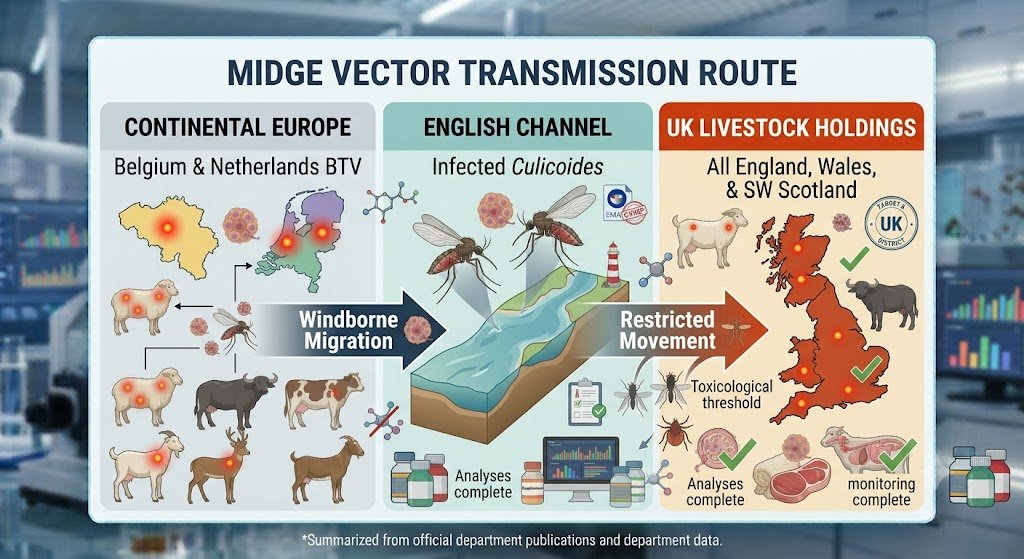
To control further disease transmission, Defra has placed expanded Restricted Zones across all of England, Wales, and parts of southwestern Scotland. These zones enforce strict movement controls on susceptible livestock species—including cattle, sheep, goats, and deer—requiring pre-movement testing and official licensing prior to transport.
2. Derbyshire Emergency Briefing & Vaccination Drive
In response to the disease advancing toward central and northern livestock regions, local authorities and veterinary bodies have scheduled an emergency farmer education meeting on September 16 at Bakewell Market.
-
Vaccination Guidance: While peak midge activity is expected in late September, veterinary officials stress that administering vaccines now still offers crucial protection before vector populations drop with cooler autumn weather.
-
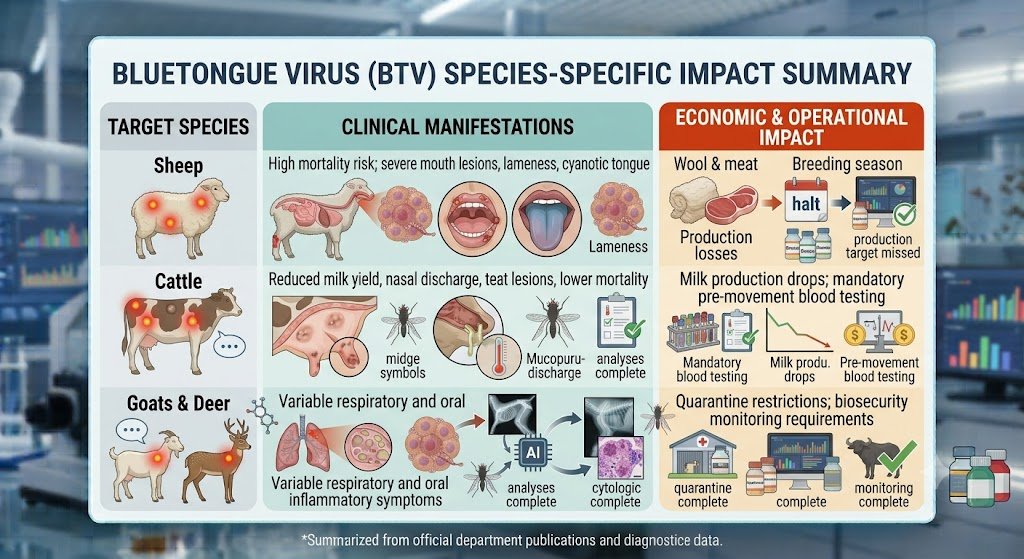
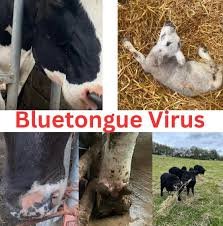
Clinical Symptoms to Watch: Farmers are advised to inspect livestock daily for hallmark signs of BTV, including high fever, excessive salivation, swelling of the head and neck, lameness, and characteristic lesions around the mouth and hooves.
3. Livestock Impact & Biosecurity Protocol Summary