

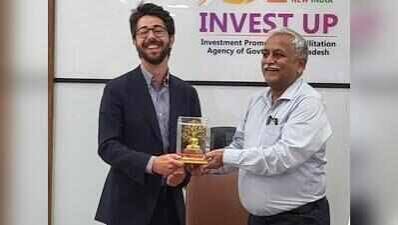
A 23-member US business delegation led by the Indo-American Chamber of Commerce (IACC), in association with the US Foreign Commercial Service and US-India Business Council, held discussions with the Uttar Pradesh government on September 14, exploring opportunities for deeper India–US collaboration across healthcare, food processing, horticulture, animal husbandry, dairy and fisheries.
The delegation represented 17 companies and met senior Uttar Pradesh government officials, including the Deputy Chief Minister and officials responsible for animal husbandry, fisheries and dairy development. Discussions covered investment, technology transfer, research and development, manufacturing, public-private partnerships and broader government–industry engagement.
Importantly, no specific livestock-sector investment amount or animal-health project was announced in the reported discussions. The formal MoU signed during the visit was between the Uttar Pradesh Promote Pharma Council (UPPPC) and IACC, creating a framework for investment facilitation and technology collaboration. Nevertheless, the inclusion of animal husbandry and dairy in the delegation’s sector discussions is strategically significant given Uttar Pradesh’s scale in India’s livestock economy.
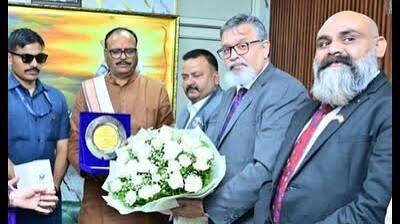
Visit of US Business Delegation
A US business delegation visited Lucknow on September 14 as part of a wider effort to identify opportunities for India–US commercial and technology cooperation.
The delegation was led by the Indo-American Chamber of Commerce, together with the US Foreign Commercial Service and US-India Business Council.
The reported delegation included:
-
23 members
-
Representatives of 17 companies
-
US business interests spanning healthcare, life sciences, agriculture and related sectors
-
Government-industry engagement with senior Uttar Pradesh officials.
The delegation met:
-
Uttar Pradesh Deputy Chief Minister Brajesh Pathak
-
Horticulture Minister Dinesh Pratap Singh
-
Senior officials dealing with animal husbandry
-
Fisheries and dairy-development officials
-
Planning and IT officials
-
Agro-food-processing officials
-
Other senior state-government representatives.
The breadth of the discussions is important: animal husbandry was included alongside healthcare, agriculture, food processing, horticulture, dairy and fisheries, suggesting an increasingly integrated approach to agricultural and biological-sector investment.
Formal agreement — and what it does NOT mean
The principal formal agreement reported from the visit was an MoU between:
Uttar Pradesh Promote Pharma Council (UPPPC)
and
Indo-American Chamber of Commerce (IACC)
The framework is intended to facilitate:
Area |
Potential activity |
|---|---|
Investment facilitation |
Connecting US companies with UP opportunities |
Technology transfer |
Introduction/adaptation of technologies |
R&D |
Collaborative research |
Manufacturing |
Potential industrial projects |
PPPs |
Government–private-sector projects |
Government–industry engagement |
Structured institutional dialogue |
Investment support |
Joint working group and nodal officers |
Why Uttar Pradesh is particularly important for animal-health investors
The commercial rationale for engaging with Uttar Pradesh is unusually strong. According to Uttar Pradesh’s investment-promotion platform, the livestock sector contributes approximately 7% of state GSDP, compared with about 5.2% nationally.
The state also reports approximately 5.31 crore milch animals, equivalent to around 19% of India’s milch-animal population. Uttar Pradesh livestock/dairy investment indicators:
Indicator |
Uttar Pradesh |
|---|---|
Milch-animal population |
~5.31 crore |
Share of India’s milch animals |
~19% |
Livestock contribution to state GSDP |
~7% |
Milk-production rank |
#1 in India |
Share of India’s milk production |
~16% |
In-milk buffaloes |
~1.2 crore |
In-milk cows |
~0.66 crore |
Milk processing level |
~10% |
India average milk processing |
~17% |
Target under Dairy Policy 2022 |
Raise processing to 25% |
The opportunity therefore extends well beyond conventional veterinary medicines. It encompasses the entire livestock value chain:
Genetics → breeding → animal nutrition → veterinary care → diagnostics → disease prevention → milk productivity → collection → processing → cold chain → waste management
Uttar Pradesh is India’s largest milk-producing state
The latest Basic Animal Husbandry Statistics 2025 data put Uttar Pradesh’s 2024–25 milk production at approximately: 38.82 million tonnes
The state accounted for approximately 15.66% of India’s total milk production, retaining its position as India’s largest milk-producing state. For comparison:
State |
Share of India’s milk production, 2024–25 |
|---|---|
Uttar Pradesh |
15.66% |
Rajasthan |
14.82% |
Madhya Pradesh |
9.12% |
Gujarat |
7.78% |
Maharashtra |
6.71% |
Top 5 combined |
54.09% |
This concentration is strategically important for companies looking to establish regional livestock-health, dairy or animal-nutrition platforms.
Bigger opportunity may be productivity rather than simply herd expansion
One of the most important investment signals from Uttar Pradesh is the gap between livestock scale and processing/productivity infrastructure. The state’s investment-promotion agency identifies milk processing as an important opportunity: approximately 10% of milk is currently processed, versus an estimated 17% national average, while the state’s Dairy Policy 2022 targets an increase to 25%.
This creates opportunities for US technology providers in: Animal productivity
-
Precision feeding
-
Feed additives
-
Ration optimisation
-
Animal monitoring
-
Reproductive management
-
Genomic selection
-
Artificial insemination technologies
Why the US–India connection could be strategically useful
The US possesses significant expertise in high-productivity livestock systems, animal genetics, precision dairy, veterinary diagnostics, animal nutrition and agricultural technology.
India, meanwhile, offers: scale + livestock numbers + rising protein/dairy demand + fragmented production + large smallholder base.
That creates a potentially attractive partnership model: US technology + Indian livestock scale + local manufacturing + Indian distribution + government-supported infrastructure
The opportunity is particularly relevant in Uttar Pradesh because a large share of the livestock economy is based on small and marginal producers. Uttar Pradesh’s investment platform estimates that approximately 86% of farmers are landless or small farmers with holdings of 0–1 hectare.
Animal health could become an important component of the investment equation
The livestock opportunity should not be viewed purely as a dairy-production story. Disease prevention directly affects:
-
milk yield
-
fertility
-
calf survival
-
mortality
-
replacement costs
-
farmer income
-
antimicrobial use
-
productivity
-
food safety
-
trade potential.
India’s Department of Animal Husbandry and Dairying continues to develop national infrastructure around livestock disease control, breeding, statistics and animal-health systems. The government is also operating the Animal Husbandry Infrastructure Development Fund (AHIDF), whose revised outlay was ₹29,110.25 crore through March 31, 2026. This creates a potentially useful ecosystem for private investment.
Potential US investment themes emerging from the discussion
For US animal-health and agricultural companies, the most attractive opportunities could fall into six broad categories.
① Veterinary diagnostics – India’s livestock sector remains highly fragmented. Rapid, affordable diagnostics could improve:
-
FMD surveillance
-
brucellosis detection
-
mastitis diagnosis
-
reproductive disease management
-
antimicrobial stewardship
-
outbreak response.
Commercial opportunity: HIGH
② Animal nutrition and feed technology – The scale of Uttar Pradesh’s dairy industry creates a significant addressable market for:
-
feed additives
-
enzymes
-
probiotics
-
yeast products
-
organic acids
-
mineral nutrition
-
mycotoxin management
-
precision nutrition.
Commercial opportunity: VERY HIGH
③ Genetics and reproductive technologies – The state is already developing breeding infrastructure and policies. Opportunities include:
-
sexed semen
-
genomic selection
-
embryo transfer
-
reproductive diagnostics
-
herd fertility analytics
-
genetic improvement programmes.
Commercial opportunity: HIGH
④ Digital livestock management – A US–India technology partnership could potentially introduce:
-
wearable livestock sensors
-
AI-based disease detection
-
automated heat detection
-
milk-yield analytics
-
fertility prediction
-
veterinary telemedicine
-
herd-health dashboards.

