

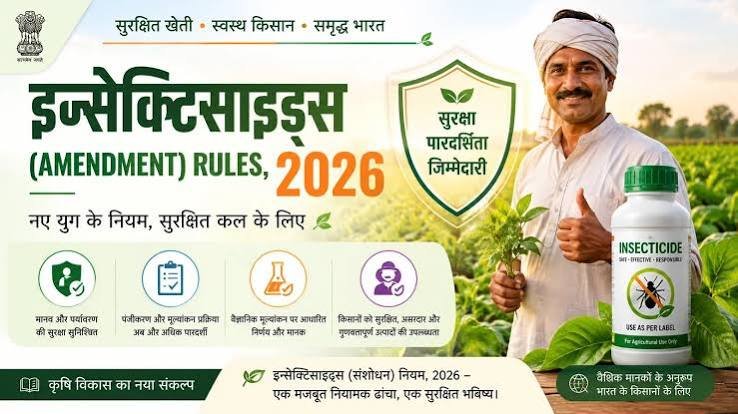
NEW DELHI — In a milestone structural reform for agribusiness and animal health biosecurity, India’s Ministry of Agriculture and Farmers Welfare has officially enforced the Insecticides (Amendment) Rules, 2026.
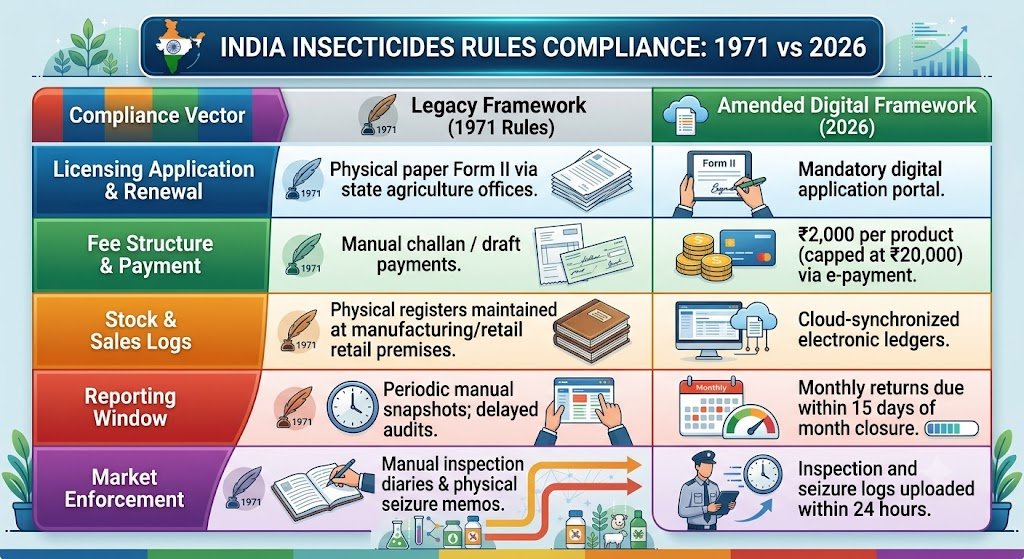
The new framework completely dismantles more than five decades of paper-based compliance under the legacy Insecticides Rules, 1971, replacing manual ledgers with a mandatory, centralized digital licensing and real-time inventory tracking platform.
While designed broadly for crop protection, the digital mandate creates an unprecedented compliance overhaul for manufacturers, importers, and distributors of veterinary parasiticides and topical livestock treatments—products registered and regulated as insecticides under Indian law.
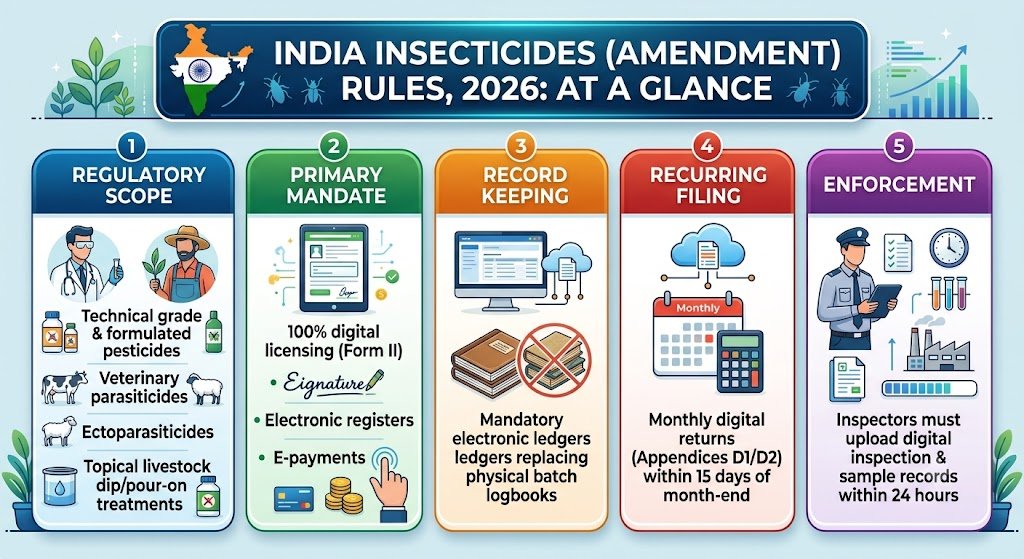
1. Transforming Veterinary Parasiticide & Livestock Biosecurity
In rural Indian farming, topical ectoparasiticides—such as synthetic pyrethroids, organophosphates, and amitraz dips used to control cattle ticks, mites, and flies—are regulated under the Insecticides Act. Historically, a lack of supply-chain visibility enabled a parallel gray market of spurious, diluted, or unapproved veterinary chemical formulations.
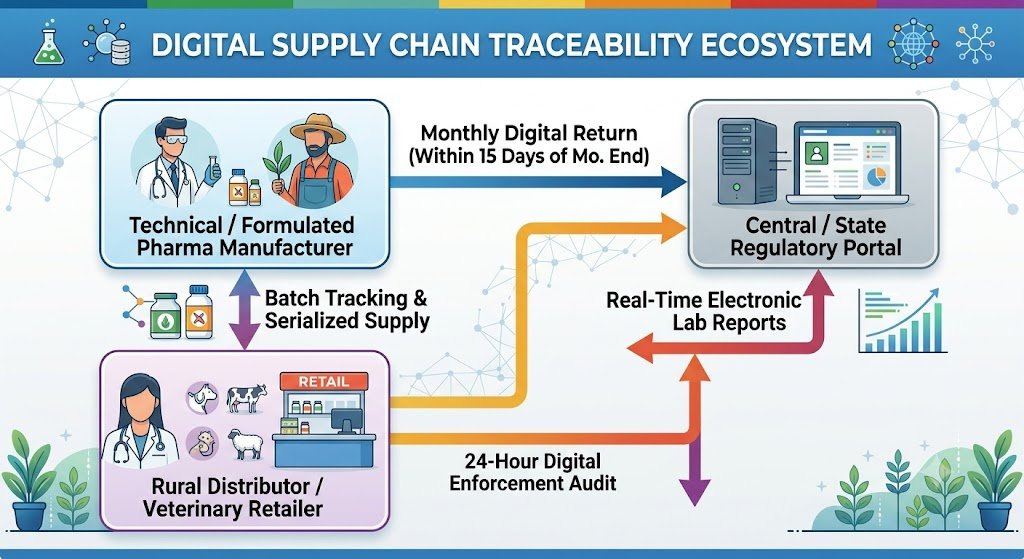
The 2026 digital overhaul establishes three core enforcement pillars:
-
Digital Laboratory Integration: Chemical test notifications, active ingredient percentage verifications, and residue assay results from central and state testing labs must be transmitted electronically through integrated regulatory channels.
-
24-Hour Inspection Uploads: Insecticide Inspectors are required to log physical inspections, sample collection protocols, and seizure orders onto the digital portal within 24 hours of execution.
-
Automated Batch-Level Auditing: Manufacturers and distributors must file monthly electronic returns under Appendices D1 and D2 of Form III, locking in batch numbers, production runs, sales flows, and remaining stock balances.
2. Regulatory Operational Matrix