

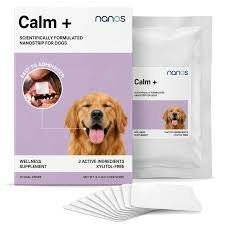
Los Angeles-based NanosVet has raised $8.3 million in an SEC-reported securities offering, providing fresh capital to expand its fast-dissolving oral-film platform from pet wellness applications toward pharmaceutical drug delivery.
The financing was disclosed through a U.S. Securities and Exchange Commission Form D filed on September 18, 2026. The filing reports $8.30 million in securities sold against a total offering of $8.62392 million, with 17 investors participating. Approximately $323,920 remained to be sold at the time of the filing, including $123,920 associated with warrants.
The offering was signed by NanosVet founder and CEO Andrew Green, with securities sales beginning September 15.
From Dental Strips to Veterinary Drug Delivery
NanosVet is developing its proprietary NanoMelt technology around rapidly dissolving oral films designed to simplify medication administration in pets.
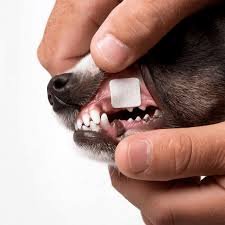
The company’s current commercial product is a fast-dissolving dental strip for dogs. Its broader platform, however, is being positioned for pharmaceutical applications where conventional tablets can create administration and compliance problems.
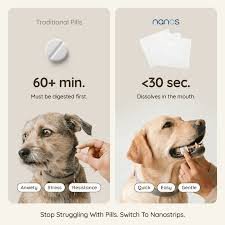
NanosVet says its strips dissolve in the mouth in under 30 seconds and are designed to deliver active molecules through the oral mucosa rather than relying entirely on conventional gastrointestinal absorption.
The company currently lists several additional applications in development, including calming support, anti-inflammatory therapy and skin-related applications. Its veterinary pharmacy platform also lists prescription products such as trazodone, gabapentin, carprofen and oclacitinib as forthcoming NanoMelt formulations.
Importantly, these pharmaceutical applications should be regarded as development-stage products rather than evidence that the platform has already demonstrated clinical equivalence or superiority to conventional formulations.
Why Oral Drug Delivery Matters in Veterinary Medicine
Medication administration is a persistent practical problem in companion-animal medicine. Dogs may resist tablets, spit medications out, or make administration difficult for owners. This can become particularly important for chronic conditions, behavioural disorders and treatments requiring repeated dosing.
NanosVet’s proposition is therefore not simply a different dosage form. It is an attempt to address the administration-compliance interface between veterinary medicine and the pet owner.
The company’s technology is designed around three proposed advantages:
-
rapid dissolution in the mouth;
-
direct absorption through oral mucosal tissue; and
-
avoidance of some gastrointestinal degradation and first-pass metabolism.
NanosVet currently advertises potentially faster absorption for its NanoMelt technology. These are company claims, however, and the clinical and pharmacokinetic performance of an oral film can vary substantially according to the active ingredient, dose, formulation and species.
That distinction will become increasingly important as the company moves from wellness products toward regulated veterinary pharmaceuticals.
Separation Anxiety Creates a Potential High-Value Use Case
One of the most commercially interesting applications is canine calming and anxiety management. NanosVet’s platform is being extended toward products intended for stressful situations, while GlobalPetIndex has reported the company’s broader ambition to address canine separation-anxiety medication delivery.
This is strategically relevant because behavioural-health treatments can require repeated administration, making ease of dosing particularly important.
A successful oral-film platform could potentially reduce the friction associated with administering conventional tablets while creating a differentiated formulation platform for veterinary pharmaceuticals.
However, the investment thesis ultimately depends on whether the company can demonstrate that the delivery system provides reproducible dosing, appropriate pharmacokinetics, safety and clinical efficacy for individual veterinary drug molecules.
The $8.3 Million Financing
The SEC filing provides unusually clear visibility into the financing.
Financing metric |
NanosVet |
|---|---|
Amount sold |
$8.30 million |
Total offering |
$8.624 million |
Remaining amount |
~$323,920 |
Investors reported |
17 |
SEC filing |
Form D |
Filing date |
September 18, 2026 |
Company |
NanosVet, Inc. |
Headquarters |
Los Angeles, California |
Founder & CEO |
Andrew Green |
The filing does not itself establish the valuation of NanosVet, the identity of all investors, or how the proceeds will be allocated across research, regulatory development, manufacturing and commercial expansion.
Strategic Implications for Animal Health
The NanosVet financing highlights a broader development in companion-animal healthcare: drug delivery itself is becoming a potential source of differentiation and investment value.
Traditional animal-health innovation has largely centred on discovering new molecules, vaccines, diagnostics and biologics.
The emerging opportunity is broader:
Active pharmaceutical ingredient → formulation → delivery technology → adherence → measurable clinical outcome
For companion animals, the delivery layer can have unusual importance because the animal cannot independently choose whether to take its medication.
This creates potential commercial value around technologies that make treatment easier for both veterinarians and pet owners.
What Investors and Animal-Health Companies Should Watch
The next stage for NanosVet will be less about demonstrating that an oral strip can dissolve and more about demonstrating that the platform can reliably deliver specific veterinary therapeutics.
Key milestones include:
-
Pharmacokinetic validation for individual drug molecules.
-
Dose consistency across different animal sizes and formulations.
-
Safety and tolerability of repeated oral-mucosal administration.
-
Regulatory pathway for prescription veterinary products.
-
Manufacturing scalability and stability of oral-film formulations.
-
Clinical evidence demonstrating meaningful benefits versus conventional dosage forms.
-
Veterinary adoption and owner compliance in real-world use.

