


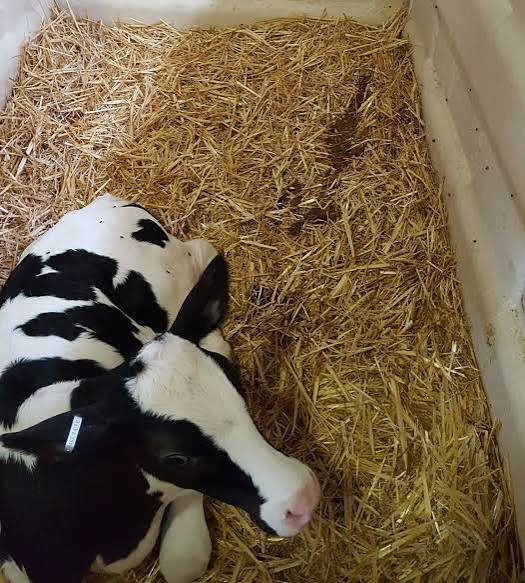
University of Florida–Kyung Hee University research identifies host-associated Bifidobacterium longum strains with gastrointestinal resilience, colonisation traits and strong in-vitro inhibition of Salmonella — potentially opening a route toward next-generation calf probiotics.
Latest Research Report
Researchers from the University of Florida and Kyung Hee University have characterized Bifidobacterium longum strains isolated from healthy pre-weaning dairy calves that demonstrated a combination of gastrointestinal stress tolerance, mucosal-adhesion characteristics and anti-Salmonella activity.
The work is particularly relevant because the researchers did not simply screen conventional human-derived probiotic strains. Instead, they looked for host-associated bacteria already adapted to the bovine gastrointestinal environment.
From samples collected from healthy calves, the team identified 12 B. longum strains for detailed genomic and functional characterization. Several strains demonstrated strong survival under simulated gastrointestinal conditions, while competition experiments showed substantial inhibition of Salmonella enterica serovars Typhimurium and Dublin in vitro.
Two strains — KCJ2K3532 and KCJ2K3574 — emerged as particularly interesting candidates because they combined gastrointestinal resilience, colonisation-related traits, Salmonella inhibition and a comparatively favourable genomic antimicrobial-resistance profile. However, the evidence remains preclinical/in-vitro; efficacy in live calves has yet to be established.
1. What the Researchers Found
The study began with healthy pre-weaning dairy calves aged approximately 3–28 days, a critical period in which gastrointestinal disease and calf diarrhoea can have substantial implications for mortality, growth and subsequent productivity.
The researchers collected rectal faecal samples from 47 healthy calves. From the resulting bacterial isolates, 16 candidates underwent whole-genome sequencing and were taxonomically characterized.
This ultimately identified:
| Research stage | Finding |
|---|---|
Healthy calves sampled |
47 |
Age range |
3–28 days |
Presumptive isolates recovered |
225 |
Bifidobacterium candidates sequenced |
16 |
Confirmed B. longum strains |
12 |
Other identified organisms |
3 B. pseudocatenulatum + 1 Ligilactobacillus salivarius |
B. longum genomes compared |
792 |
Human-derived genomes in comparison set |
759 |
The researchers found that the calf-derived B. longum isolates clustered within a livestock-associated genomic lineage, supporting the hypothesis that probiotic candidates isolated directly from the target host may possess characteristics better suited to that host environment.
2. Why Host-Specific Probiotics Matter
A major point from the study is that “probiotic” is not simply a species-level characteristic. A strain of Bifidobacterium longum that performs well in humans does not necessarily perform similarly in calves.
The bovine gastrointestinal tract differs substantially from the human gut in:
-
diet
-
gastrointestinal physiology
-
microbial ecology
-
intestinal transit
-
early-life microbial succession
-
pathogen exposure
-
environmental stresses.
The researchers therefore investigated whether B. longum naturally occurring in healthy calves might possess host-adapted genomic and functional characteristics.
Their comparative genomic analysis found that the calf isolates clustered separately from most human-derived B. longum genomes, supporting the concept of host-associated diversification.
3. The Gastrointestinal Survival Test
For an oral probiotic to work, it must first survive the journey through the gastrointestinal tract. The researchers therefore subjected the isolates to several simulated gastrointestinal stresses.
Acid tolerance – Under simulated gastric conditions containing pepsin at approximately pH 3, most isolates retained meaningful viability after two hours.
The strains also demonstrated survival under post-prandial acidic conditions, with eight isolates retaining more than 50% viability in the reported assay.
Bile tolerance – Exposure to approximately 0.2% bile salts did not eliminate the isolates, with viable counts remaining above approximately 10⁷ CFU/mL in the reported testing.
All strains also possessed the bile salt hydrolase (bsh) gene, consistent with a genetic capacity potentially supporting bile tolerance.
Lysozyme tolerance – The isolates also demonstrated substantial tolerance to lysozyme exposure.
Osmotic stress – Higher sodium chloride concentrations were more challenging, particularly at approximately 2–3% NaCl. Three strains were consistently strong performers across the gastrointestinal tolerance assays:
-
KCJ2K3504
-
KCJ2K3532
-
KCJ2K3574
4. Colonisation May Be as Important as Survival
Simply surviving gastrointestinal transit does not necessarily mean a probiotic will establish itself sufficiently to exert a biological effect. The researchers therefore assessed several characteristics associated with intestinal interaction. These included:
-
cell-surface hydrophobicity
-
mucin adhesion
-
biofilm formation
-
auto-aggregation.
Eight isolates demonstrated more than 50% cell-surface hydrophobicity, while two exceeded 95% in the reported assay.
Mucin adhesion was detected in almost all strains, and all of the isolates demonstrated biofilm formation under the experimental conditions. One isolate, KCJ2K3577, showed approximately 94% auto-aggregation after five hours.
These are not proof of successful colonisation in a calf. Rather, they are screening characteristics that help identify strains worthy of animal testing.
5. The Anti-Salmonella Finding
This is the most commercially relevant part of the research. The researchers tested the isolates against two important Salmonella serovars:
Salmonella Typhimurium – A broad-host-range Salmonella serovar relevant to livestock and food safety.
Salmonella Dublin – A cattle-adapted pathogen of particular importance to the dairy sector.
The cell-free supernatants from all 12 B. longum isolates produced inhibition zones against both serovars. Importantly, neutralising the supernatants substantially reduced the inhibitory activity.
That suggests the anti-Salmonella effect was principally associated with acidification/organic-acid production, rather than a conventional bacteriocin mechanism. The researchers also did not identify known bacteriocin biosynthetic gene clusters in their genomic screening.
Co-culture results were stronger
In direct competition experiments:
-
3 strains completely suppressed S. Typhimurium growth over 48 hours.
-
7 strains completely inhibited S. Dublin under the experimental conditions.
This is significant because S. Dublin is particularly relevant to cattle production, while S. Typhimurium has broader host range.
6. Two Strains Stand Out
The researchers identified KCJ2K3532 and KCJ2K3574 as particularly promising candidates for subsequent in-vivo work. They combine several desirable characteristics:
Attribute |
KCJ2K3532 / KCJ2K3574 |
|---|---|
Calf-derived |
✓ |
B. longum |
✓ |
Gastrointestinal tolerance |
Strong |
Bile tolerance |
Strong |
Colonisation-related characteristics |
Present |
Salmonella antagonism |
Strong |
S. Typhimurium activity |
Demonstrated |
S. Dublin activity |
Demonstrated |
Genomic safety screening |
Favourable |
In-vivo calf efficacy |
Not yet demonstrated |

