



CAMBRIDGE, UK — Cambridge-based biotech and AI startup HERlab has officially closed an investment round backed by Animal Health Angels, an investor network dedicated to early-stage animal health and veterinary innovation. The fresh capital will accelerate HERlab’s platform, which leverages artificial intelligence and engineering biology to dramatically reduce the cost of producing monoclonal antibodies (mAbs) for animal health applications.
Addressing the Cost Bottleneck in Veterinary Biologics
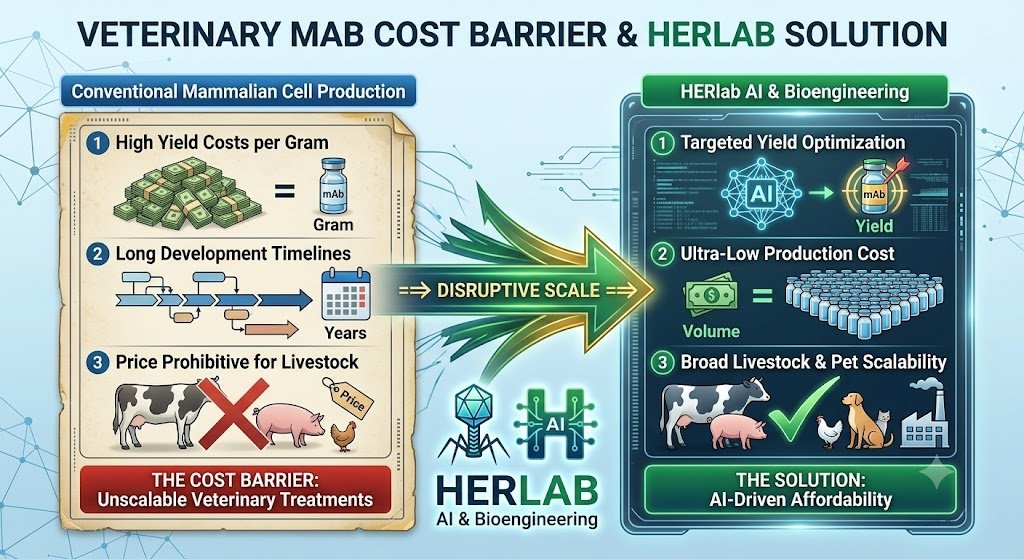
Monoclonal antibodies represent one of the fastest-growing therapeutic categories in companion animal health, providing targeted treatment for chronic inflammation, pain, atopic dermatitis, and oncology with minimal off-target toxicity. However, widespread deployment—particularly across large-animal production and broader companion animal segments—has been limited by prohibitive manufacturing expenses inherent to traditional mammalian cell culture platforms.
HERlab addresses this bottleneck by combining predictive AI models with host-strain engineering biology to optimize expression systems, yield efficiency, and upstream processing. By lowering manufacturing cost-per-gram parameters, the company aims to make biologic therapies accessible beyond premium companion animal care.
“Monoclonal antibody therapeutics have transformed veterinary medicine, but high production costs restrict their reach. HERlab’s platform addresses the cost structure directly, unlocking high-potency targeted biologics for broader veterinary markets.”
— Spokesperson, Animal Health Angels
Key Operational Milestones
-
AI-Driven Host Selection: Applying machine-learning algorithms to predict optimal cellular machinery configurations for high-density protein expression.
-
Upstream Process Efficiency: Reducing fermentation footprints and raw material inputs required for commercial-scale veterinary mAb batches.
-
Pipeline Expansion: Enabling cost-effective development of species-specific (caninized, felinized, and equine) biologics across pain, dermatology, and infectious disease categories.

