


US | Pet Food | Quality & Safety | Consumer Health
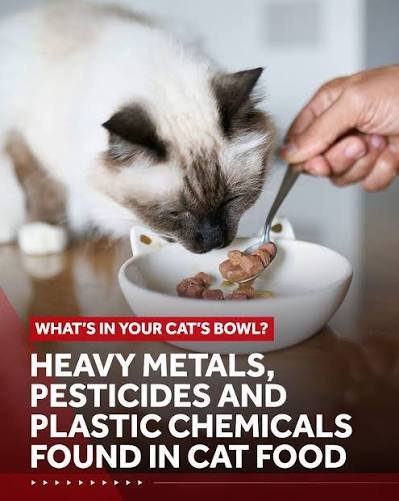
A new Clean Label Project investigation has triggered renewed debate over contaminant testing and safety standards in commercial cat food.
The study tested 100 cat-food products from 62 brands and reported detection of lead in 99% of products, cadmium in 96% and arsenic in 94%.
Study Findings
- Clean Label Project tested 100 top-selling cat food products across 62 brands for over 122 environmental contaminants
- Lead was found in 99% of samples, cadmium in 96%, and arsenic in 94%
- Plastic chemicals (DEHP) and the herbicide glyphosate were also detected in a significant portion of products
- Dry kibble contained roughly three times more lead per calorie than wet or air-dried foods
-
Fish- and seafood-based formulas carried much higher mercury and cadmium levels compared to poultry- or meat-based options
However, the Pet Food Institute has challenged the interpretation of the findings, stressing that detection of a substance does not automatically establish a health risk and that concentration, exposure, bioavailability and applicable safety standards must all be considered.
Modern analytical techniques can detect extremely small concentrations of environmental contaminants. A credible safety assessment therefore needs to consider not simply whether a contaminant is present, but whether the amount consumed represents a meaningful biological risk.
Nevertheless, the report could have commercial consequences. Consumers increasingly expect premium pet foods to provide transparency around ingredient sourcing, contaminants and quality-control systems.
Pet-food manufacturers may therefore face growing pressure to strengthen:
-
raw-material testing;
-
supplier qualification;
-
contaminant monitoring;
-
batch traceability;
-
laboratory verification.

