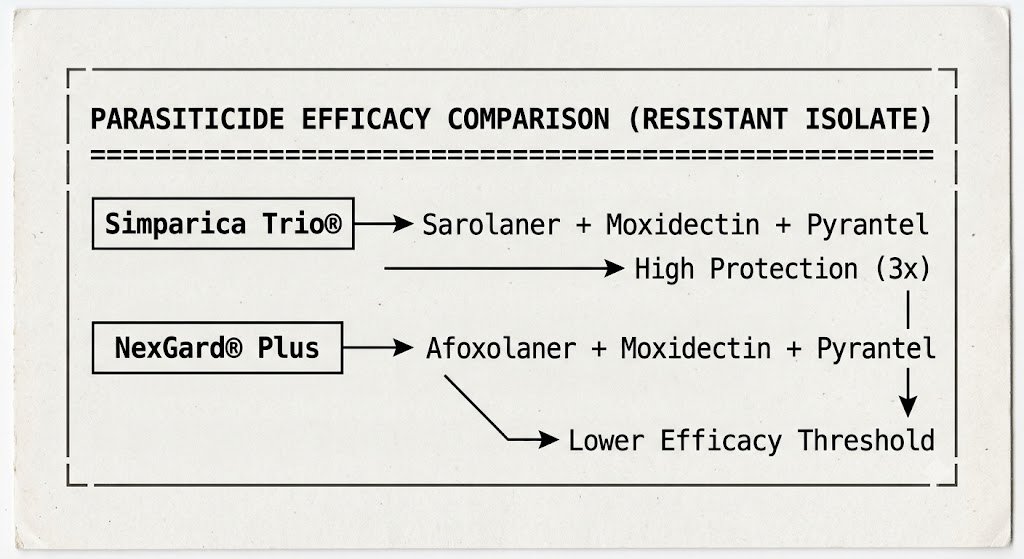
PARSIPPANY, N.J. — October 9, 2026 — Zoetis announced the publication of a landmark peer-reviewed laboratory study evaluating macrocyclic lactone (ML) resistance patterns in canine heartworm (Dirofilaria immitis). Published in a leading veterinary parasitology journal, the trial data demonstrates that Simparica Trio® (sarolaner, moxidectin, and pyrantel) achieved a 3-fold higher protection rate against a documented resistant heartworm isolate compared to NexGard® Plus (afoxolaner, moxidectin, and pyrantel).
Addressing Macrocyclic Lactone Resistance in Endemic Regions
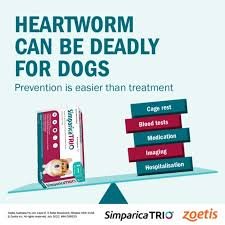
Heartworm disease remains a severe, potentially fatal mosquito-borne threat across North America, with microfilarial resistance to traditional macrocyclic lactones increasingly reported throughout the Mississippi Delta and Southeastern United States. The comparative study evaluated preventive efficacy against a known multi-drug resistant field isolate under controlled clinical trial protocols.
Clinical & Pharmacokinetic Findings
While both monthly chewable formulations utilize moxidectin as their active heartworm preventive component, variations in formulation chemistry, systemic bioavailability, and pharmacokinetics contributed to the significant divergence in protective efficacy:
-
Efficacy Metrics: Simparica Trio® demonstrated 3x higher preventive efficacy against the resistant isolate than NexGard® Plus.
-
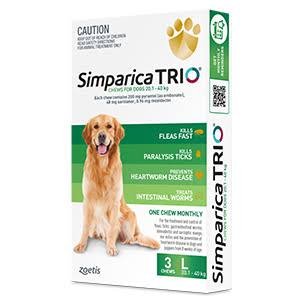
Broad-Spectrum Coverage: In addition to heartworm prevention, the triple-combination monthly chewable maintains continuous protection against fleas, ticks, and intestinal roundworms and hookworms.
-
Veterinary Guidance: Researchers emphasized that selecting heartworm preventives with proven efficacy against emerging resistant strains is vital for small animal practitioners operating in high-density mosquito corridors.