HomeCompanion AnimalsCalifornia Reports 17th Seasonal Equine West Nile Virus Death in Kings County

California Reports 17th Seasonal Equine West Nile Virus Death in Kings County

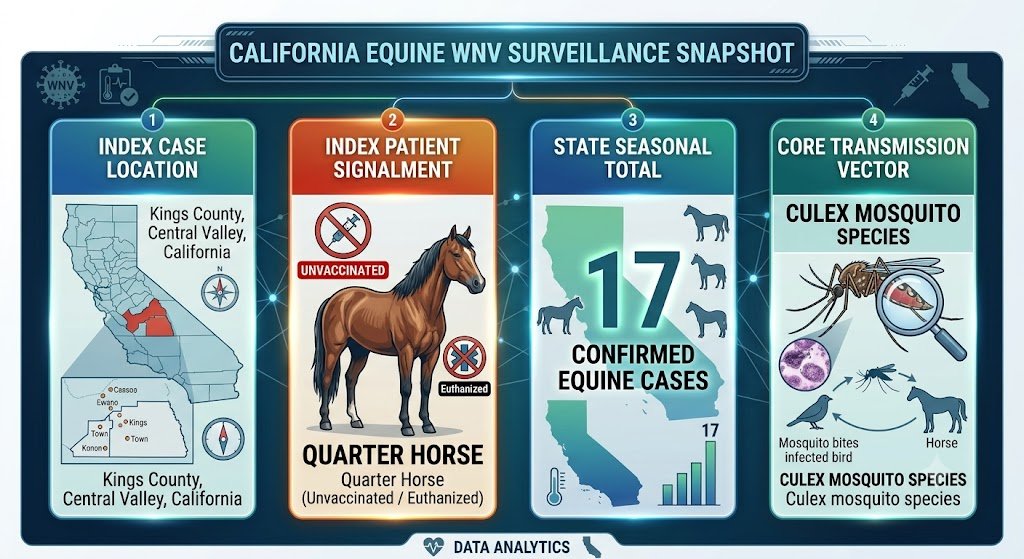
SACRAMENTO, CA — Equine disease surveillance monitors have confirmed an additional equine fatality attributed to West Nile Virus (WNV) in Kings County, California. The affected patient—an unvaccinated Quarter Horse—exhibited severe neurological deterioration and was humanely euthanized following clinical confirmation.

This latest casualty brings California’s total reported seasonal equine WNV count to 17 confirmed cases, highlighting ongoing vector-borne risks across Central Valley agricultural regions.

California Reports 17th Seasonal Equine West Nile Virus Death

Key Details

  • 17th Equine Case: Confirmed on October 14, 2026, in a 10-month-old Paint filly in Sacramento County

  • Earlier Kings County Event: Kings County recorded California’s first human West Nile virus death of the 2026 season in early August (with 3 total human cases reported in the county at that time), and an earlier equine case was reported in Kings County in July 2026

  • Prevention: Public health officials advise owners to use core equine WNV vaccinations and protect horses and humans from mosquito bites by eliminating standing water and avoiding outdoor activity during peak mosquito hours (dusk and dawn)

Animal Health India Editorial Team
Animal Health India Editorial Teamhttps://animalhealthindia.com
Animal Health India (AHI) is an independent news and intelligence platform covering the global animal health, veterinary, livestock, poultry, companion animal and pet food sectors. Our editorial team comprises veterinary journalists, animal health professionals, regulatory affairs specialists and industry analysts with over 30 years of combined experience covering India, Asia, Europe and North America. AHI publishes news, regulatory updates, market intelligence and company news drawn from primary sources including DAHD, EMA, USDA, AVMA and leading veterinary publications worldwide.

RELATED ARTICLES