

HomePoultrySpain Confirms Newcastle Disease at Broiler Farm Housing Approximately 29,000 Birds

Spain Confirms Newcastle Disease at Broiler Farm Housing Approximately 29,000 Birds

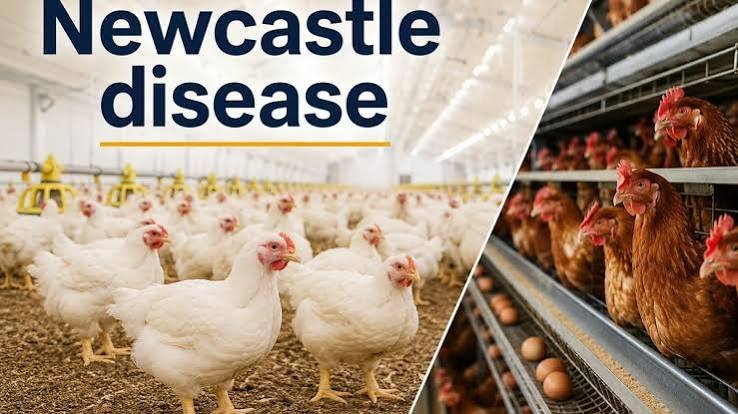
CASAS DE JUAN NÚÑEZ, ALBACETE, SPAIN — Spanish veterinary authorities have confirmed an outbreak of Newcastle disease at a commercial broiler farm in Casas de Juan Núñez, in Albacete province, Castilla-La Mancha. The regional government announced the confirmation on 16 October 2026, reporting a flock of approximately 30,000 broiler chickens aged six weeks. This is close to, but slightly above, the approximately 29,000 birds cited in the initial headline.

The outbreak is significant for poultry producers because Newcastle disease is a highly contagious viral infection that can cause substantial mortality and production losses, depending on the virus strain, bird susceptibility and immune status. Authorities have imposed movement restrictions, established a temporary restricted zone and initiated sanitary depopulation of the affected premises.

The regional government said the affected birds had not been vaccinated against Newcastle disease. They entered the farm on 31 August 2026, before mandatory vaccination began on 1 October, according to the official announcement. This timing is an important part of the incident’s context and should not be interpreted as evidence that vaccination alone would prevent every outbreak.
Outbreak facts at a glance

Parameter
Officially reported information
Country
Spain
Autonomous community
Castilla-La Mancha
Province
Albacete
Municipality
Casas de Juan Núñez
Confirmation announcement
16 October 2026
Farm type
Commercial broiler operation
Flock size
Approximately 30,000 birds
Bird age
Six weeks
Vaccination status
Not vaccinated against Newcastle disease
Laboratory confirmation
Central Veterinary Laboratory, Algete
Immediate response
Farm immobilisation, movement restrictions and sanitary depopulation
Restricted zone
3 km protection zone and 10 km surveillance zone
Source: Castilla-La Mancha regional government. The official flock estimate is approximately 30,000 birds; the 29,000 figure in the supplied headline is not the exact figure in the government release.

Laboratory confirmation and emergency response

The regional veterinary services collected samples from the affected flock and sent them to Spain’s Central Veterinary Laboratory in Algete, the national reference laboratory for Newcastle disease. The laboratory confirmed the presence of the virus, triggering the control measures described by the regional government.

The response has four principal components:

  1. Farm immobilisation: movements of animals and products into and out of the affected holding were restricted from the suspicion stage.

  2. Sanitary depopulation: authorities began emptying the farm under official veterinary supervision, citing the high transmission risk and elevated mortality.

  3. Protection and surveillance zones: a 3 km protection zone and a 10 km surveillance zone were established temporarily. Poultry holdings within the restricted area were also subject to movement restrictions.

  4. Official investigation: the case falls under Spain’s statutory animal-disease reporting and control framework. Epidemiological investigation and the prescribed biosecurity and cleaning measures are essential to preventing onward spread.

These measures are intended to limit transmission between poultry holdings. The available announcement does not establish the source of infection, identify a specific introduction pathway or confirm whether additional linked farms have been infected.

Why Newcastle disease is a serious commercial risk

Newcastle disease is caused by avian orthoavulavirus 1, commonly referred to as Newcastle disease virus or avian paramyxovirus type 1. It can affect a wide range of bird species, and clinical severity varies considerably between viral strains. Highly virulent forms can produce severe disease and high mortality in susceptible flocks.

For a broiler producer, an outbreak can disrupt the production cycle even when the affected farm represents only a small part of the wider poultry sector. The principal commercial exposure comes from the combination of flock losses, mandatory disease-control measures, restrictions on movements and possible disruption to the placement and processing of birds.

Spain’s wider Newcastle disease situation

The Albacete incident comes amid a broader period of Newcastle disease activity in Spain. The national Ministry of Agriculture, Fisheries and Food (MAPA) maintains an official outbreak archive and epidemiological updates, including a national update dated 16 October 2026. Earlier outbreaks during the current episode included commercial poultry farms in Valencia and Castilla y León.

A European Commission presentation from April 2026 documented multiple outbreaks in Valencia province beginning in December 2025. The listed events included broiler and layer farms, with flock censuses ranging from 15,000 to 75,822 birds among the examples shown. Those figures provide historical context, not a count of the current national outbreak total.

The new case in Castilla-La Mancha is noteworthy because it is outside the previously prominent Valencia outbreak area. It makes ongoing national surveillance and farm-level disease prevention particularly important. However, the available announcement does not establish a direct epidemiological link between the Albacete farm and earlier outbreaks.

Vaccination and biosecurity: key lessons for poultry producers

The regional government states that vaccination against Newcastle disease became mandatory on 1 October 2026 for poultry production and breeding establishments, excluding holdings intended for personal consumption. The affected flock had entered the farm on 31 August, before the requirement took effect.

The case illustrates the importance of coordinating vaccination programmes with flock placement, veterinary oversight and biosecurity. Vaccination is an important prevention tool, but it does not replace surveillance, hygiene, movement controls or prompt reporting of suspected disease.

The European Commission classifies Newcastle disease as a Category A disease under EU animal-health legislation, requiring immediate eradication measures following detection. Infection can spread through direct contact with infected birds and their secretions or excretions, as well as indirectly through contaminated feed, water, equipment, vehicles, people and other materials.

Industry outlook

The immediate impact is concentrated on the affected farm and poultry holdings within the restricted zone. The wider consequences will depend on the results of epidemiological investigations, whether further infections are detected, the duration of restrictions and the effectiveness of containment measures.

For poultry integrators, hatcheries, feed suppliers and processors, the incident reinforces the importance of disease-contingency planning. For veterinary vaccine and biologics suppliers, it highlights the continuing importance of vaccination compliance, surveillance and producer education. The outbreak itself does not establish any change in market demand or indicate that a particular vaccine or supplier is responsible.

Animal Health India Editorial Team
Animal Health India Editorial Teamhttps://animalhealthindia.com
Animal Health India (AHI) is an independent news and intelligence platform covering the global animal health, veterinary, livestock, poultry, companion animal and pet food sectors. Our editorial team comprises veterinary journalists, animal health professionals, regulatory affairs specialists and industry analysts with over 30 years of combined experience covering India, Asia, Europe and North America. AHI publishes news, regulatory updates, market intelligence and company news drawn from primary sources including DAHD, EMA, USDA, AVMA and leading veterinary publications worldwide.
RELATED ARTICLES