


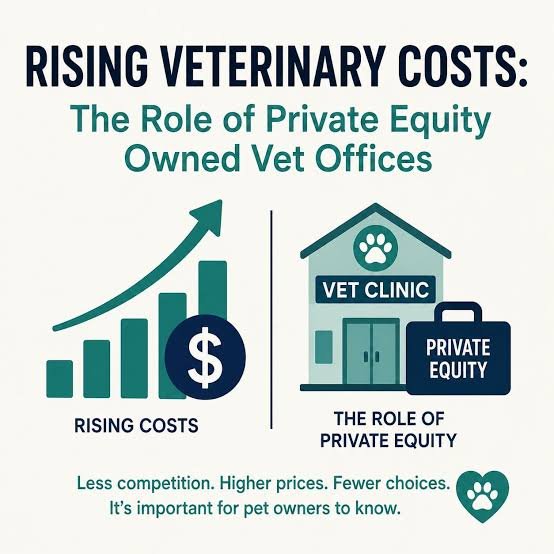
Rising veterinary costs put ownership models under the spotlight – Private equity firms and large corporate groups own an estimated 30% to 50% of U.S. veterinary practices and up to 75% of specialty and emergency care centers, a sharp increase from roughly 10% a decade ago
31 October 2026 | Companion animal health | United States and United Kingdom
The consolidation of veterinary practices by corporate groups and private equity-backed platforms is facing renewed scrutiny as pet owners confront increasingly expensive consultations, diagnostics, emergency procedures and specialist treatments. The debate is becoming particularly prominent in advanced veterinary oncology, where multimodal treatment, advanced imaging, specialist staffing and repeated monitoring can produce substantial bills.
A recent report described the financial pressure experienced by pet owners seeking advanced veterinary care. One case cited a bill of US$9,500 before additional testing costing thousands of dollars. The report highlighted the growing sophistication of veterinary medicine alongside the expanding role of corporate ownership. Such individual cases illustrate the financial exposure facing owners, but should not be treated as representative average oncology costs. Source: The Philadelphia Inquirer, 31 October 2026.

Consolidation has materially changed veterinary practice ownership
The commercial appeal of veterinary services is rooted in a fragmented market, recurring healthcare needs, specialist referral networks and the historically high proportion of costs paid directly by pet owners.
An analysis published by Octus in January 2026 estimated that private equity invested approximately US$45 billion in US veterinary-sector deals between 2017 and 2022. It also noted that corporate ownership was considerably more prevalent in specialty and emergency practices than in general veterinary clinics. These are estimates, and ownership shares vary by source, geography and clinic definition. Source: Octus.
The investment model typically involves acquiring independent practices, integrating administrative functions, expanding referral networks, improving purchasing leverage and building a larger platform that can potentially command a higher valuation. However, the benefits of scale do not automatically translate into lower bills for clients.
UK competition findings provide measurable evidence
The UK’s Competition and Markets Authority (CMA) has published evidence suggesting that consolidation can affect prices and customer choice.
Its investigation found that, between January 2023 and July 2024, average prices at five large veterinary groups—Medivet, IVC, CVS, VetPartners and Linnaeus—were 18.3% higher than at independent practices for the consultations, treatments and medicines included in the analysis. The CMA also estimated that acquisitions by some groups were associated with average price increases of approximately 9% four years after acquisition, relative to the previous pricing trend at acquired independent practices. These findings apply to the UK’s analysed practices and should not be extrapolated automatically to every corporate-owned clinic or to the US market.
The regulator has also pointed to concerns about transparency, customer choice and whether savings from purchasing power are passed on to pet owners. Its report does not establish that all corporate veterinary groups deliver inferior clinical care or that consolidation alone explains the rise in veterinary prices. Source: UK CMA.
Why oncology has become a focal point
Veterinary oncology may involve surgery, histopathology, advanced imaging, chemotherapy, radiation therapy and repeated monitoring. Costs vary significantly according to cancer type, stage, treatment goals, geography and available specialist services.
The issue is therefore broader than the ownership of a clinic. Advanced veterinary medicine has become more capable, but the cost of technology, skilled labour, referral services and prolonged treatment can create difficult financial decisions for owners.
Corporate ownership adds another question: whether commercial targets, referral pathways and pricing policies affect the range and cost of treatment options presented to clients. This question requires transparent evidence on pricing, clinical outcomes, informed consent and treatment alternatives—not assumptions based solely on ownership.
Implications for animal-health investors and veterinary groups
For investors, the next phase of consolidation may be shaped as much by consumer affordability and regulatory oversight as by acquisition opportunities. Key issues to monitor include:
-
Comparable pricing for common procedures across independent and corporate-owned practices.
-
Disclosure of ownership, referral relationships and treatment costs.
-
Availability of staged treatment options and written estimates.
-
The relationship between clinic-level profitability, staffing and clinical outcomes.
-
Consumer access to second opinions, independent pharmacies and alternative providers.
-
Financing costs and debt exposure at veterinary service organisations.
Industry outlook
Veterinary consolidation is unlikely to disappear: scale can support specialist infrastructure, investment in equipment, recruitment and consistent operating systems. But the sector faces pressure to demonstrate that these advantages benefit patients and clients.
For animal-health companies, the debate also affects the channels through which medicines, diagnostics, nutrition and specialist therapies reach the market. Corporate purchasing can influence supplier negotiations, product selection and the adoption of new diagnostic technologies.
Conclusion
The central issue is not simply whether private equity owns veterinary clinics. It is whether consolidation improves access, quality and efficiency while maintaining transparent, affordable choices for pet owners. Regulators, investors and veterinary groups will increasingly be judged on the evidence they provide on all three.

