


Bhopal, India | November 18, 2026
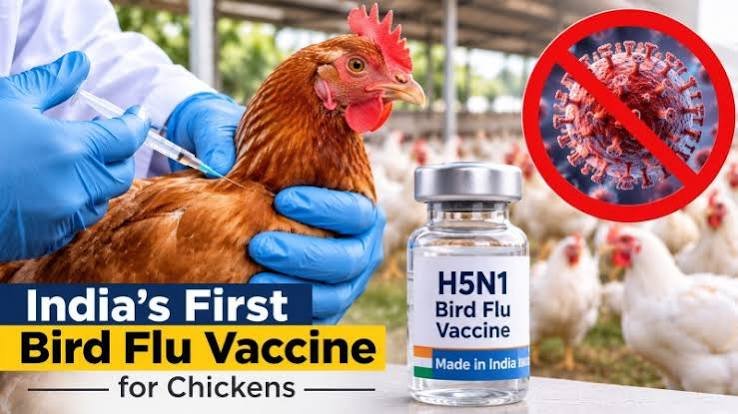
India is preparing to dedicate its first indigenously developed inactivated H5N1 vaccine for chickens, marking a significant development in the country’s efforts to strengthen domestic poultry disease prevention and reduce dependence on imported veterinary vaccine technologies.
The vaccine has been developed by scientists at the ICAR–National Institute of High Security Animal Diseases (NIHSAD) in Bhopal and targets the highly pathogenic avian influenza (HPAI) virus belonging to H5N1 clade 2.3.2.1a.
A significant step towards India’s indigenous poultry vaccine development
Highly pathogenic avian influenza remains one of the most economically damaging infectious diseases affecting the global poultry industry. HPAI outbreaks can cause extremely high mortality in infected flocks, necessitate mass culling and trigger movement restrictions, trade disruption and substantial compensation and disposal costs.
India’s disease-control strategy has historically relied heavily on surveillance, containment, biosecurity and stamping-out operations. The development of a vaccine specifically targeting the circulating H5N1 clade represents an additional technological capability for the country’s veterinary disease-control infrastructure.
The significance lies not simply in producing another poultry vaccine, but in developing a domestic platform against a high-consequence transboundary animal disease.
Understanding the H5N1 clade targeted by the vaccine
The vaccine is designed against H5N1 clade 2.3.2.1a. Clade identification is important because avian influenza viruses continually evolve, and vaccine effectiveness depends on the antigenic relationship between the vaccine strain and circulating field viruses.
A vaccine developed against a particular H5N1 lineage cannot automatically be assumed to provide equivalent protection against every H5N1 clade. The development of a strain-relevant vaccine therefore represents an important step towards improving the ability of Indian veterinary authorities to respond to changing HPAI epidemiology.
Why the timing is important for India’s poultry sector
The announcement comes during a period of renewed HPAI activity in India. Recent outbreaks and containment operations in Kerala, including Alappuzha district, have highlighted the continuing vulnerability of poultry populations. Outbreak management can involve:
-
Culling infected and exposed birds.
-
Establishing surveillance and restricted zones.
-
Restricting movement of poultry and related products.
-
Safe disposal of infected carcasses.
-
Disinfection of farms and equipment.
-
Intensified surveillance of neighbouring holdings.
These operations can impose substantial financial costs on farmers, integrators, hatcheries and poultry traders. The availability of a suitable vaccine could potentially add another layer of protection to India’s poultry disease-management strategy. However, vaccination should not be viewed as a substitute for biosecurity, surveillance, rapid reporting or outbreak containment.
What an inactivated H5N1 vaccine means
An inactivated vaccine contains virus that has been rendered non-infectious while retaining antigenic components capable of stimulating an immune response.
Following administration, the chicken’s immune system recognises viral antigens and develops an immune response, including antibodies directed against the target virus. Potential advantages of inactivated poultry vaccines include:
-
No replication of the vaccine virus
-
Established manufacturing approaches
-
Potential for targeted vaccination programmes
-
Compatibility with structured veterinary surveillance
-
Opportunities for domestic production and supply-chain development
The actual protective efficacy, duration of immunity, dosing schedule and field performance of the ICAR-NIHSAD vaccine need to be evaluated against its approved technical documentation.
Potential economic implications: Reducing dependence on stamping-out alone
India is one of the world’s major poultry-producing countries, with extensive commercial broiler, layer, breeder and backyard poultry networks. For a sector of this scale, recurrent HPAI outbreaks can affect:
-
Commercial poultry production.
-
Hatchery operations.
-
Breeder flock availability.
-
Egg supply.
-
Poultry meat prices.
-
Inter-state trade.
-
Farmer confidence and investment.
A domestically developed vaccine could eventually provide Indian authorities with greater flexibility in designing targeted vaccination strategies. It may also create opportunities for domestic vaccine manufacturing, technology transfer, quality control, cold-chain infrastructure and veterinary distribution.
An important regulatory qualification: The November 18 announcement confirms the vaccine’s development and scheduled dedication. It does not, by itself, establish unrestricted commercial availability, final marketing authorisation, or approval for routine nationwide vaccination. Those details need to be confirmed separately.
What the Indian poultry industry should watch next
The November 20 event should be followed by scrutiny of several important technical and regulatory milestones:
| Area | Information to monitor |
|---|---|
| Vaccine composition | Seed strain and antigenic characteristics |
| Efficacy | Protection against homologous and field strains |
| Safety | Adverse reactions and safety studies |
| Dosage | Age, route and number of doses |
| Duration | Persistence of protective immunity |
| DIVA strategy | Differentiation of infected from vaccinated animals |
| Manufacturing | Production capacity and commercial manufacturer |
| Regulatory status | Approvals and conditions of use |
| Deployment | Target populations and vaccination policy |
The DIVA component deserves particular attention. Differentiating infected from vaccinated animals is important in disease-control programmes because vaccination must not compromise the ability to detect field infection.
For Indian animal health businesses, the development also highlights the commercial and strategic importance of developing vaccines against diseases with significant domestic economic impact rather than relying exclusively on imported technologies.
India’s first indigenous H5N1 clade 2.3.2.1a chicken vaccine represents an important scientific and strategic milestone. Its ultimate impact, however, will depend on demonstrated field efficacy, regulatory approval, scalable manufacturing and integration into a comprehensive national HPAI-control programme.

