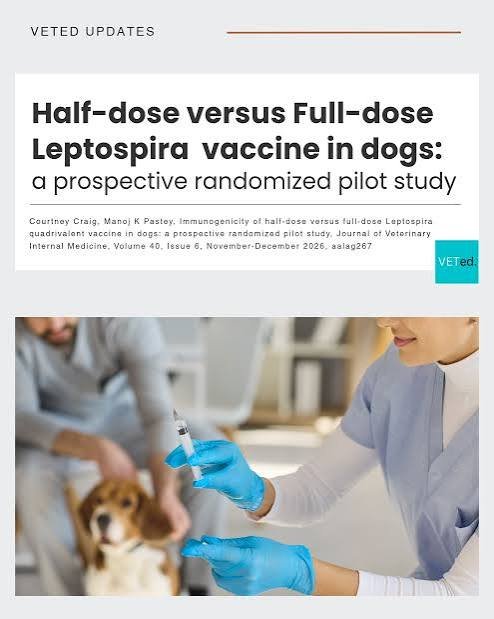
A small randomised study found that half-dose administration of a quadrivalent canine leptospirosis vaccine produced less consistent antibody responses than the labelled dose.
A small randomised pilot study has raised questions about the practice of reducing canine leptospirosis vaccine doses to save costs or simplify administration.
The study examined antibody responses in ten dogs receiving either a full or half dose of a quadrivalent inactivated leptospirosis vaccine.
The vaccine investigated was Nobivac Lepto4. Researchers measured antibody responses using the microscopic agglutination test (MAT), a laboratory method commonly used in leptospirosis serology. According to the report, three of the five dogs receiving half doses developed antibody titres below 1:800 against at least one vaccine serovar. Every dog in the full-dose group reached or exceeded that titre against all four serovars.
What the study tells us
The findings suggest that reducing the administered vaccine volume may produce less predictable antibody responses.
This is relevant because leptospirosis vaccines are designed to stimulate immunity against specified Leptospira serovars. An inadequate response to one or more components could potentially compromise the intended breadth of protection.
However, the study involved only ten clinically healthy, client-owned dogs aged one to four years. None had previously been vaccinated against leptospirosis, and all were seronegative at baseline. The small sample size means that the findings should be regarded as preliminary.
Furthermore, antibody titres are not identical to demonstrated clinical protection. The study does not establish how many dogs would develop clinical leptospirosis following natural exposure, nor does it provide a basis for estimating vaccine effectiveness in the wider canine population.
Why leptospirosis vaccination matters
Leptospirosis is a zoonotic bacterial disease caused by pathogenic Leptospira species. Dogs can become infected through contact with urine-contaminated water, wet soil and environments contaminated by infected animals, particularly rodents.
Clinical disease can involve acute kidney injury, liver dysfunction, haemorrhage and systemic illness. Some infected dogs may also shed organisms in urine, creating potential exposure risks for other animals and people.
Risk varies by geography, environmental conditions, lifestyle and circulating serovars. Vaccination is an important preventive measure, but vaccine selection should account for available products, local disease patterns and veterinary guidance.
Implications for veterinary practices
The study reinforces the importance of following product labelling and established vaccination protocols.
Reducing vaccine doses without adequate supporting evidence may introduce uncertainty into the immune response. Cost pressures should not become a reason to alter labelled administration volumes. Larger studies will be needed to evaluate antibody persistence, clinical protection and the relevance of MAT titres to real-world disease prevention.