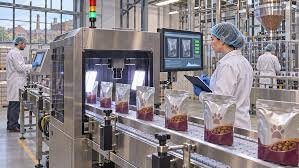
The investment will upgrade Mars’ Ernolsheim-Bruche facility through 2030, strengthening production efficiency and supporting packaging changes across major dog and cat food brands.
Mars has announced a €60 million investment programme to modernise its wet pet-food manufacturing facility in Ernolsheim-Bruche, in France’s Bas-Rhin department. The investment will run through 2030 and is intended to improve production flows, energy efficiency and packaging performance.
The plant manufactures wet food for dogs and cats under brands including Pedigree, Whiskas, Sheba and Cesar. Opened in 1981, the facility operates six production lines within a 21,000-square-metre production building and manufactures approximately 77,000 tonnes of wet pet food annually. Around 65% of its production is exported to other European Union markets.
Investment allocation
Mars has divided the €60 million programme into three principal areas:
-
€40 million for modernising raw-material reception and preparation
-
€18.5 million for production equipment
-
€1.5 million for packaging changes
The investment is designed to improve ingredient handling, reduce production bottlenecks and increase energy efficiency. The packaging component includes a transition towards recyclable mono-material pouch formats.
Mono-material packaging uses a single principal polymer family, making recycling potentially easier than multi-material structures that combine different plastics and barrier layers.
However, recyclability depends on the final packaging design, collection infrastructure and local recycling systems.
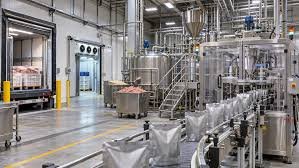
Manufacturing efficiency becomes a competitive priority
Wet pet-food manufacturing requires complex processing, including raw-material preparation, mixing, thermal treatment, filling, sealing and quality control. Modernising ingredient flows and production equipment can help manufacturers improve throughput, reduce waste and maintain product consistency.
Packaging is another major area of investment. Pet-food companies face growing pressure to reduce packaging complexity while maintaining shelf life, product safety and resistance to leakage.
The Mars programme illustrates how large manufacturers are integrating production modernisation with sustainability objectives.
Implications for the pet-food industry
The investment is relevant to manufacturers competing in the growing wet-food segment. Wet pet food has distinct manufacturing requirements compared with dry kibble, including higher moisture content, specialised packaging and thermal processing.
Automation and packaging innovation can improve operating efficiency, but capital expenditure must be supported by sufficient production volumes and consumer demand. The project also demonstrates the importance of local manufacturing infrastructure in European pet-food supply chains.