HomeCorporateUS: Deadly New World Screwworm's Northward Spread Raises Questions for Animal Health...

US: Deadly New World Screwworm’s Northward Spread Raises Questions for Animal Health Experts

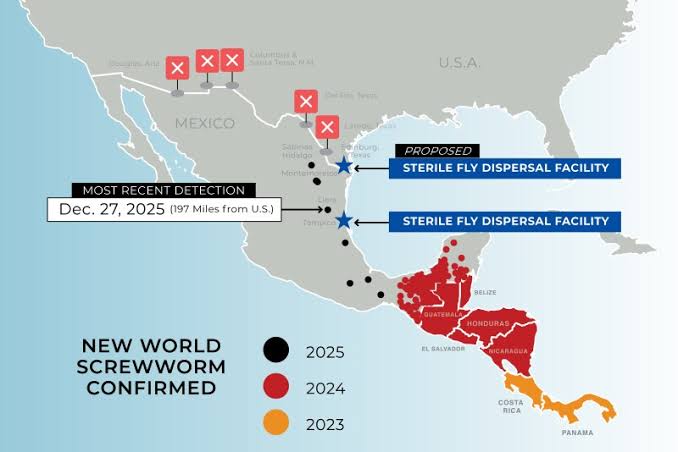
The continued northward advance of the New World screwworm (Cochliomyia hominivorax) toward the United States has intensified concern among veterinary authorities and livestock producers, with scientists now working to better understand the factors behind the parasite’s unexpected geographical expansion.

The flesh-eating fly, long regarded as one of the most destructive livestock parasites in the Western Hemisphere, has moved steadily through parts of Central America despite decades of successful regional eradication efforts. Its renewed spread has prompted increased surveillance, emergency preparedness measures and renewed international cooperation to prevent its re-establishment in North America.

An Unusual Resurgence

For more than half a century, the United States remained free of the New World screwworm following one of the world’s most successful pest eradication programmes based on the Sterile Insect Technique (SIT). Under that programme, millions of sterile male flies were released to interrupt reproduction, ultimately eliminating the parasite from the United States, Mexico and much of Central America.

The recent detection of screwworm populations moving north has surprised many researchers, particularly given the extensive surveillance systems and long-standing biological control programmes that have remained in place.

Scientists are now investigating whether changing ecological conditions, livestock movement, wildlife migration, climatic influences or operational gaps in regional control programmes may have contributed to the parasite’s renewed expansion.

Serious Threat to Livestock

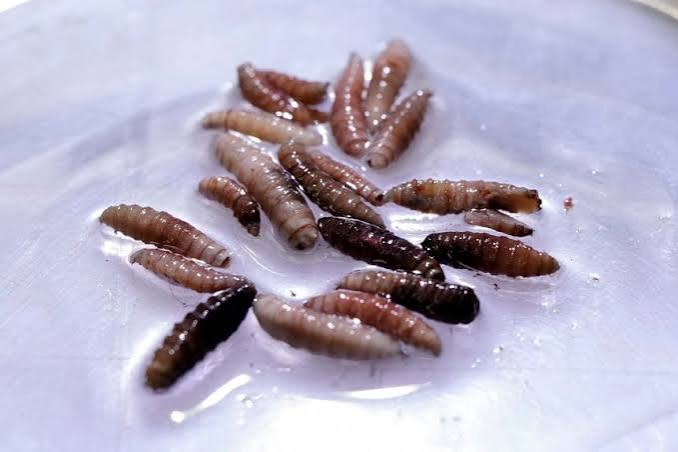
Unlike most fly larvae that feed on dead tissue, New World screwworm larvae invade healthy living tissue, causing severe wounds that continue to enlarge as the larvae develop.

Infestations can affect cattle, sheep, goats, horses, pigs, wildlife, companion animals and, on rare occasions, humans. Untreated cases may result in secondary bacterial infections, severe production losses and death.

The parasite represents a major economic threat to livestock industries because affected animals require immediate veterinary treatment, while outbreaks can disrupt animal movement and international trade.

Veterinary Authorities Intensify Surveillance

The United States Department of Agriculture (USDA) and state animal health officials have expanded surveillance activities as part of efforts to detect any introduction of the parasite at the earliest possible stage.

Veterinarians have been encouraged to report suspicious wound infestations immediately, particularly in animals exhibiting non-healing lesions containing maggots. Diagnostic laboratories remain on heightened alert to rapidly identify suspected cases and support emergency response measures.

Animal health officials continue to emphasise that rapid detection is critical to preventing establishment of the parasite in susceptible livestock populations.

Regional Cooperation Remains Essential

Containment efforts continue to rely heavily on close collaboration between the United States, Mexico and Central American countries.

International control programmes involve coordinated surveillance, movement monitoring, veterinary reporting and continued production of sterile insects for release in affected areas. The sterile insect technique remains the principal long-term strategy for suppressing screwworm populations while avoiding widespread insecticide use.

Experts note that successful eradication depends on maintaining sustained regional cooperation, as the parasite can readily spread across national borders through the movement of livestock and wildlife.

Climate and Wildlife Under Investigation

Researchers are also examining whether changing environmental conditions may be influencing the parasite’s distribution.

Rising temperatures, altered rainfall patterns and changing wildlife movements have the potential to modify the habitat suitability for numerous insect vectors and parasites. While no single factor has yet been identified as the primary driver of the screwworm’s recent spread, ongoing investigations aim to better understand the ecological conditions supporting its expansion.

Improved knowledge of these factors is expected to strengthen future surveillance and risk prediction models.

Economic Implications

The livestock sector remains highly sensitive to any resurgence of screwworm because of the parasite’s potential impact on cattle production, animal welfare and international trade.

A widespread outbreak could increase veterinary treatment costs, reduce productivity, restrict animal movement and affect export markets for livestock and animal products. Consequently, maintaining freedom from screwworm remains a strategic priority for North American animal health authorities.

Industry Outlook

Although no widespread establishment of New World screwworm has occurred in the United States, its continued movement through Central America has renewed global attention on one of the livestock industry’s most significant parasitic threats.

Veterinary experts emphasise that early detection, rapid reporting, coordinated international surveillance and continued investment in sterile insect technology remain the most effective safeguards against re-establishment of the parasite. As investigations continue into the factors driving its unexpected northward spread, animal health authorities are reinforcing preparedness measures to protect livestock industries from a pest that was once considered permanently eliminated from the region.

Animal Health India Editorial Team
Animal Health India Editorial Teamhttps://animalhealthindia.com
Animal Health India (AHI) is an independent news and intelligence platform covering the global animal health, veterinary, livestock, poultry, companion animal and pet food sectors. Our editorial team comprises veterinary journalists, animal health professionals, regulatory affairs specialists and industry analysts with over 30 years of combined experience covering India, Asia, Europe and North America. AHI publishes news, regulatory updates, market intelligence and company news drawn from primary sources including DAHD, EMA, USDA, AVMA and leading veterinary publications worldwide.

RELATED ARTICLES