


NOVUS and academic collaborators present new research on trace minerals, intestinal health and reduced-energy feeding strategies as poultry producers seek to improve productivity amid rising production costs
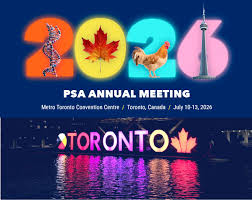
TORONTO, Canada — Scientists, poultry nutritionists, veterinarians and industry leaders have gathered in Toronto for the 2026 Poultry Science Association (PSA) Annual Meeting, where the latest advances in poultry nutrition, health, genetics, welfare and production efficiency are taking centre stage. Being held at the Metro Toronto Convention Centre from July 10–13, the annual conference brings together researchers from universities, government institutions and the poultry industry to present peer-reviewed studies addressing some of the sector’s most pressing production challenges.
Among the scientific presentations attracting industry attention are three collaborative studies led by NOVUS International and its research partners, examining broiler resilience during bacterial challenge, the biological performance of alternative copper sources and nutritional strategies designed to maintain productivity when dietary energy levels are reduced. Together, the studies reflect the poultry industry’s increasing emphasis on precision nutrition as producers contend with volatile feed costs, tighter sustainability targets and growing pressure to optimise bird health without compromising performance.
 Feed Efficiency Remains a Major Industry Priority
Feed continues to represent the single largest operating cost in commercial broiler production, typically accounting for 60% to 70% of total production costs. Even modest improvements in feed conversion ratio (FCR) can generate substantial economic benefits for integrated poultry companies.
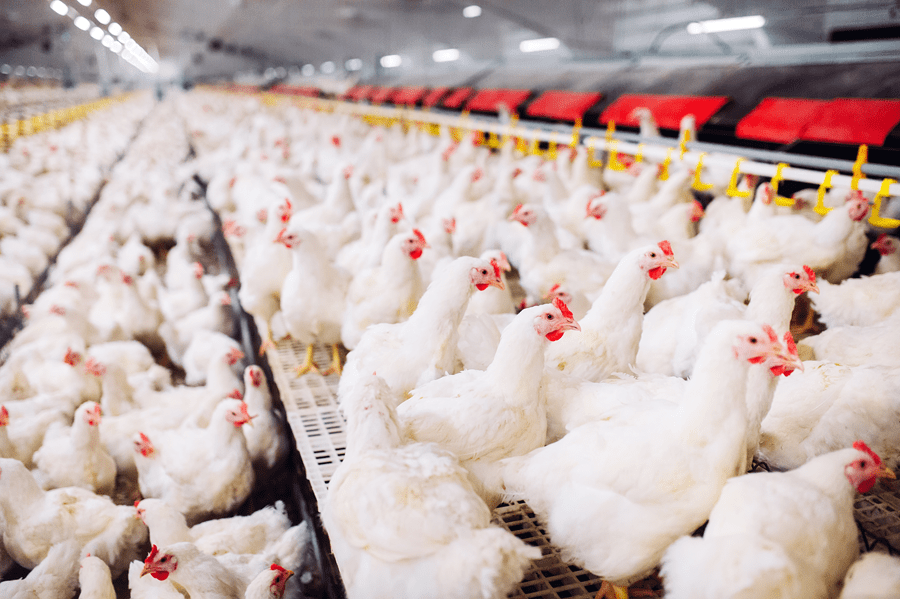
Against this backdrop, many presentations at PSA 2026 are focusing on improving nutrient utilisation, gut health and biological resilience rather than simply increasing nutrient inclusion rates. Researchers are exploring how targeted nutritional interventions can help birds maintain growth performance under commercial production stresses while supporting more sustainable poultry production systems.
Study Explores Nutritional Support During Enterococcus cecorum Challenge
One of the featured studies, conducted in collaboration with North Carolina State University, investigated whether replacing conventional inorganic trace minerals with lower inclusion levels of methionine hydroxy analogue bis-chelated trace minerals could influence broiler health during exposure to Enterococcus cecorum.
The bacterium has become an important challenge for commercial broiler operations because it can migrate from the intestinal tract into the bloodstream before affecting joints, bones and internal organs. Such infections are associated with reduced growth, impaired welfare and increased production losses.
Researchers evaluated whether improved mineral bioavailability could help maintain intestinal integrity and reduce bacterial translocation under challenge conditions. According to the research team, understanding how trace minerals influence immune function and gut barrier health may contribute to more resilient broiler production systems.
Copper Source Research Examines Biological Function
A second presentation investigates the biological mechanisms associated with bis-chelated copper supplementation in broilers.
Rather than measuring growth performance alone, researchers used transcriptomic analysis to examine how different copper sources influence gene expression and metabolic pathways involved in nutrient utilisation and physiological function.
Trace minerals such as copper play essential roles in enzyme systems, antioxidant defence, connective tissue development and immune function. The study aims to improve understanding of how highly bioavailable mineral sources interact with cellular biology, information that could help nutritionists optimise mineral supplementation while reducing unnecessary mineral excretion into the environment.
Reduced-Energy Diets Under Scientific Evaluation
Another study presented at the conference addresses one of the poultry industry’s most significant economic challenges: maintaining broiler performance while lowering dietary energy density.
Conducted over a 42-day broiler production cycle, the collaborative research evaluated whether a bio-optimised xylanase enzyme could compensate for a reduction of approximately 130 kcal/kg in metabolisable energy within conventional corn-soybean meal diets.
Researchers observed that lowering dietary energy reduced broiler performance, as expected. However, birds receiving the optimised xylanase demonstrated improved feed efficiency and better nutrient utilisation than birds receiving a conventional wild-type enzyme, suggesting that targeted enzyme technologies may help offset part of the performance loss associated with lower-energy diets.
Precision Nutrition Continues to Evolve
The research presented at PSA 2026 reflects a broader shift towards precision nutrition across the global poultry industry.
Instead of relying primarily on higher nutrient inclusion rates, nutritionists are increasingly focusing on improving nutrient digestibility, mineral utilisation, intestinal health and metabolic efficiency.
Advances in feed enzymes, highly bioavailable trace minerals, functional additives and molecular biology are allowing nutrition programmes to become more targeted, helping producers maximise biological responses while controlling feed costs and supporting sustainability objectives.
Conference Highlights Broad Scientific Collaboration
Beyond the NOVUS-led studies, the PSA Annual Meeting features hundreds of oral presentations, scientific posters and technical sessions covering:
-
poultry nutrition and metabolism;
-
intestinal health;
-
genetics and breeding;
-
food safety;
-
welfare and behaviour;
-
hatchery management;
-
precision poultry farming;
-
disease prevention; and
-
sustainable poultry production.

 Meeting,)