



In a significant advance for the U.S. cattle industry, Medgene, a South Dakota-based animal health biotechnology company, has announced the commercial availability of the first prescription platform vaccine designed to target Theileria orientalis Ikeda, an emerging tick-borne parasite that has become an increasing threat to beef and dairy herds across the United States.
The vaccine is the first biological product in the United States developed specifically to help veterinarians manage bovine theileriosis caused by the highly pathogenic Ikeda genotype. Until now, cattle producers have had no approved therapeutic option once animals became infected.
Why Theileria orientalis Ikeda Is a Growing Concern
Theileria orientalis Ikeda is a protozoan parasite that infects red blood cells in cattle. It is transmitted primarily by the Asian longhorned tick (Haemaphysalis longicornis), an invasive tick species first detected in the United States in 2017 and now established across numerous states.
Unlike bacterial infections, protozoan parasites cannot be controlled using conventional antibiotics. Clinical disease may include:
-
Severe anemia
-
High fever
-
Jaundice
-
Weakness and lethargy
-
Reduced milk production
-
Weight loss
-
Abortion
-
Death in severe infections
Young calves, pregnant heifers and stressed cattle are among the animals most likely to develop severe disease. Animals that survive infection often remain lifelong carriers, allowing the parasite to persist within herds.
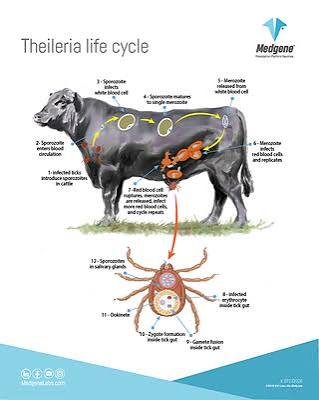
No Approved Drug or any Treatment Has Been Available
One of the greatest challenges facing veterinarians has been the absence of an approved treatment for bovine theileriosis in the United States.
Although some drugs have shown activity against Theileria elsewhere in the world, no pharmaceutical treatment has been approved for use against this parasite in U.S. cattle. Management has therefore relied on supportive care, tick control and biosecurity measures.
This has increased interest in preventive vaccination as the most practical long-term strategy.
Prescription Vaccine Platform Designed for Emerging Diseases
Medgene’s new product is offered through the company’s Prescription Platform Vaccine technology, which enables veterinarians to prescribe vaccines tailored to emerging disease threats under USDA regulatory guidance. The company states that its proprietary ISPrime® development platform combines field diagnostics, bioinformatics and rapid vaccine production to shorten development timelines compared with traditional vaccine approaches.
According to Medgene, the Theileria vaccine is administered as a two-dose vaccination programme and is intended for veterinary use in cattle exposed to the Ikeda genotype. As with other prescription platform biologics, potency and field efficacy continue to be evaluated under the platform framework.
A Disease With Major Economic Consequences
Tick-borne diseases already impose a substantial burden on U.S. livestock production. Medgene notes that tick-borne pathogens collectively account for more than US$13.9 billion in annual economic losses in the United States through reduced productivity, disease management costs and mortality.
Theileriosis contributes to these losses through:
-
Lower milk yields
-
Reduced weight gain
-
Pregnancy losses
-
Veterinary treatment costs
-
Deaths in severely affected animals
-
Long-term carrier cattle that continue disease transmission
Recent outbreaks in states including Virginia, Tennessee, Kentucky, Arkansas and neighbouring regions have highlighted the rapid geographic spread of both the parasite and its tick vector.
Asian Longhorned Tick Continues to Expand
The emergence of Theileria orientalis Ikeda is closely linked with the spread of the Asian longhorned tick, an invasive species capable of reproducing rapidly and establishing large populations. Researchers are increasingly concerned because the tick has demonstrated remarkable adaptability to diverse climates and livestock production systems.
Its expanding distribution has raised concerns among veterinarians, epidemiologists and livestock producers regarding future disease spread and the need for integrated tick management programmes.
What This Means for Veterinarians and Producers
The availability of a vaccine provides veterinarians with a preventive option that was previously unavailable. Potential advantages include:
-
Improved herd protection in high-risk areas
-
Reduced clinical disease
-
Lower economic losses
-
Additional support for integrated parasite management
-
Better preparedness as the Asian longhorned tick continues to spread
Because bovine theileriosis remains an emerging disease, veterinarians are expected to combine vaccination with tick control, surveillance, biosecurity and herd health monitoring.
Why This Matters Beyond the United States
Although the vaccine has been introduced for the U.S. market, the announcement has wider significance for global cattle health. Theileria species affect cattle throughout Asia, Australia, Africa and parts of Europe, causing substantial production losses each year.
The successful commercial development of a targeted vaccine may stimulate additional research into vaccines against other economically important tick-borne protozoan diseases affecting livestock worldwide.
Industry Perspective
The launch of Medgene’s Theileria orientalis Ikeda vaccine represents one of the most important veterinary biologics introduced for the U.S. cattle industry in recent years. As invasive ticks expand their geographic range and climate conditions favour greater vector survival, livestock producers are increasingly confronting diseases that previously received little attention.
While continued field experience will determine the vaccine’s long-term impact, the availability of the first prescription biologic targeting bovine theileriosis marks an important step forward in protecting cattle health. It also highlights a broader shift within animal health towards rapid-response vaccine platforms capable of addressing emerging infectious diseases before they become widespread national problems.
Key Highlights
-
Medgene has launched the first U.S. prescription platform vaccine targeting Theileria orientalis Ikeda
-
The parasite is transmitted primarily by the Asian longhorned tick, an invasive species expanding across the United States
-
Bovine theileriosis can cause severe anemia, fever, abortion, reduced milk production and death
-
There are currently no FDA-approved drug treatments for Theileria infection in U.S. cattle, making prevention especially important
-
Tick-borne diseases are estimated to cost the U.S. livestock industry more than US$13.9 billion annually, underscoring the importance of new preventive tools

