

HomeCorporateUPenn Vet Researchers Develop Method to Generate Early Germ Cells from Adult...

UPenn Vet Researchers Develop Method to Generate Early Germ Cells from Adult Skin and Blood Cells

Penn Vet Reports Major Advance in Reproductive Biology

Researchers at the University of Pennsylvania School of Veterinary Medicine (Penn Vet) have reported an important advance in reproductive biology after successfully developing a technique to convert adult body cells into primordial germ cell-like cells (PGCLCs)—the earliest developmental precursors of sperm and eggs.
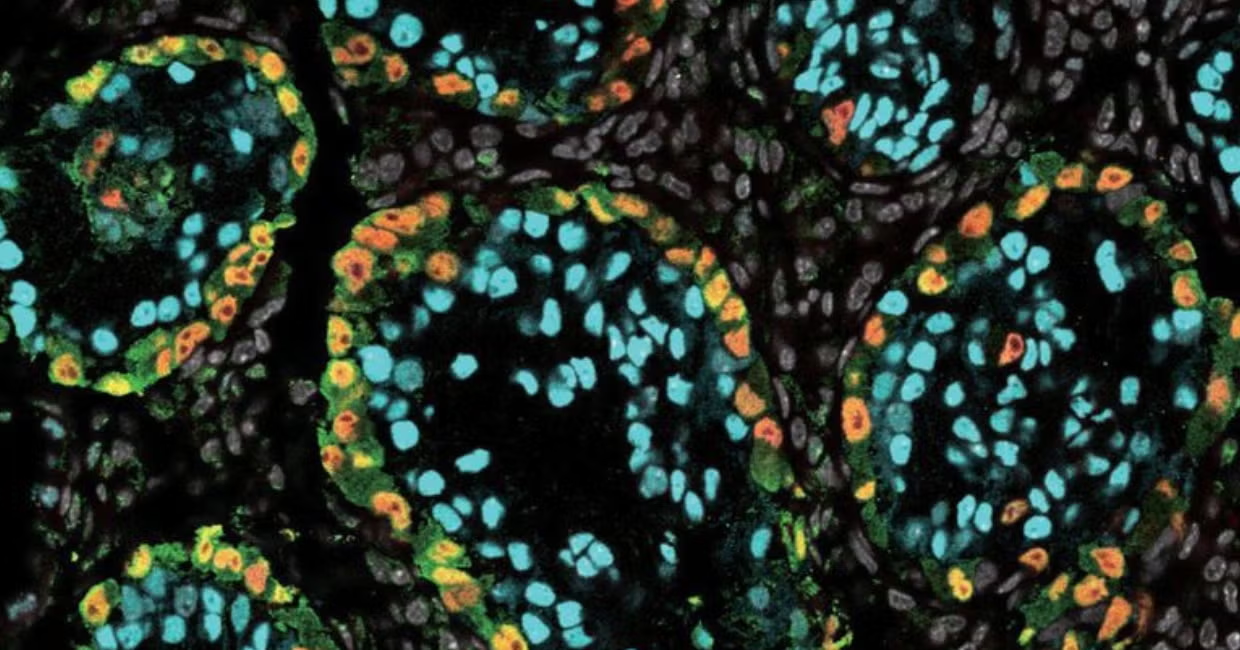
Spermatogonia generated from pluripotent stem cells

The research moves scientists a step closer to understanding how reproductive cells develop and could eventually contribute to new approaches for treating certain forms of infertility, preserving endangered animal species and improving livestock breeding technologies.

Although the work represents a significant scientific milestone, researchers emphasise that the cells produced are early germ cell precursors, not mature sperm or eggs capable of fertilisation.


From Skin Cells to Early Reproductive Cells

In the study, the Penn Vet team collected ordinary somatic cells, including skin and blood cells, and first reprogrammed them into induced pluripotent stem cells (iPSCs).

These stem cells were then guided through carefully controlled laboratory conditions to develop into primordial germ cell-like cells, which resemble the cells that naturally give rise to sperm and eggs during embryonic development.

Understanding this transition is one of the most challenging areas of reproductive biology because germ cells undergo highly specialised developmental processes that cannot easily be reproduced outside the body.


Why Germ Cells Matter

Germ cells are unique because they are the only cells responsible for passing genetic information from one generation to the next.

Unlike ordinary body cells, germ cells eventually undergo specialised developmental processes that produce mature sperm in males and eggs in females. For decades, scientists have sought reliable methods to recreate these early developmental stages in the laboratory, both to understand infertility and to study inherited diseases.

The Penn Vet research provides a new experimental platform for investigating how these specialised cells form and develop.
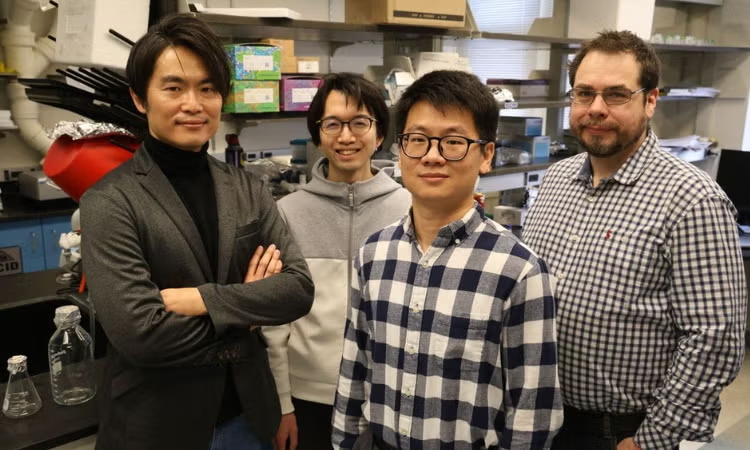
Members of the spermatogonia study research team: Kotaro Sasaki, PhD, MD, and Richard King Mellon Associate Professor of Biomedical Sciences; visiting scholar Yuichiro Shirafuta, MD, PhD; Mingyue Guo, PhD and postdoctoral fellow; and Eoin Whelan, PhD and senior research investigator. (Photo courtesy of Tokaro Sasaki)

Potential Applications in Veterinary Medicine

Although the research remains at an early stage, it has significant implications for veterinary science. Future applications could include:

  • Better understanding of infertility in valuable breeding animals

  • Preservation of endangered species using stored skin or tissue samples

  • Development of advanced reproductive technologies

  • Improved breeding programmes for cattle, sheep, pigs and horses

  • Conservation of rare wildlife populations with limited breeding individuals

For species with critically small populations, the ability to generate germ cell precursors from preserved tissues could eventually expand reproductive options and help maintain genetic diversity.


Opportunities for Livestock Breeding

Modern livestock breeding increasingly depends on advanced reproductive technologies such as artificial insemination, embryo transfer and genomic selection.

In the future, laboratory-generated germ cells could complement these technologies by helping researchers study fertility disorders, evaluate genetic traits and better understand reproductive development.

However, experts caution that practical agricultural applications remain several years away and will require additional research to demonstrate safety, functionality and regulatory acceptance.


Implications for Human Fertility Research

The findings may also benefit human reproductive medicine. Many cases of male infertility result from defects that occur during the earliest stages of germ cell development.

Having laboratory models that closely mimic these developmental stages could help scientists investigate why infertility occurs, identify new therapeutic targets and improve understanding of inherited reproductive disorders.

The research is intended primarily as a platform for studying germ cell biology rather than as an immediate clinical treatment for infertility.


More Research Still Needed

Despite the excitement surrounding the findings, researchers stress that important scientific challenges remain. The primordial germ cell-like cells produced in the laboratory must still undergo multiple complex developmental stages before becoming fully functional sperm or eggs.

Those later stages normally occur within the specialised environment of the testes or ovaries and are not yet fully reproducible in laboratory conditions.

As a result, the research should be viewed as a major advance in basic reproductive science, rather than a technology ready for clinical or commercial use.


Looking Ahead

Penn Vet’s latest discovery highlights the rapid progress being made in stem cell biology and reproductive biotechnology.

By demonstrating a reliable pathway for generating early germ cell precursors from adult body cells, the researchers have created a valuable new tool for studying fertility, reproductive development and species conservation.

For veterinary medicine, the work offers promising long-term possibilities ranging from safeguarding endangered wildlife to improving reproductive efficiency in livestock. While practical applications will require further scientific validation, the study represents another important step towards understanding one of biology’s most fundamental processes—the creation of the cells that give rise to the next generation.

Animal Health India Editorial Team
Animal Health India Editorial Teamhttps://animalhealthindia.com
Animal Health India (AHI) is an independent news and intelligence platform covering the global animal health, veterinary, livestock, poultry, companion animal and pet food sectors. Our editorial team comprises veterinary journalists, animal health professionals, regulatory affairs specialists and industry analysts with over 30 years of combined experience covering India, Asia, Europe and North America. AHI publishes news, regulatory updates, market intelligence and company news drawn from primary sources including DAHD, EMA, USDA, AVMA and leading veterinary publications worldwide.
RELATED ARTICLES