


Penn Vet Reports Major Advance in Reproductive Biology
Researchers at the University of Pennsylvania School of Veterinary Medicine (Penn Vet) have reported an important advance in reproductive biology after successfully developing a technique to convert adult body cells into primordial germ cell-like cells (PGCLCs)—the earliest developmental precursors of sperm and eggs.
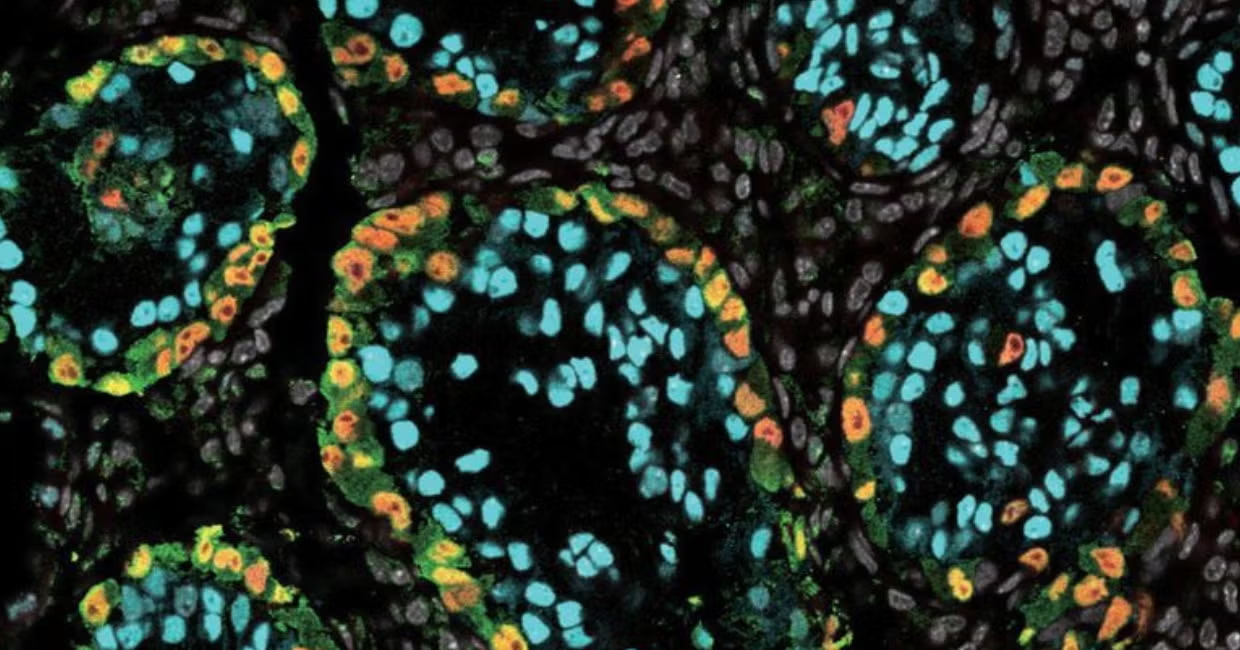
The research moves scientists a step closer to understanding how reproductive cells develop and could eventually contribute to new approaches for treating certain forms of infertility, preserving endangered animal species and improving livestock breeding technologies.
Although the work represents a significant scientific milestone, researchers emphasise that the cells produced are early germ cell precursors, not mature sperm or eggs capable of fertilisation.
From Skin Cells to Early Reproductive Cells
In the study, the Penn Vet team collected ordinary somatic cells, including skin and blood cells, and first reprogrammed them into induced pluripotent stem cells (iPSCs).
These stem cells were then guided through carefully controlled laboratory conditions to develop into primordial germ cell-like cells, which resemble the cells that naturally give rise to sperm and eggs during embryonic development.
Understanding this transition is one of the most challenging areas of reproductive biology because germ cells undergo highly specialised developmental processes that cannot easily be reproduced outside the body.
Why Germ Cells Matter
Germ cells are unique because they are the only cells responsible for passing genetic information from one generation to the next.
Unlike ordinary body cells, germ cells eventually undergo specialised developmental processes that produce mature sperm in males and eggs in females. For decades, scientists have sought reliable methods to recreate these early developmental stages in the laboratory, both to understand infertility and to study inherited diseases.
The Penn Vet research provides a new experimental platform for investigating how these specialised cells form and develop.
Potential Applications in Veterinary Medicine
Although the research remains at an early stage, it has significant implications for veterinary science. Future applications could include:
-
Better understanding of infertility in valuable breeding animals
-
Preservation of endangered species using stored skin or tissue samples
-
Development of advanced reproductive technologies
-
Improved breeding programmes for cattle, sheep, pigs and horses
-
Conservation of rare wildlife populations with limited breeding individuals

