


Global Market, Leading Brands and the Future of Cattle Parasite Control
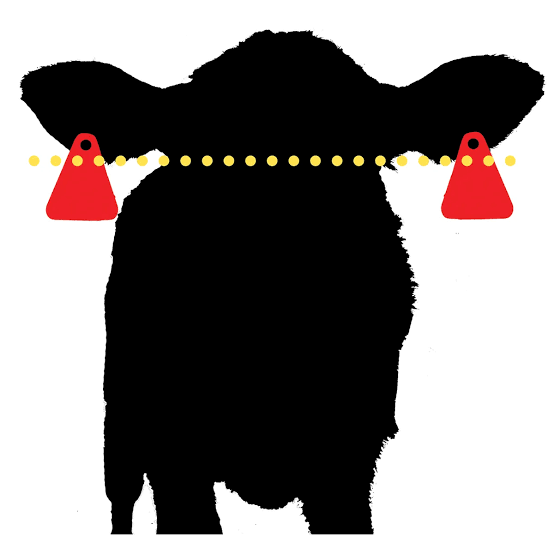
Insecticide ear tags have evolved from a simple veterinary innovation into a cornerstone of modern cattle parasite management. Today, millions of beef and dairy cattle wear insecticide-impregnated ear tags every grazing season, helping farmers reduce fly populations, improve animal welfare and protect productivity with a single application.
Over the past four decades, manufacturers have continually refined ear tag technology by introducing new insecticides, combination formulations and controlled-release polymers designed to extend protection while addressing the growing challenge of insecticide resistance.
Global Market Worth Hundreds of Millions
Although insecticide ear tags represent only one segment of the livestock ectoparasiticide market, they have become an important commercial category within the global animal health industry.
Industry analyses estimate the worldwide market for insecticide livestock ear tags at approximately US$700 million to US$1 billion annually, depending on the products included in the assessment. Demand continues to grow as commercial livestock farming expands and producers increasingly adopt integrated parasite management programmes. The largest markets include:
-
United States – The world’s biggest market, driven by its large beef cattle population and widespread seasonal horn fly control programmes.
-
Brazil – Rapidly growing demand supported by one of the world’s largest commercial cattle herds.
-
Argentina – Extensive beef production systems requiring seasonal parasite control.
-
Australia – High adoption in northern beef-producing regions where flies and ticks present major production challenges.
-
Canada – Strong use during the summer grazing season, particularly against horn flies.
-
Mexico – Growing demand linked to commercial beef production and export-oriented farming.
While North America remains the largest regional market, Latin America continues to experience strong growth due to expanding commercial beef production and increasing awareness of preventive animal healthcare.
Science Behind Modern Insecticide Ear Tags
Early ear tags relied primarily on single insecticides. Today’s products incorporate sophisticated polymer technology that controls the release of active ingredients over several months. Manufacturers carefully balance several factors:
-
Release rate of the insecticide
-
Weather resistance
-
Polymer durability
-
Stability under ultraviolet light
-
Compatibility with different insecticides
-
Animal safety
-
Ease of application
This controlled-release approach enables a relatively small amount of insecticide to remain effective throughout much of the fly season, reducing the need for repeated treatments.
Leading Active Ingredients
Several classes of insecticides dominate today’s commercial ear tag market.
Synthetic Pyrethroids – Pyrethroids are among the most widely used insecticides in cattle ear tags. Common active ingredients include:
-
Beta-cyfluthrin
-
Lambda-cyhalothrin
-
Permethrin
-
Zeta-cypermethrin
These compounds rapidly affect the nervous system of susceptible flies and ticks and have been widely adopted because of their effectiveness and favourable safety profile when used according to label directions. However, decades of intensive use have resulted in resistance among horn fly populations in several countries.
Organophosphates – Organophosphate-based ear tags remain valuable, particularly in resistance management programmes. Important examples include:
-
Diazinon
-
Coumaphos
-
Pirimiphos-methyl
Because they work through a different mode of action than pyrethroids, organophosphate tags are often used in rotation to slow the development of insecticide resistance.
Combination Products – One of the most important recent developments has been the introduction of combination ear tags containing two active ingredients with different modes of action. These products aim to:
-
Improve efficacy
-
Delay resistance
-
Broaden parasite control
-
Extend useful product life
Combination technologies are becoming increasingly important as resistance management moves to the centre of parasite control programmes.
Leading Commercial Brands
Several companies have established strong positions in the global insecticide ear tag market.
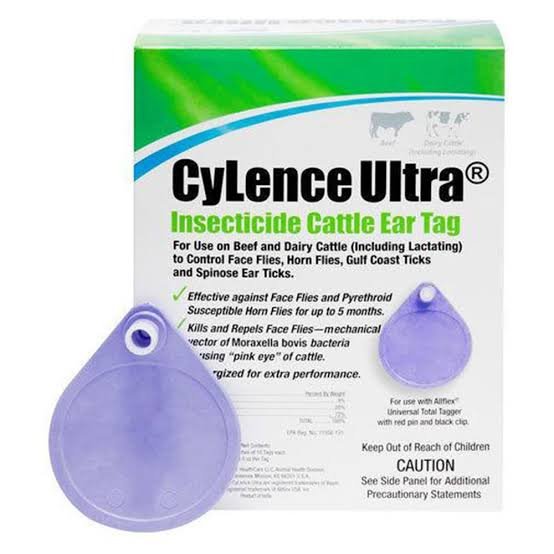
Elanco – Elanco remains one of the industry’s leading suppliers of cattle parasite control products, thanks in part to its acquisition of Bayer AH. Its best-known ear tag brands include:
Cylence Ultra
-
Active ingredient: Beta-cyfluthrin
-
Primary target: Horn flies
-
Additional activity against face flies and selected tick species in approved markets
Corathon
-
Active ingredients: Coumaphos and Diazinon
-
Designed to provide dual-mode insecticide activity
-
Often recommended as part of resistance management strategies
Patriot
-
Active ingredient: Diazinon
-
Widely used in rotation programmes where pyrethroid resistance has emerged
Merck Animal Health – Merck Animal Health offers several well-established insecticide ear tags.
Saber Extra
-
Active ingredient: Lambda-cyhalothrin
-
Broad-spectrum activity against economically important flies
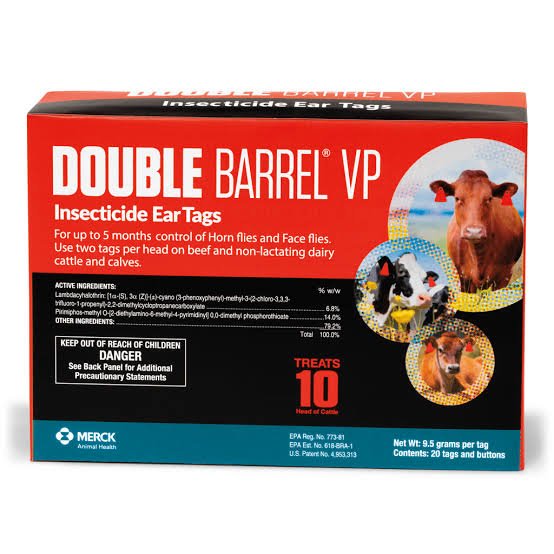
Double Barrel VP
-
Active ingredients: Lambda-cyhalothrin and Pirimiphos-methyl
-
Combination formulation designed to improve control of resistant horn fly populations
Y-Tex Corporation – Y-Tex has been one of the pioneers in insecticide ear tag technology and maintains one of the industry’s most comprehensive portfolios. Its products include:
-
Python II
-
Python Magnum
-
Tri-Zap
-
XP-820
-
GardStar Plus
-
Optimizer
-
Max 40
Y-Tex has focused on multiple insecticide classes, enabling producers to rotate products according to local resistance patterns.
Choosing the Right Ear Tag
Selecting an insecticide ear tag is not simply a matter of purchasing the newest product. Veterinarians generally recommend considering:
-
Local parasite species
-
Resistance status
-
Duration of the fly season
-
Beef versus dairy production
-
Regional climate
-
Previous insecticide use
-
Regulatory approvals
Using the wrong insecticide repeatedly can accelerate resistance and reduce long-term effectiveness.
Growing Challenge of Resistance
The success of insecticide ear tags has inevitably led to one of the industry’s biggest concerns—insecticide resistance. Horn flies have developed varying levels of resistance to several pyrethroid insecticides in multiple countries after decades of repeated exposure.
Resistance does not necessarily mean products stop working completely, but it can significantly reduce effectiveness if the same insecticide class is used year after year. To preserve efficacy, veterinary parasitologists recommend:
-
Rotating insecticide classes annually.
-
Avoiding unnecessary retreatment.
-
Applying tags at the recommended time.
-
Removing tags after the treatment season.
-
Integrating ear tags with other parasite control methods such as pour-ons, pasture management and biological control where appropriate.
These practices help reduce selection pressure and prolong the useful life of existing insecticides.
Economic Benefits for Farmers
Although insecticide ear tags represent a relatively small investment per animal, the economic returns can be substantial. Effective fly control has been associated with:
-
Improved average daily weight gain in beef cattle.
-
Better milk production in dairy herds.
-
Reduced irritation and stress.
-
Lower incidence of fly-associated diseases such as pinkeye.
-
Improved feed conversion efficiency.
-
Reduced labour costs compared with repeated spray treatments.
For large commercial operations, the savings in labour alone can justify the use of ear tags, while healthier cattle often translate into stronger financial performance.
Future of Insecticide Ear Tags
Research continues to improve both the effectiveness and sustainability of cattle parasite control. Future innovations are expected to include:
-
Longer-lasting controlled-release polymers.
-
New insecticide classes with novel modes of action.
-
Improved resistance management technologies.
-
Environmentally friendly biodegradable tag materials.
-
Precision livestock systems that integrate identification, health monitoring and parasite management.

