


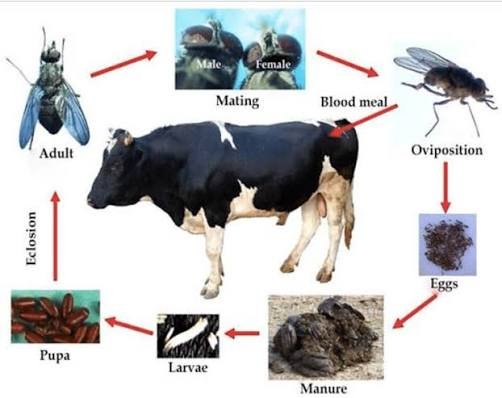
A simple innovation that transformed parasite control, improved animal welfare and saved the global cattle industry billions of dollars in both labour as well as from prevention of vector borne diseases…Read On
For decades, cattle producers around the world fought a relentless battle against one of livestock farming’s smallest but most damaging enemies—flies and ticks.
These external parasites do far more than irritate animals. They reduce weight gain, lower milk production, spread infectious diseases, damage hides, increase veterinary costs and place enormous economic pressure on beef and dairy farms. Every year, ectoparasites cost the global cattle industry billions of pounds in lost productivity and disease control expenses.
Today, controlling these pests is often as simple as attaching a small plastic tag to each animal’s ear. Known as insecticide ear tags, these slow-release devices have become one of the most successful innovations in modern veterinary medicine, protecting millions of cattle across North America, Latin America, Australia and many other livestock-producing regions.
Although they appear simple, insecticide ear tags combine polymer engineering, veterinary pharmacology and parasite biology into a highly effective delivery system that provides continuous protection for several months with minimal labour.
Hidden Cost of Flies and Ticks
Before understanding why insecticide ear tags became so popular, it is important to appreciate the scale of the problem they were designed to solve. More than a dozen species of flies and ticks affect cattle worldwide, but a handful account for most economic losses.
The horn fly (Haematobia irritans) is regarded as one of the most costly external parasites of beef cattle. Thousands of flies may feed repeatedly on a single animal every day, causing irritation, blood loss and stress. Studies have shown that heavy infestations can significantly reduce average daily weight gain in beef cattle while also lowering milk production in dairy herds.
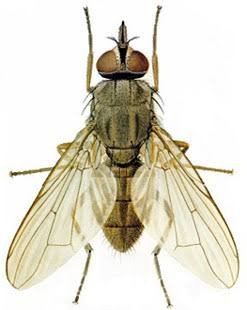
The face fly (Musca autumnalis) is another important pest. Unlike horn flies, face flies feed on secretions around the eyes and muzzle. In doing so, they act as mechanical vectors for infectious bovine keratoconjunctivitis, commonly known as pinkeye, one of the most widespread eye diseases affecting cattle.
Stable flies (Stomoxys calcitrans) inflict painful bites on the legs and lower body, causing cattle to stamp, bunch together and spend less time grazing. Even moderate infestations can reduce feed efficiency and overall productivity.
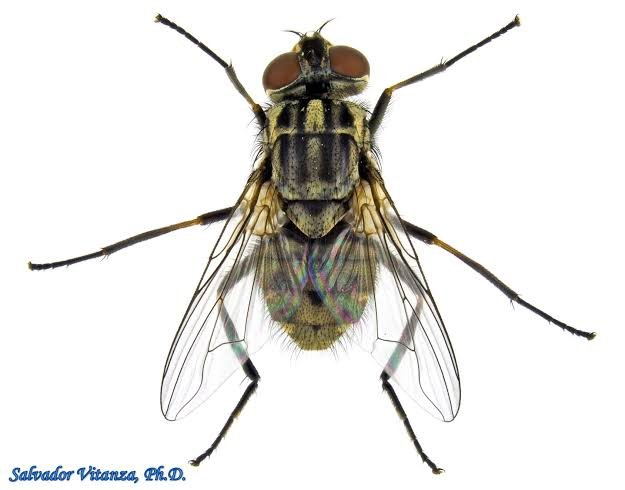
Ticks present an even greater challenge in many tropical and subtropical regions. Species such as the cattle tick transmit serious diseases including babesiosis and anaplasmosis, both of which can cause severe production losses and, in some cases, death.
Collectively, these parasites affect cattle welfare, reduce reproductive performance, increase veterinary interventions and significantly impact farm profitability.
Life Before Insecticide Ear Tags
Until the late twentieth century, controlling flies and ticks was labour-intensive, expensive and often inconsistent. Farmers relied primarily on:
-
Hand spraying insecticides
-
Backpack or tractor-mounted sprayers
-
Dust bags
-
Back rubbers
-
Dips
-
Pour-on formulations
While each method offered some level of protection, none was ideal. Sprays required repeated applications because rain, sunlight and normal animal behaviour rapidly reduced their effectiveness. Treating large herds was time-consuming and required significant labour.
Back rubbers and dust bags depended on cattle making regular contact with treated equipment. Animals that used them infrequently often remained poorly protected.
Pour-on insecticides represented an important advance, but they still required repeated handling of animals throughout the grazing season. For large commercial ranches with hundreds or thousands of cattle, maintaining effective parasite control became a major logistical challenge.
Veterinary researchers therefore began searching for a solution that would provide long-lasting protection without repeated treatments.
Birth of Insecticide Ear Tag Technology
The answer emerged during the 1970s and 1980s with the development of insecticide-impregnated ear tags. Instead of applying insecticide directly onto the animal every few weeks, scientists incorporated carefully selected active ingredients into durable polymer materials that slowly released the insecticide over several months.
After an ear tag is attached, tiny quantities of insecticide gradually migrate to the surface of the tag. Normal movement of the animal’s head, neck and body, combined with natural skin oils and physical contact, helps distribute the active ingredient across the hair coat.
This continuous, low-dose release creates a protective barrier that repels or kills susceptible parasites over an extended period. The concept proved remarkably successful because it combined several important advantages:
-
One application provided season-long protection in many situations.
-
Labour requirements were dramatically reduced.
-
Animals experienced less handling stress.
-
Insecticide use became more controlled and targeted.
-
Farmers achieved more consistent parasite control.
Within a few years, insecticide ear tags became a standard component of parasite management programmes in many beef-producing countries.
How Modern Ear Tags Actually Work
Although they look like ordinary identification tags, insecticide ear tags are sophisticated controlled-release delivery systems. Each tag contains a carefully formulated polymer matrix mixed with one or more insecticides.
Rather than releasing the active ingredient all at once, the polymer slowly allows tiny amounts to diffuse to the tag’s surface over time. This controlled-release mechanism helps maintain insecticidal activity for several months, depending on environmental conditions, parasite pressure and the product used.
As cattle move, groom themselves or interact with herd mates, the insecticide spreads over much of the animal’s body surface through the hair coat and skin oils. When flies or ticks come into contact with treated hair, the insecticide affects their nervous system, causing paralysis and death or discouraging feeding.
Different products employ different active ingredients, but most work by disrupting normal nerve transmission in insects and ticks while remaining safe for cattle when used according to label directions.
This controlled delivery approach represented a major breakthrough compared with older spray-based treatments, which often produced high initial concentrations followed by rapid decline.
Parasites That These Tags Control
Modern insecticide ear tags are designed to control a range of economically important external parasites. Depending on the formulation, they may provide protection against:
-
Horn flies
-
Face flies
-
Stable flies
-
Gulf Coast ticks
-
Spinose ear ticks
-
Lice (selected products)

