


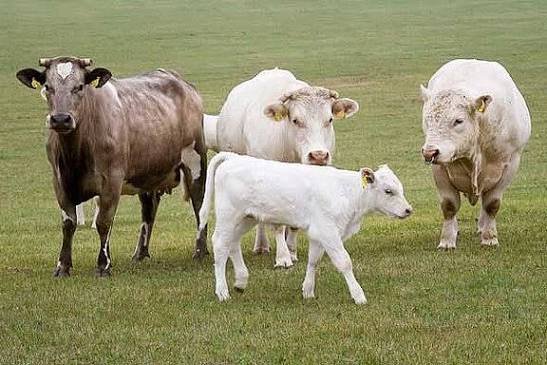
Veterinary health authorities across Central Europe have issued urgent surveillance advisories following the simultaneous emergence of a novel, midge-borne orthobunyavirus infecting dairy herds across Switzerland, southern Germany, and France.
First identified in late July 2026 by Switzerland’s Institute of Virology and Immunology (IVI) and Germany’s Friedrich-Loeffler-Institut (FLI), the pathogen belongs to the Simbu serogroup and has been provisionally designated as a “Shamonda-like” orthobunyavirus due to high genetic homology with the African Shamonda virus.
The outbreak coincides with the seasonal peak of Culicoides biting midges. With no commercial vaccine or targeted antiviral therapies available, livestock epidemiologists are raising major alarms over confirmed transplacental transmission, which threatens severe teratogenic impacts (congenital malformations and abortions) in pregnant livestock heading into the autumn and winter calving seasons.
Key Takeaways & Outbreak Briefing
-
Simultaneous Multi-Country Detection: Active viral transmission confirmed in cattle herds across Switzerland, southern Germany (Bavaria and Baden-Württemberg), and eastern France.
-
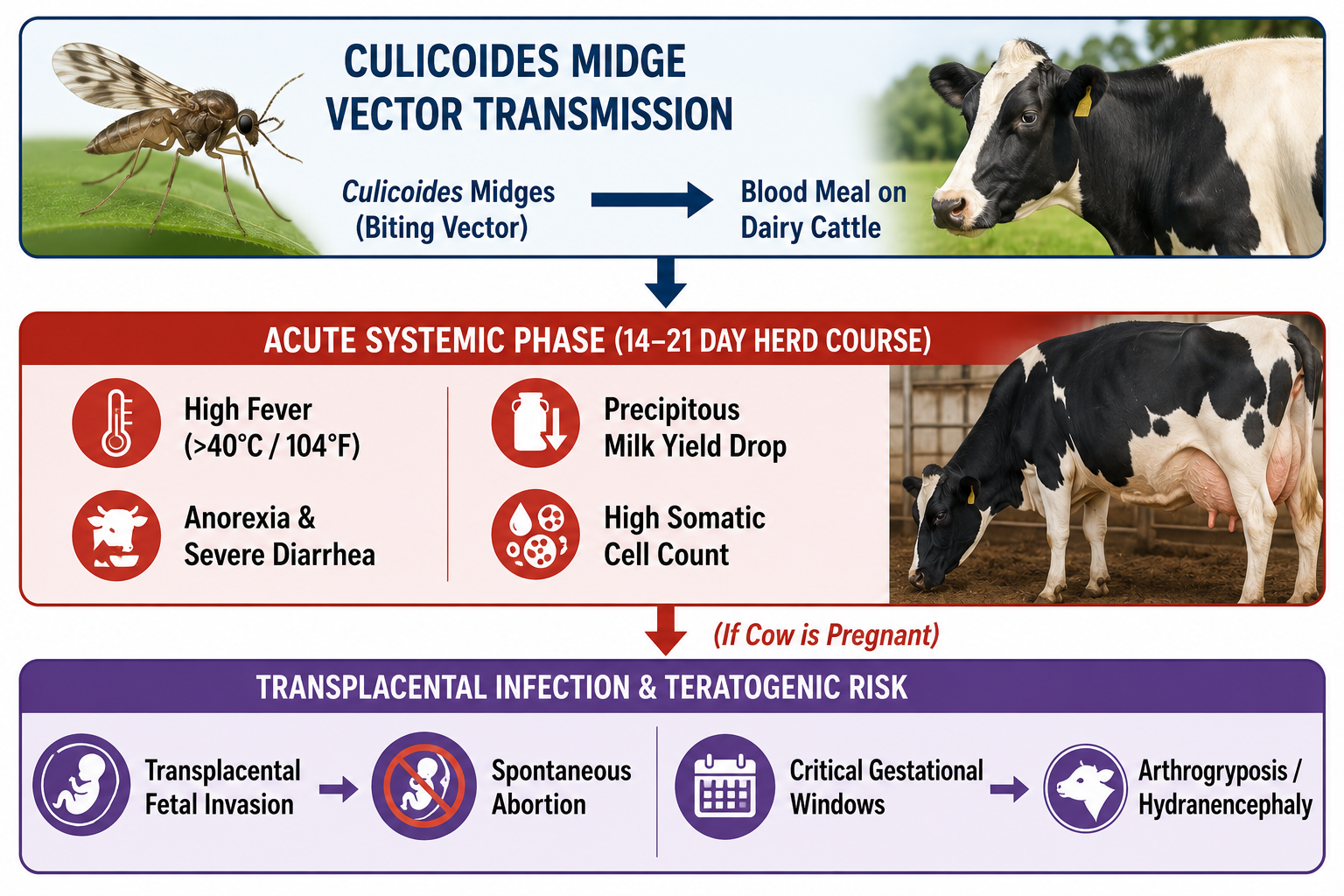
Acute Clinical Signature: Affected cows present with sudden high fever, sharp drops in daily milk yield, severe diarrhea, and anorexia.
-
Vector Transmission: Spread primarily via Culicoides midges (blood-sucking biting flies); direct animal-to-animal transmission is not observed.
-
Confirmed Fetal Infection: IVI confirmed the virus in aborted bovine fetuses, verifying transplacental cross-barrier capabilities.
-
Public Health Risk: Low to non-existent. Simbu serogroup viruses are non-zoonotic and pose no known threat to human health or food safety (milk and meat remain safe).
The Science Behind the “Shamonda-Like” Pathogen
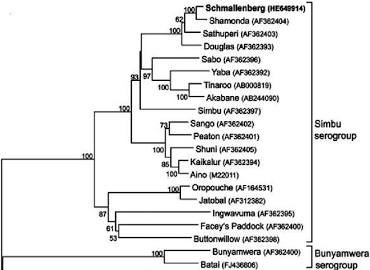
Using Next-Generation Sequencing (NGS), researchers at the FLI and IVI isolated the virus S, M, and L RNA segments. The pathogen clusters closely within the Simbu serogroup, a lineage of Peribunyaviridae that includes the Schmallenberg virus (SBV)—which swept through European livestock in 2011–2012—and the Akabane virus.
1. Acute Milk-Drop Syndrome
In adult dairy cattle, the acute clinical phase lasts approximately 2 to 5 days per individual animal, with total herd-level morbidity spanning 14 to 21 days. Affected farms report sudden milk drops exceeding 30% to 50% across lactating herds, placing immediate financial strain on dairy producers. Heatwave conditions across Western Europe in mid-summer 2026 may have exacerbated host vulnerability due to thermal stress.
2. The Silent Teratogenic Threat
While adult cattle typically recover with supportive care, the primary threat lies in pregnant cows. In early August 2026, the IVI confirmed the presence of viral RNA in four aborted bovine fetuses across different Swiss herds.
When pregnant ruminants (cattle, sheep, and goats) are infected during critical gestational windows (typically days 30–150 in cattle), the virus crosses the placental barrier, attacking the fetus’s central nervous system and skeletal system. This can lead to: Spontaneous late-term abortions and stillbirths and Arthrogryposis-Hydranencephaly Syndrome (AHS): Calves born with severe joint malformations (fused limbs) and brain damage (water on the brain).
Comparative Matrix: European Midge-Borne Livestock Pathogens
Feature |
Novel Shamonda-Like Virus (2026) |
Schmallenberg Virus (SBV) |
Bluetongue Virus (BTV-3) |
Family / Genus |
Peribunyaviridae / Orthobunyavirus |
Peribunyaviridae / Orthobunyavirus |
Reoviridae / Orbivirus |
Primary Vector |
Culicoides Midges |
Culicoides Midges |
Culicoides Midges |
Adult Clinical Signs |
Fever (>40 C), milk drop, diarrhea |
Fever, milk drop, mild diarrhea |
Coronitis, facial edema, lameness |
Fetal Impact |
Abortions, suspected AHS |
Severe skeletal & cranial deformities |
Abortions, cerebral hydranencephaly |
Vaccine Availability |
None (Development ongoing) |
Commercial vaccines available |
Emergency vaccines authorized |
Regulatory Status |
Not reportable / Non-regulated |
Non-regulated in EU/CH |
Strictly regulated (Category D+E) |
Diagnostic Guidelines & Control Protocols
Federal agriculture departments in Switzerland (FSVO), Germany (FLI), and France (ANSES) have issued sampling directives for livestock veterinarians:
-
Diagnostic Testing:
-
Live Animals: EDTA blood and serum samples collected during the acute febrile phase (>40 C).
-
Aborted Fetuses / Dead Animals: Spleen, brain tissue, and body cavity fluid submitted for RT-PCR analysis.
-
-
Vector Mitigation:
-
Apply pyrethroid-based insecticides or repellent pour-ons to reduce midge bites during twilight peak activity hours.
-
Move high-value pregnant stock indoors or to high-elevation pastures where vector density is lower.
-
-
Supportive Care:
-
Administer non-steroidal anti-inflammatory drugs (NSAIDs) under veterinary direction to control fever and encourage feed intake.
-

