


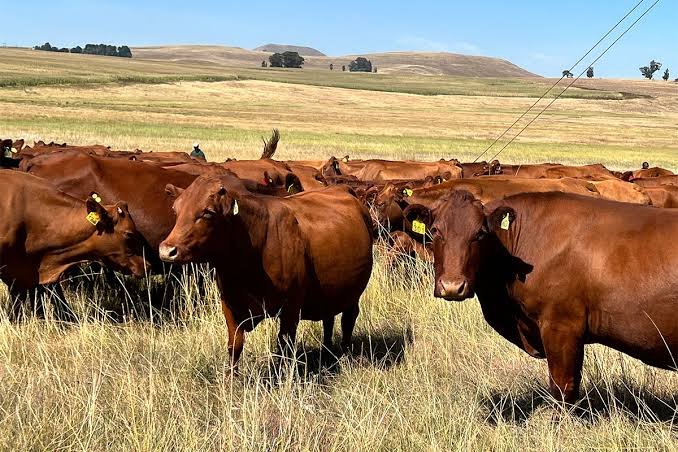
South Africa’s Free State Province has reported no new foot-and-mouth disease cases in its latest weekly update, with 799 of 804 confirmed cases resolved and approximately 1.76 million cattle vaccinated. Authorities continue to warn about limited vaccine availability and underreporting of suspected infections.
South Africa’s Free State Province is reporting progress in its foot-and-mouth disease (FMD) control programme, with the cumulative number of confirmed cases remaining at 804 in the latest provincial update.
The Department of Agriculture, Rural Development and Environmental Affairs reported that no new cases had been recorded during the preceding week. Of the 804 confirmed cases, 799 had been resolved, leaving five premises under quarantine. The latest update, issued on 6 November 2026 and subsequently reported on 12 November, reflects the province’s continuing efforts to contain FMD through vaccination, quarantine, surveillance and movement controls.
FMD situation across the Free State
The outbreak has affected 19 local municipalities and 14 state veterinary areas. The highest reported case numbers have been recorded in the following locations:
Area |
Confirmed cases |
|---|---|
Kroonstad, Moqhaka Municipality |
127 |
Heilbron |
98 |
Frankfort |
81 |
Bethlehem |
75 |
Other affected areas |
Remaining cases |
Total |
804 |
The department reported that 799 affected premises had met the required conditions for quarantine to be lifted following completion of prescribed disease-control measures. Only five remained under quarantine at the time of the update.
Although the absence of new cases is encouraging, it does not establish that the virus has been eliminated from the province. Continued surveillance and compliance with movement restrictions remain important.
Vaccination reaches approximately 1.76 million cattle
A major component of the provincial response has been the implementation of a risk-based cattle vaccination programme. A total of 1,762,772 cattle had been vaccinated according to the provincial figures. The reported breakdown is:
Vaccination category |
Cattle vaccinated |
|---|---|
Government-supported vaccination using Biogenesis Bago and Dollvet vaccines |
1,734,519 |
Farmer-administered vaccination |
28,253 |
Total |
1,762,772 |
The department also recorded 196 vaccination notifications associated with farmer-administered vaccinations. The vaccination programme prioritises infected premises, neighbouring farms, epidemiologically linked properties and other locations considered high-risk following veterinary assessment.
Vaccine availability remains a constraint
Despite the scale of the campaign, the department has cautioned that it cannot immediately fulfil every vaccination request. Vaccine availability remains limited, requiring authorities to prioritise high-risk areas and allocate doses according to disease-control requirements.
Farmers have been encouraged to continue submitting vaccination requests because this information helps veterinary authorities plan future allocations and vaccination campaigns.
The department has also encouraged eligible farmers to apply for authorisation to vaccinate through the National FMD Reporting System.
This highlights a recurring challenge in large-scale FMD control: vaccination capacity is determined not only by the number of doses available but also by allocation, logistics, trained personnel and the ability to reach the appropriate herds.
Underreporting threatens disease surveillance
Another concern raised by provincial authorities is the underreporting of suspected FMD cases and administered vaccinations. The department has instructed livestock owners to report suspected infections to the nearest state veterinary office on the day they are identified.
Affected animals should be isolated immediately, while movements of potentially infected animals should be restricted in accordance with veterinary instructions. Vaccinations must also be reported to the department within 14 days. Accurate reporting is important for several reasons:
-
It allows veterinary authorities to identify new infection clusters.
-
It supports epidemiological tracing of animal movements.
-
It helps determine where vaccine allocation is most urgently required.
-
It improves estimates of vaccination coverage.
-
It enables more reliable assessment of the effectiveness of disease-control measures.
Underreporting can create a misleading picture of outbreak control and delay the deployment of veterinary resources.
Why FMD control remains difficult
Foot-and-mouth disease is highly contagious and can spread rapidly through susceptible cloven-hoofed animals, including cattle, pigs, sheep and goats. Its economic impact extends well beyond direct animal mortality. FMD can cause:
-
Reduced milk production.
-
Weight loss and reduced growth performance.
-
Lower reproductive efficiency.
-
Increased veterinary and biosecurity expenditure.
-
Production interruptions.
-
Restrictions on animal movement and trade.
-
Costs associated with quarantine and surveillance.
In commercial dairy and beef systems, even temporary disruption can create significant economic consequences. The scale of the Free State vaccination programme demonstrates the resources required to protect livestock populations in an affected region.
Implications for veterinary vaccine manufacturers
The Free State situation reinforces the importance of vaccine supply security and efficient field implementation. For animal-health companies, several areas deserve attention.
1. FMD vaccine manufacturing capacity: Large-scale campaigns require consistent access to appropriately matched vaccine products.
2. Antigen selection and matching: Vaccine selection must be guided by epidemiological information, circulating virus strains and veterinary-authority recommendations.
3. Cold-chain infrastructure: Vaccine potency depends on appropriate storage and transportation conditions.
4. Field delivery: Distribution networks, trained vaccinators and reliable farm-level records are essential to achieving coverage.
5. Digital surveillance: Integrated systems linking vaccination records, farm locations and outbreak reports can improve resource allocation.
6. Farmer engagement: Compliance with reporting and vaccination requirements depends on clear communication and accessible veterinary services.
The use of Biogenesis Bago and Dollvet vaccines in the Free State programme also demonstrates the role of multiple suppliers in supporting a large provincial vaccination effort. The reported figures do not, however, establish comparative product efficacy.
What to watch next
The next important indicators will be:
-
Whether the province records further confirmed cases.
-
Whether the five remaining quarantined premises are released.
-
Additional vaccine availability and allocation.
-
Vaccination coverage across high-risk areas.
-
Compliance with farmer reporting requirements.
-
Evidence of infection in previously unaffected municipalities.
The Free State’s progress is encouraging, but the combination of limited vaccine availability and underreporting risks complicating the final stages of outbreak control. Sustained surveillance, reliable vaccination records and rapid reporting will remain essential to achieving durable FMD control.

