


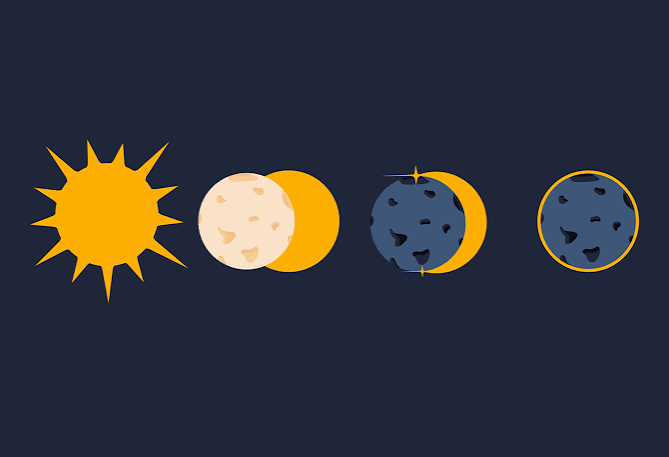
As millions of celestial observers prepare to view the total solar eclipse sweeping across Greenland, Iceland, Spain, and parts of continental Europe and North Africa, veterinary medicine authorities have issued specialized clinical guidelines to protect domestic pets.
In a joint educational release, the American Animal Hospital Association (AAHA) and senior emergency veterinarians from the Schwarzman Animal Medical Center (AMC) in New York City clarified that while animals face negligible risk of optical damage, pet owners must prepare for environmental shifts, anxiety triggers, and logistical complications during the astronomical event.
Key Clinical Takeaways & Emergency Guidance
-
No Eclipse Eyewear Required: Veterinary ophthalmologists confirm pets instinctively avoid gazing directly at the sun, rendering protective glasses unnecessary and counterproductive.
-
Primary Threat is Behavioral: Sudden daylight drops trigger circadian rhythm confusion and thunderstorm-like anxiety responses in dogs and cats.
-
Human Excitement Contagion: Animals pick up on human emotional elevation and erratic crowd noise, amplifying stress levels during totality.
-
Travel & Entrapment Risks: Massive traffic congestion along path-of-totality corridors poses heat exhaustion risks if pets are left inside vehicles.
Veterinary Breakdown: Why Pets Do Not Need Protective Eyewear
A primary point of confusion among pet owners ahead of celestial events is whether dogs and cats require ISO-certified solar glasses. According to Dr. Carly Fox, DVM, Senior Veterinarian in Emergency and Urgent Care at the Schwarzman Animal Medical Center, pets possess natural protective behaviors that humans lack during an eclipse.
“Unlike people, animals don’t know that there’s an eclipse happening, so they are very unlikely to look directly into the sun. They don’t need glasses because they aren’t going to stare at the sky. Attempting to force eyewear onto a dog or cat causes far more physiological stress than the eclipse itself.”
— Dr. Carly Fox, DVM, Schwarzman Animal Medical Center
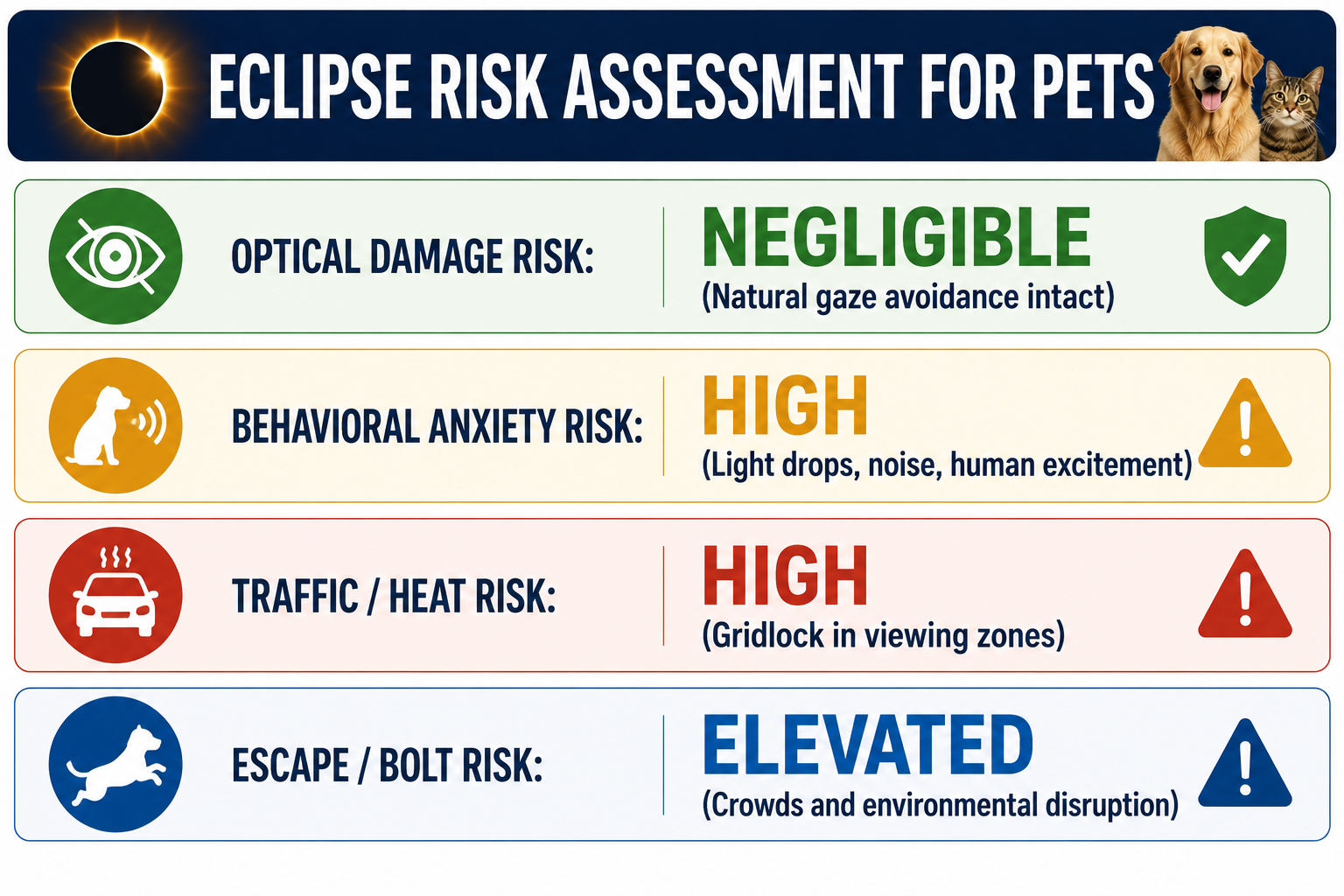
Veterinary medical literature records virtually zero documented cases of solar retinopathy or solar ocular damage in domestic pets following eclipse events, as their instinctual gaze avoidance remains completely intact
Veterinary Behavioral Protocols for Pet Owners
To ensure pet safety during the rapid transition into totality, the AAHA outlines six core protocol recommendations for veterinary practices and pet owners:
1. Maintain Daily Schedules
To minimize stress, keep feeding times, walk schedules, and indoor activity routines as normal as possible. Disrupting daily rhythms alongside sudden atmospheric dimming increases restlessness.
2. Establish an Indoor Sanctuary
Keep pets indoors before the eclipse begins. Draw blinds, close curtains, turn on interior lights, and play ambient background music or white noise to mute sudden cheers or noise from outside eclipse-viewing crowds.
3. Manage Human Stress & Excitement
Pets are highly sensitive to human emotional cues. Owners who show high agitation or intense excitement during celestial viewing can inadvertently trigger panic in anxious animals. Staying composed around pets helps keep them grounded.
4. Verify Identification Protocols
The sudden loss of light and outdoor commotion can cause skittish animals to bolt. Ensure pets are wearing physical collars with up-to-date ID tags and that microchip registry data is current before the event.
5. Road Travel & Vehicle Precautions
If traveling through heavy viewing traffic with animals, schedule walking breaks well before the eclipse windows. Never leave a pet unattended inside a parked vehicle during viewing stops, as cabin temperatures can surge rapidly.
Clinical Signs of Eclipse-Induced Distress vs. Ocular Injury
Veterinarians should advise clients to monitor for behavior changes versus rare signs of eye discomfort:
Category |
Clinical Symptoms |
Recommended Immediate Action |
Anxiety Response |
Pacing, panting, whining, hiding, lip licking |
Move pet to a quiet, darkened room; offer high-value treats or calming compression wraps. |
Ocular Irritation (Rare) |
Squinting, excessive tearing, eye discharge, rubbing eyes |
Schedule an evaluation with a primary veterinarian or veterinary ophthalmologist. |

