


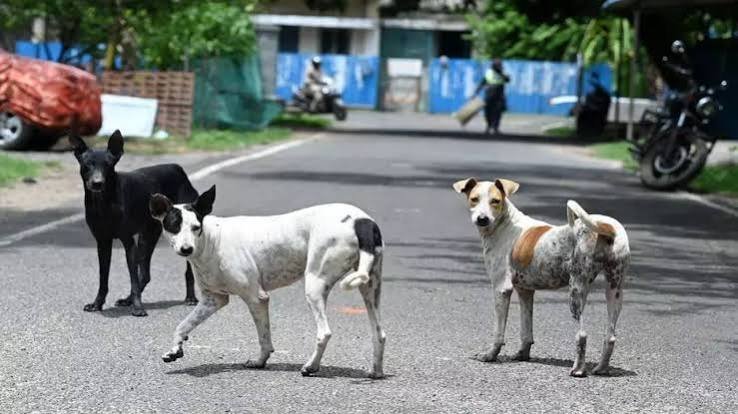
In a major policy enforcement push targeting urban stray animal control and public health safety, the Greater Chennai Corporation (GCC) has proposed a strict penalty of ₹25,000 (USD 275) for residents caught abandoning pet dogs within city limits.
The resolution, which will take legal effect upon formal approval by the Corporation Council during its upcoming sitting, aims to curtail the surging stray dog population driven by negligent pet ownership.
Simultaneously, the civic body launched a 75-working-day mass Anti-Rabies Vaccination (ARV) and endectoparasiticidal treatment camp targeting 200,000 pet and stray dogs across the metropolis.
Key Highlights & Policy Roadmap
-
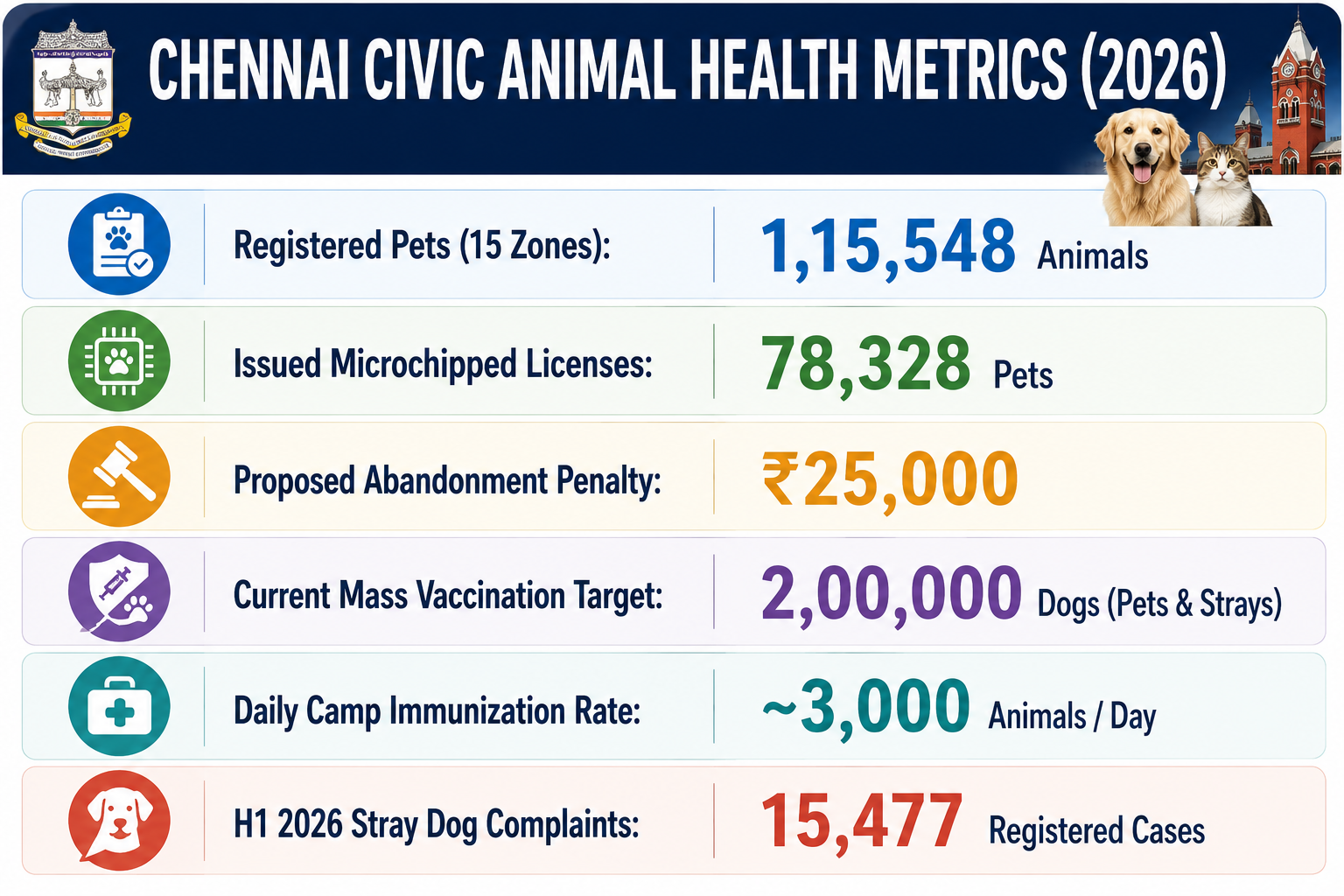
Proposed Fine for Abandonment: A stiff ₹25,000 penalty for residents abandoning pets in public spaces.
-
Mass Immunization Target: Free ARV and parasitic treatment drive covering 2,00,000 dogs (targeting ~3,000 dogs daily across 75 working days).
-
Phase 1 Launch Zones: Campaign rollout commencing in northern zones including Tiruvottiyur, Manali, and Tondiarpet.
-
Microchipping Integration: GCC has registered 1,15,548 pets across 15 zones, with 78,328 microchipped pet licenses already issued to establish owner traceability.
-
Rising Civic Complaints: GCC recorded 15,477 stray dog-related complaints in the first six months of 2026, with Tondiarpet logging the highest frequency (1,869 complaints).
Chennai Stray Dog Metrics & Civic Response
Microchipping and Traceability: How GCC Plans to Enforce the Fine
To enforce the proposed ₹25,000 penalty, the civic body is leveraging its mandatory online pet licensing portal and microchipping infrastructure. Under existing GCC animal welfare bye-laws, dog and cat owners are required to register their pets for a nominal fee of ₹50.
During registration, animals are implanted with a microchip containing a unique identification code tied to the owner’s legal name, residential address, contact details, and updated vaccination history. When an abandoned or stray-roaming pedigree or crossbreed animal is picked up by civic animal control teams, veterinary inspectors scan the animal for a microchip.
If a registered owner is identified as having abandoned the animal on public roads, the fine will be legally levied against them.
“Obtaining pet licences and microchipping animals are critical steps in tracking annual rabies vaccinations and curbing the irresponsible abandonment of pets. When pet owners abandon animals on roads, it increases human-animal conflict and strains municipal resources.”
— GCC Public Health Department Representative
75-Day Mass Vaccination & Parasite Control Drive
To prevent the spread of zoonotic diseases, the GCC’s Public Health and Veterinary Departments have mobilized dedicated veterinary teams across all 15 municipal zones.
1. Anti-Rabies Vaccination (ARV)
Building upon last year’s campaign—which successfully vaccinated 1.47 lakh animals—the 2026 drive expands coverage to 200,000 dogs and cats. Free vaccines are available for both pet dogs brought in by residents and street dogs caught and released by municipal animal birth control (ABC) staff.
2. Parasitic Treatment
Alongside ARV dosing, animals are receiving endectoparasiticidal drugs. These broad-spectrum treatments clear ectoparasites (such as ticks and fleas that vector tick fever) and internal gastrointestinal helminths, improving overall stray dog immunity and reducing public health exposure to vector-borne disease in residential wards.
Zone-Wise Complaint Hotspots
Data compiled by the Greater Chennai Corporation reveals significant disparity in stray dog complaints across municipal divisions during the first half of 2026:
Zone |
H1 2026 Complaint Volume |
Primary Issues Reported |
Tondiarpet (Zone 4) |
1,869 (Highest in City) |
High stray density, garbage feeding points |
Anna Nagar (Zone 8) |
High |
Territorial aggression, road obstruction |
Madhavaram (Zone 3) |
High |
Unvaccinated stray packs |
Manali (Zone 2) |
280 (Lowest in City) |
Industrial zone spread |

