


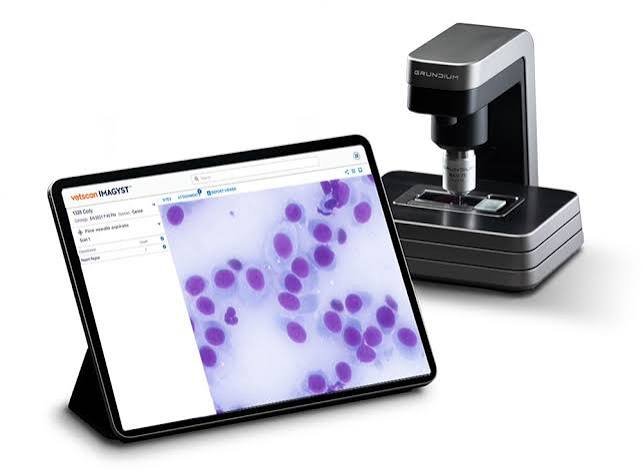
Legal troubles for Zoetis seem to be increasing in 2026 – as after extensively publicised, class action suit which gets underway soon over Zoetis stock price collapse, following its Q1′ 2026 results announcement – another legal matter is grabbing headlines, this time for its AI-Diagnostics Platform.
A legal battle has emerged at the intersection of artificial intelligence and clinical veterinary medicine. Columbia Veterinary Hospital, based in The Dalles, Oregon, filed a lawsuit against animal health giant Zoetis Inc., alleging that the company’s flagship AI diagnostic platform, Vetscan Imagyst®, misdiagnosed a malignant canine neck tumor as a benign inflammatory lesion.
The complaint alleges that the AI-generated misclassification led to an incomplete initial surgical resection, requiring a secondary intervention that ultimately contributed to the patient’s death. The case highlights emerging legal liability, standard-of-care implications, and regulatory scrutiny surrounding AI-assisted diagnostic tools in clinical veterinary practice.
1. Incident Analysis: The Clinical & Procedural Sequence
The lawsuit stems from a clinical presentation involving an 11-year-old Belgian Tervuren evaluated for a rapidly expanding neck mass.
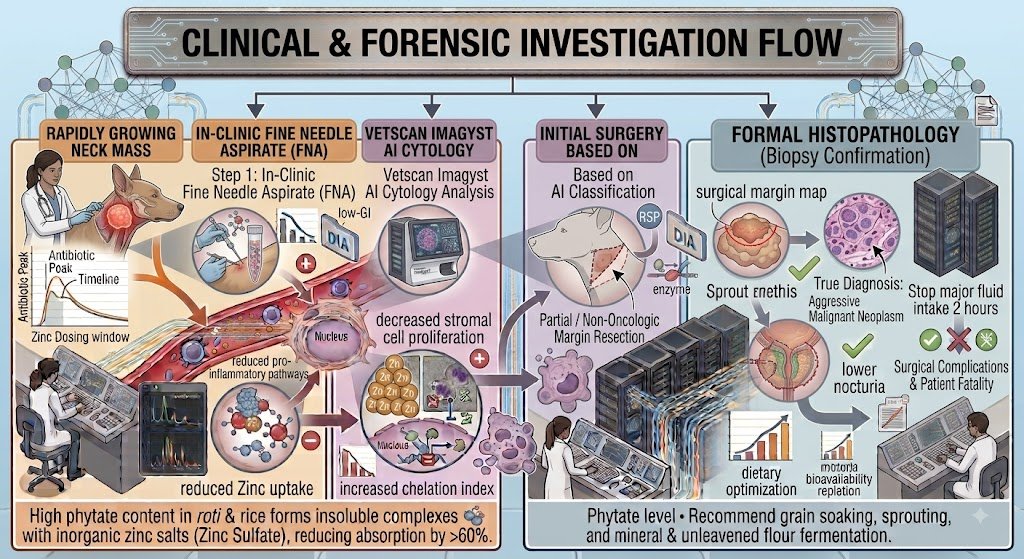
According to court filings, the veterinary team utilized the Vetscan Imagyst AI deep-learning algorithm to analyze fine-needle aspirate (FNA) cytology slides. The system returned an algorithmic classification indicating benign inflammation. Based on this rapid digital read, clinicians proceeded with a conservative surgical approach.
Subsequent traditional histopathology revealed an aggressive cancer. The initial surgery failed to clear the malignant margins, necessitating a second, more invasive operation. The canine patient subsequently suffered fatal post-operative complications.
2. Broader Industry & Medico-Legal Implications
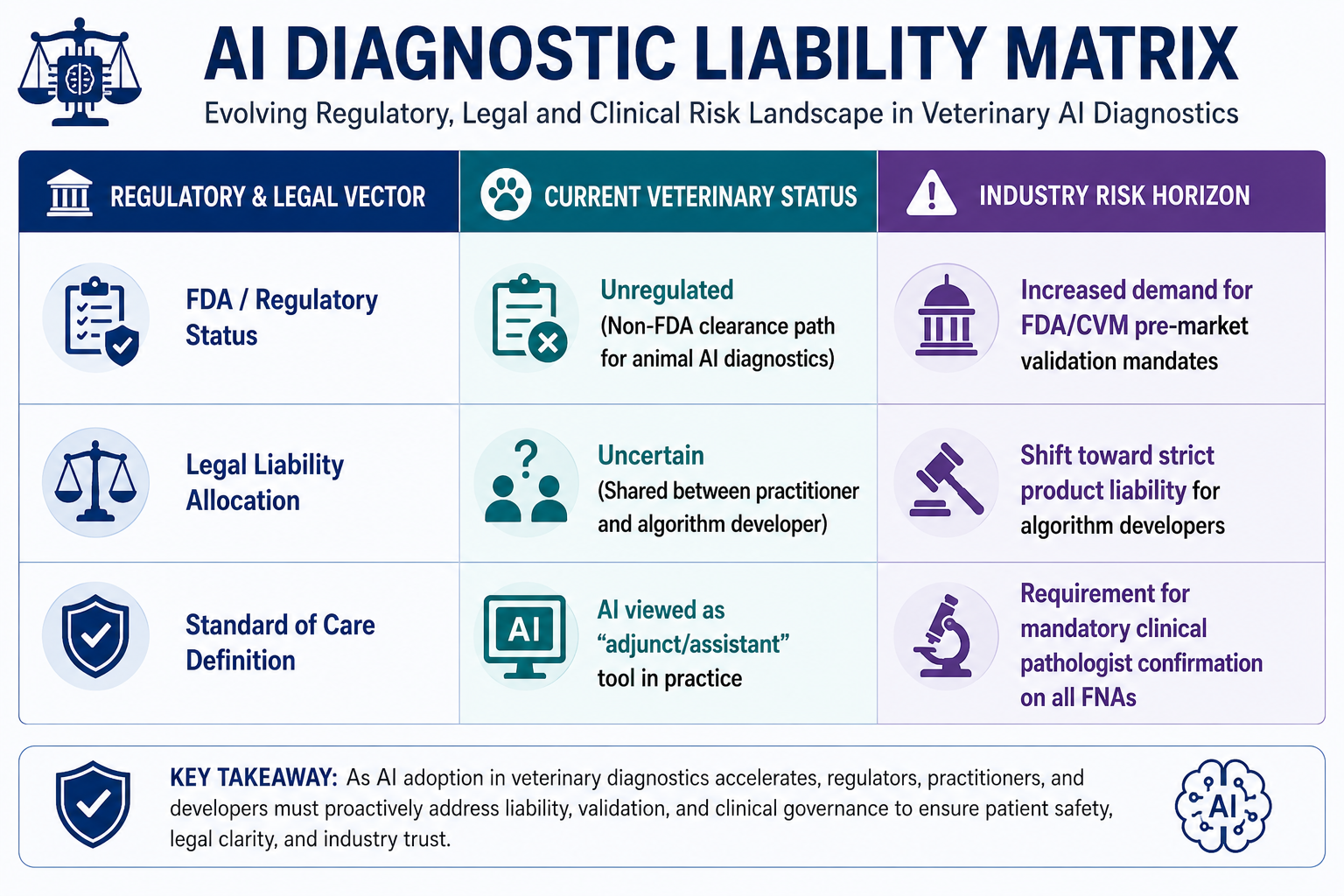
A. The “Human-in-the-Loop” Legal Defense vs. Product Liability
In human medicine, software-as-a-medical-device (SaMD) is strictly regulated by the FDA, and clinical responsibility remains firmly with the licensed physician. In veterinary medicine, diagnostic AI algorithms operate in a less rigid regulatory framework.
-
The Developer’s Stance: Diagnostic providers typically frame AI platforms as “decision-support tools” intended to supplement, rather than replace, veterinary clinical judgment or clinical pathologist confirmation.
-
The Plaintiff’s Argument: The lawsuit contends that commercial marketing of AI cytology tools emphasizes “expert-level accuracy” and “rapid actionable results,” creating relying conditions for busy practitioners under time-sensitive constraints.
B. Misclassification Risks in Deep-Learning Cytology
AI cytology engines utilize convolutional neural networks (CNNs) trained on thousands of digitized pathology slides. However, clinical pathologists point to key technical vulnerabilities:
-
Sampling Artifacts: Poor stain quality, cell overlapping, or blood contamination can cause neural networks to falsely identify neoplastic cells as inflammatory lymphocytes.
-
Tumor Heterogeneity: Necrotic cores within aggressive tumors often shed inflammatory debris, leading algorithms to analyze localized inflammation while missing underlying cellular atypia.
3. Financial & Regulatory Market Outlook
Zoetis has invested heavily in digital diagnostics, establishing the Vetscan Imagyst® platform as a core driver of its companion animal diagnostics portfolio. The system integrates deep-learning AI for fecal analysis, blood smears, dermatological cytology, and digital cytology slide scanning connected to remote board-certified pathologists.
This lawsuit poses reputational and strategic challenges for the broader veterinary health-tech landscape:
-
Increased Demand for Hybrid Workflows: Clinics are likely to shift away from “standalone AI reads,” enforcing protocols that mandate secondary validation by board-certified veterinary pathologists for suspected neoplastic masses.
-
Insurance & Malpractice Shifts: Veterinary malpractice insurers may establish clear policy guidelines regarding the reliance on unverified AI diagnostic outputs prior to invasive procedures.
-
Regulatory Oversight: Public litigation of this nature strengthens calls for the FDA Center for Veterinary Medicine (CVM) or state veterinary boards to institute standardized validation protocols for AI-driven animal health technologies.

