


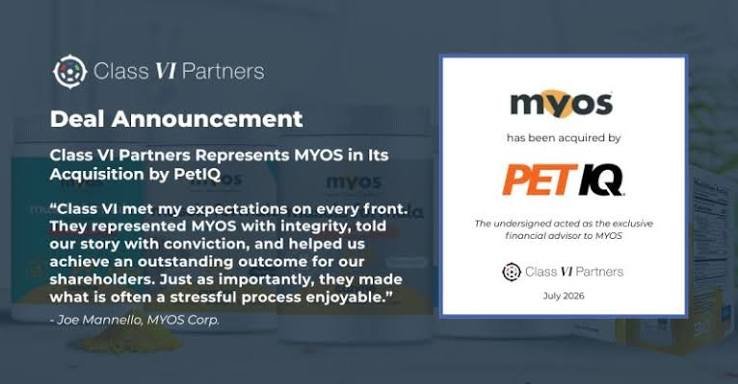
In a strategic consolidation move within the companion animal health sector, PetIQ, Inc.—a portfolio company of private equity firm Bansk Group—has acquired MYOS Corp., a bio-nutrition company specializing in clinically studied muscle health supplements.
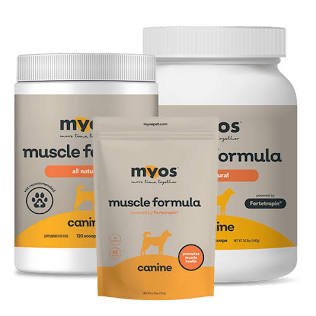
The transaction brings MYOS Corp.’s flagship product portfolio and its patented Fortetropin® ingredient technology under PetIQ’s consumer brand umbrella. The acquisition enables PetIQ to enter the rapidly expanding pet muscle health, mobility preservation, and geriatric care markets across retail, e-commerce, and veterinary distribution channels.
1. Executive Summary & Deal Architecture
Strategic Deal Objectives
-
Category Expansion: Expands PetIQ’s existing wellness portfolio (PetArmor, Capstar, Nextstar, Minties, Rocco & Roxie) into bio-active nutritional supplements.
-
IP Monetization: Secures exclusive access to Fortetropin®, a proprietary ingredient supported by over a dozen peer-reviewed clinical studies in humans and animals.
-
Omnichannel Scale: Combines MYOS’s veterinary-exclusive and direct-to-consumer (DTC) footprint with PetIQ’s mass-market retail distribution and clinic network.
2. Scientific & Clinical Asset Analysis: The Fortetropin Platform
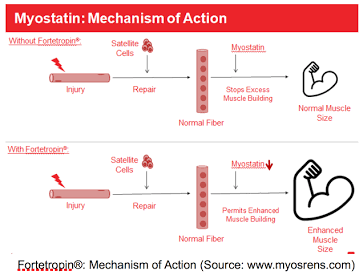
The core value driver of the acquisition is Fortetropin®, a non-thermal proteocontractile extract derived from fertilized egg yolks. Fortetropin acts as a natural myostatin inhibitor. Myostatin is a naturally occurring negative regulator of muscle growth; elevated levels accelerate muscle atrophy during aging (sarcopenia), joint immobilization, or post-surgical recovery.
Key Clinical Indications
-
Canine Osteoarthritis & TPLO Recovery: Clinical trials show Fortetropin prevents lean muscle loss in dogs recovering from orthopedic surgeries (such as Tibial Plateau Leveling Osteotomy) and chronic joint disease.
-
Senior Pet Sarcopenia: Helps aging dogs and cats maintain muscle mass, metabolic stability, and functional mobility.
-
Feline Chronic Kidney Disease (CKD): Preserved lean body mass in aging cats experiencing cachexia.
3. Market & Strategic Synergy Matrix
Strategic Integration Matrix
Operational Pillar |
MYOS Pre-Acquisition State |
Post-Acquisition Integration Strategy |
Distribution Reach |
Direct-to-consumer (DTC) e-commerce & specialized veterinary clinics |
Scale into broad national retail, big-box chains, and PetIQ’s footprint of nationwide wellness clinics |
Product Formulations |
Powdered formulations & specialized veterinary-exclusive product lines |
Potential expansion into soft chews, functional treats, and integrated daily nutritional diets |
Consumer Mindshare |
Niche focus on clinical recovery, post-surgery, and severe geriatric sarcopenia |
Repositioning as a standard preventive aging, joint, and daily mobility regimen for all active pets |
Synergies and Growth Drivers
-
Preventive Health Shifts: Modern pet owners are increasingly adopting proactive wellness routines, prioritizing mobility and longevity before clinical symptoms arise
-
Veterinary Channel Penetration: MYOS’s relationships with veterinary orthopedists and rehabilitation specialists provide PetIQ with enhanced clinical credibility across its companion animal brands

