


HomeCorporateUPM, Elanco Malaysia Formalise Veterinary Partnership to Advance Education & Research

UPM, Elanco Malaysia Formalise Veterinary Partnership to Advance Education & Research

Academia–industry collaboration will focus on veterinary education, research, innovation, talent development, antimicrobial resistance and stewardship, antiparasitic management and emerging animal-health needs.

Universiti Putra Malaysia (UPM) and Elanco Malaysia Sdn Bhd have formalised a Memorandum of Understanding (MoU) aimed at strengthening collaboration in veterinary education, research, innovation, talent development and animal health.

The agreement was signed at Elanco Malaysia’s Kuala Lumpur office on August 14, 2026, bringing together representatives of Elanco Malaysia and UPM’s Faculty of Veterinary Medicine. The partnership is intended to establish a framework for practical collaboration between UPM’s academic and research capabilities and Elanco’s animal-health expertise, industry experience and global resources.

The development is significant for Malaysia’s veterinary sector because it links one of the country’s major veterinary academic institutions with a global animal-health company at a time when the industry is facing increasingly complex challenges involving disease prevention, antimicrobial resistance, animal production, diagnostics, food safety and preventive veterinary care.
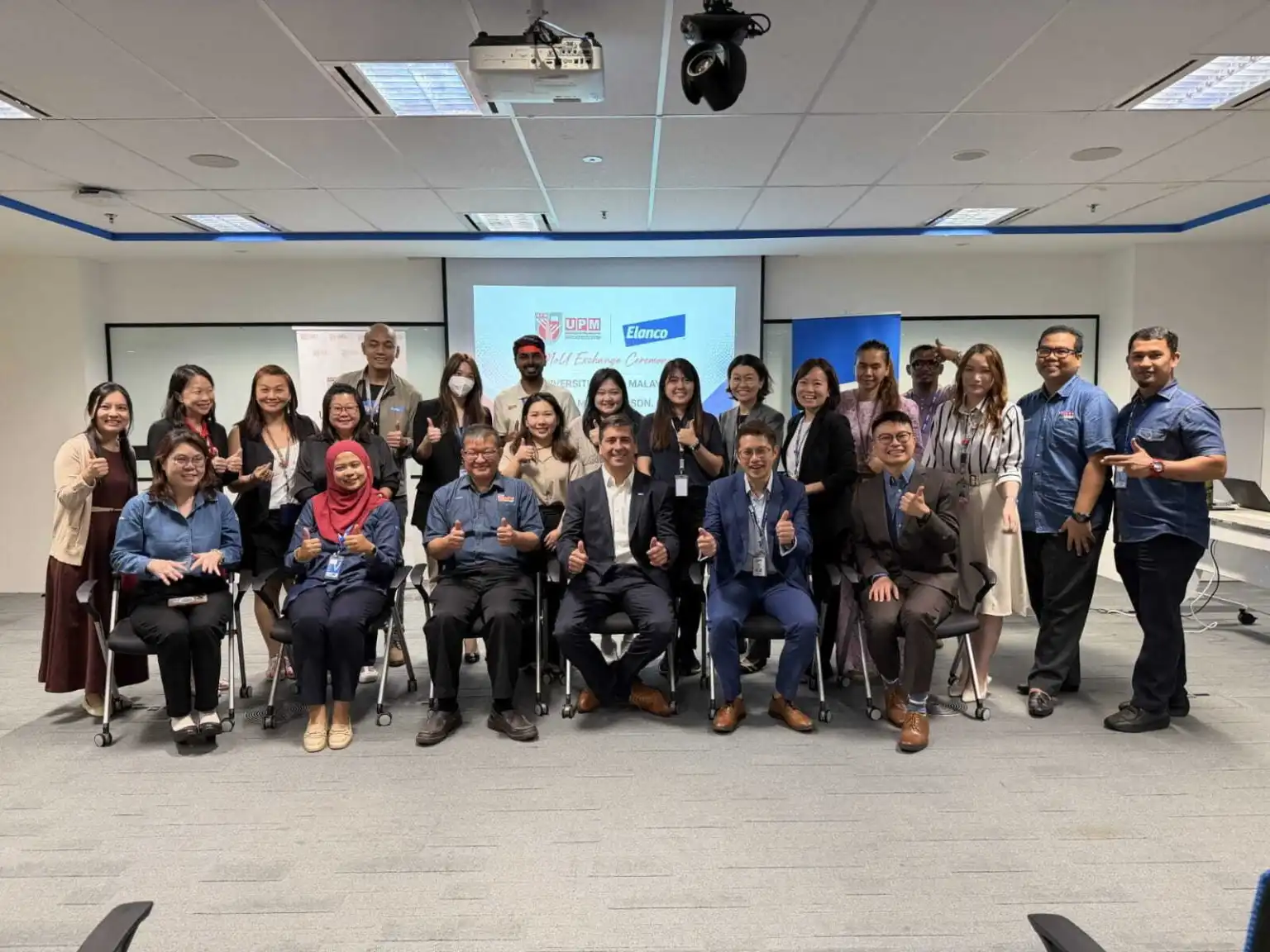
Elanco-UPM-MOU Malaysia

From Memorandum to Practical Veterinary Programmes

Elanco Malaysia Country Director for Malaysia and Singapore Tang Chee Ping said the MoU should serve as the beginning of practical programmes rather than simply a formal agreement.

The organisations intend to identify priority initiatives that can generate measurable outcomes involving students, researchers, technical experts and veterinary professionals. Potential activities include research projects, industry knowledge-sharing, student internships, technical programmes, career exposure and case-based learning.

This approach is particularly relevant to veterinary education, where graduates need both strong scientific foundations and an understanding of the practical challenges encountered in farms, veterinary clinics, diagnostic laboratories and the wider animal-health industry.

Five Key Areas of Collaboration

The partnership is expected to explore several areas across the animal-health value chain.

1. Veterinary education and talent development

Student development is a central component of the proposed collaboration. Potential activities include:

  • internships;

  • technical programmes;

  • industry presentations;

  • career exposure;

  • veterinary case studies;

  • knowledge exchange between academics and industry specialists.

The objective is to strengthen the connection between veterinary education and real-world animal-health practice.

UPM’s Faculty of Veterinary Medicine has already demonstrated experience working with animal-health companies on professional education. Earlier in 2026, the faculty collaborated with Elanco Malaysia and other industry partners on a veterinary nurse seminar and workshop focused on animal behaviour, welfare and clinical practice. That programme attracted 150 seminar participants and 50 workshop participants.

2. Antimicrobial Resistance and Stewardship

Antimicrobial resistance (AMR) is another important area identified under the partnership. Responsible antimicrobial use has become an increasingly important issue across livestock production, companion-animal medicine and veterinary public health.

For the veterinary sector, antimicrobial stewardship involves more than simply reducing antibiotic use. It includes:

Accurate diagnosis → appropriate treatment → correct antimicrobial selection → appropriate dose and duration → monitoring → prevention of unnecessary use

Closer collaboration between universities and industry can help translate research and technical knowledge into practical guidance for veterinarians and animal producers.

The UPM–Elanco partnership specifically identifies AMR and antimicrobial stewardship among the potential areas for joint work.

3. Antiparasitic Management

Antiparasitic management is also highlighted as an area of potential collaboration. Parasites can affect animal productivity, welfare and treatment outcomes, particularly when control programmes are poorly targeted or resistance develops.

A modern parasite-control strategy increasingly requires an understanding of:

  • parasite epidemiology;

  • treatment effectiveness;

  • resistance;

  • appropriate dosing;

  • diagnostic testing;

  • preventive management;

  • responsible use of antiparasitic medicines.

Bringing academic research together with field experience could help develop more evidence-based approaches to parasite management in Malaysian animal production and veterinary practice.

4. Animal Health Innovation and Diagnostics

The agreement also covers animal-health innovation, disease prevention, nutrition, animal production, diagnostics and emerging research areas.

This is potentially one of the most commercially and scientifically important components of the partnership. Veterinary diagnostics are changing rapidly, with developments in:

  • molecular testing;

  • point-of-care diagnostics;

  • imaging;

  • digital veterinary medicine;

  • data-driven disease surveillance;

  • artificial intelligence;

  • precision livestock management.

Academic institutions can contribute validation, research methodology and scientific expertise, while industry can provide practical applications, technical resources and pathways for translating innovations into veterinary practice.

5. Two-Way Knowledge Exchange

The partnership is designed to create a two-way flow of knowledge rather than a conventional industry sponsorship model.

Elanco’s technical and commercial teams will have opportunities to engage with UPM academics, researchers and students, while UPM’s academic expertise can contribute to challenges encountered by the animal-health industry. That distinction matters.

The strongest academic–industry collaborations are not simply about transferring research from a university to a company. They can also allow real-world veterinary problems to influence research priorities, potentially producing research with greater practical relevance.


Why the UPM–Elanco Partnership Matters for Malaysia

Malaysia’s animal-health sector spans livestock, poultry, companion animals, veterinary pharmaceuticals, vaccines, diagnostics, nutrition and animal welfare.

These sectors increasingly overlap with broader issues such as food security, sustainability, public health and antimicrobial resistance. The partnership therefore has potential relevance beyond veterinary education alone.

A One Health connection

Animal disease prevention can influence:

Animal health → food production → food safety → antimicrobial use → environmental health → public health

This makes veterinary research and education an important component of the wider One Health framework.

The UPM–Elanco collaboration’s emphasis on disease prevention, AMR, antiparasitic management and animal-health innovation fits within this broader direction, although the parties have not described the MoU as a formal One Health programme.


Elanco’s Existing Engagement With Veterinary Education

The new MoU builds on an existing relationship between Elanco Malaysia and UPM.

UPM records show that Elanco Malaysia has supported veterinary student activities, including awards connected with avian clinical conferences, final-year projects and avian practice. UPM’s published records indicate that some of these arrangements have existed for more than a decade.

The relationship has also extended into professional development. In January 2026, UPM’s Faculty of Veterinary Medicine worked with Elanco Malaysia and other partners on veterinary nurse education covering animal welfare, behaviour, pain management, CPR and clinical skills.

The latest MoU therefore represents an opportunity to broaden an existing relationship from individual educational initiatives toward a wider institutional framework covering research, education, innovation and animal health.

What Could Come Next?

The MoU itself does not constitute evidence that a specific vaccine, diagnostic technology or veterinary medicine has been jointly developed.

Instead, the agreement establishes a framework for identifying and developing future initiatives. The next meaningful indicators will therefore be the programmes that emerge from the partnership.

Strategic Implications for the Animal-Health Industry

From an industry perspective, the partnership reflects a broader shift in veterinary medicine: the boundary between academic research and commercial animal-health innovation is becoming increasingly important. For companies, universities provide access to scientific expertise, researchers, students and clinical environments.

For universities, industry can provide exposure to real-world problems, technical resources, market knowledge and potential pathways for translating research into practical applications. The potential value is therefore not simply financial. It is the creation of a talent–research–industry pipeline:

Veterinary education → research → validation → innovation → field application → improved animal health

That pipeline could become increasingly important as Malaysia addresses emerging diseases, antimicrobial resistance, parasite control, livestock productivity and the growing demand for advanced companion-animal care.

Animal Health India Editorial Team
Animal Health India Editorial Teamhttps://animalhealthindia.com
Animal Health India (AHI) is an independent news and intelligence platform covering the global animal health, veterinary, livestock, poultry, companion animal and pet food sectors. Our editorial team comprises veterinary journalists, animal health professionals, regulatory affairs specialists and industry analysts with over 30 years of combined experience covering India, Asia, Europe and North America. AHI publishes news, regulatory updates, market intelligence and company news drawn from primary sources including DAHD, EMA, USDA, AVMA and leading veterinary publications worldwide.
RELATED ARTICLES