

Global animal-health systems face a striking investment mismatch: WOAH estimates that bringing Veterinary Services worldwide up to international standards would require about US$2.3 billion annually, while animal diseases already destroy more than 20% of global animal production each year.
As avian influenza, African swine fever, foot-and-mouth disease and New World screwworm continue to demonstrate the cost of weak prevention systems, the investment case for veterinary infrastructure is becoming a global food-security and health-security issue.
Global animal-health industry is approaching an important inflection point
For decades, veterinary services were often viewed primarily as a national agricultural responsibility: vaccinate livestock, control outbreaks, inspect animals and protect trade. That model is becoming inadequate.
Today, animal health sits at the intersection of food security, pandemic preparedness, national security, international trade, rural livelihoods and environmental health. Yet investment in the systems responsible for preventing and detecting animal disease remains remarkably small.
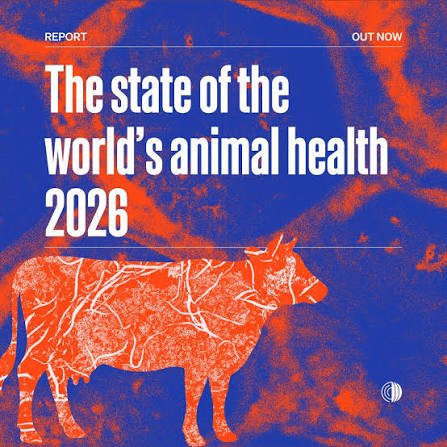
The World Organisation for Animal Health (WOAH) estimates that bringing Veterinary Services worldwide up to international standards would cost approximately US$2.3 billion per year. WOAH’s 2026 State of the World’s Animal Health report says animal health receives as little as 0.6% of global health spending, despite the scale of disease-related losses.
The question is no longer whether the world can afford stronger animal-health systems. It is whether the world can afford not to build them.
Investment Paradox
The numbers tell a remarkable story. WOAH estimates that more than 20% of global animal production is lost to preventable disease every year, representing roughly US$300 billion in annual losses. At the same time, bringing Veterinary Services globally up to international standards is estimated to cost about US$2.3 billion annually.
That creates an extraordinary imbalance:
~US$300 billion annual production loss
versus
~US$2.3 billion annual system investment requirement.
The investment required is therefore tiny compared with the economic value potentially protected. WOAH’s 2026 Animal Health Forum describes this as an “investment paradox”, noting that the global livestock market is valued at approximately US$1.37 trillion, while animal-health and welfare systems remain chronically underfunded.
This is not simply a veterinary problem. It is an economic problem.
Disease Prevention Is Becoming an Economic Asset
The traditional approach to animal disease has often been reactive:
Outbreak → detection → emergency response → treatment/culling → compensation → recovery.
The emerging model is different:
Surveillance → early detection → vaccination → biosecurity → targeted intervention → containment.
The second model costs money before the outbreak. But the first can cost dramatically more after the outbreak has begun. Recent events provide real-world examples.
New World Screwworm
The resurgence of New World screwworm (Cochliomyia hominivorax) in the Americas has become a powerful demonstration of the economic consequences of weakened disease and pest-control barriers.
USDA APHIS currently describes NWS as a serious threat to livestock and wildlife and is coordinating surveillance, reporting, control and sterile-insect efforts. Its current-status page was updated 19 of August 2026. The response now includes:
-
surveillance;
-
animal treatment;
-
wound management;
-
regulatory controls;
-
sterile-fly production and release;
-
cross-border coordination;
-
emergency veterinary products.
USDA is investing in new and renovated sterile-fly facilities because sterile-insect production and dispersal are critical components of eradication. This is exactly what underinvestment looks like in practice: a prevention infrastructure that becomes dramatically more expensive once a biological threat is established.
Avian Influenza Shows the Same Pattern
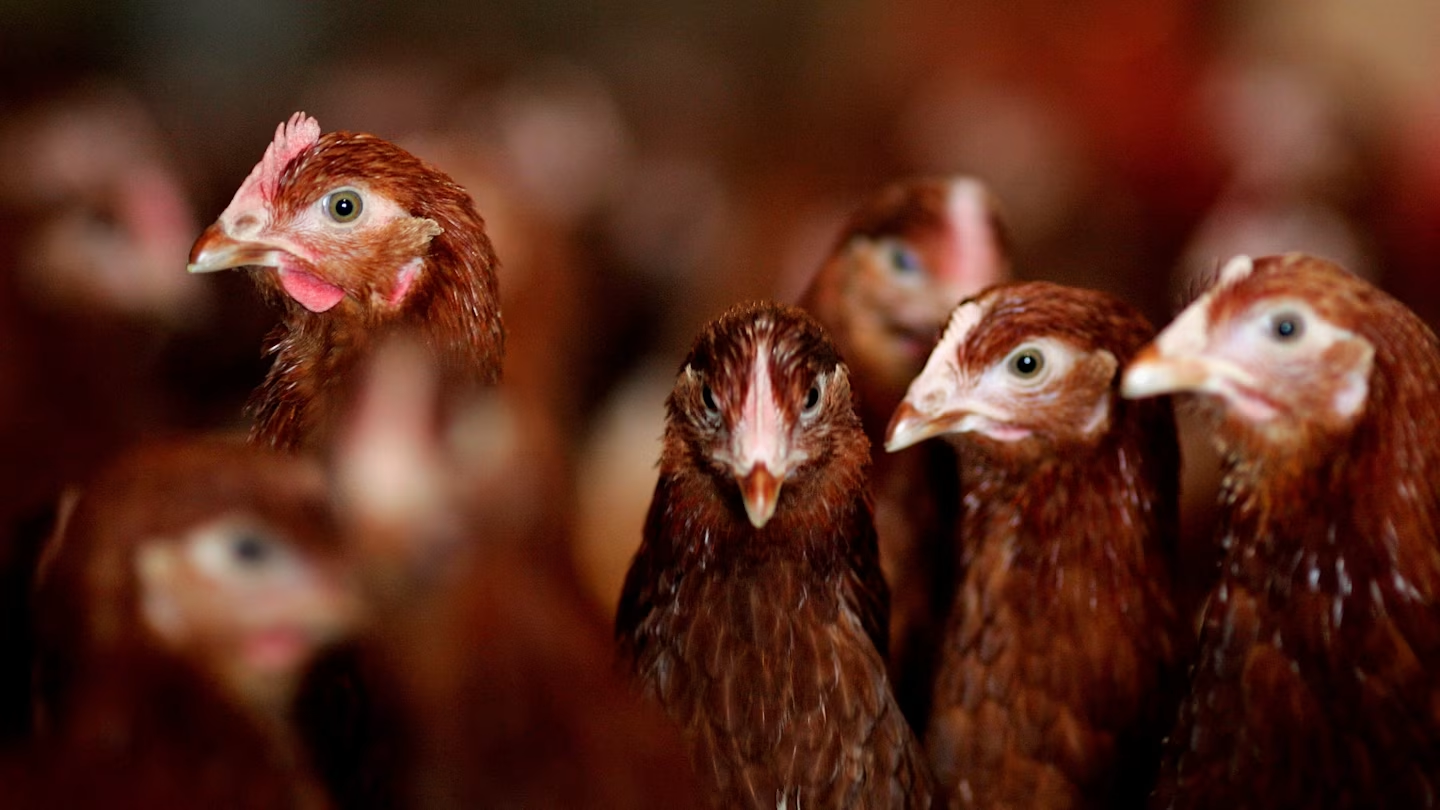
Highly pathogenic avian influenza provides another example. The disease has generated enormous costs through poultry mortality, emergency depopulation, trade disruption, surveillance and biosecurity measures.
WOAH’s 2026 report highlights the increasing pressure created by animal diseases, while recent global reporting shows how outbreaks can move rapidly between wildlife, poultry and other animal populations.
The lesson for governments and industry is straightforward:
surveillance capacity is not an administrative expense; it is outbreak insurance.
Laboratories, field veterinarians, diagnostic networks, animal identification systems and epidemiological databases may appear expensive when nothing is happening. They become invaluable when something does.
One Health Argument Changes Everything
The strongest argument for increased animal-health investment may not actually come from agriculture. It comes from human health.
The World Health Organization says more than 60% of emerging infectious diseases reported globally come from animals, while WHO’s broader One Health resources cite approximately 75% of emerging infectious diseases as having an animal origin. The implication is profound.
If animal-health systems are weak, the world is effectively allowing one of the earliest warning layers for emerging infections to remain under-resourced. A strong veterinary system can provide:
Farm surveillance → laboratory detection → epidemiological intelligence → early warning → containment
before an animal pathogen becomes a major human-health event.cThat is why One Health is no longer simply a policy slogan. It is increasingly an economic risk-management framework.
The Quadripartite organisations — WHO, FAO, UNEP and WOAH — have now extended the implementation period of the One Health Joint Plan of Action through 2029, providing continued international coordination on risks at the human-animal-environment interface.
US$2.3 Billion Is Not Simply for Vaccines
There is an important misconception to avoid. The proposed investment is not simply a global cheque for more veterinary medicines.cWOAH says the additional resources are needed across the veterinary system, including:
-
veterinarians and workforce capacity;
-
laboratories;
-
surveillance;
-
medicines;
-
regulatory functions;
-
inspection;
-
emergency response;
-
service delivery to farmers;
-
international standards and coordination.
That makes the opportunity much larger than the conventional animal-pharmaceutical market. The future animal-health ecosystem increasingly includes:
Vaccines + diagnostics + surveillance + AI + biosecurity + epidemiology + data + therapeutics + veterinary infrastructure.
Diagnostics Could Become the First Investment Priority
Among these areas, diagnostics deserve particular attention. A vaccine can prevent disease. A therapeutic can treat it. But a diagnostic system determines what is actually happening. Rapid and reliable diagnosis allows governments and veterinarians to distinguish:
-
disease from non-disease;
-
one pathogen from another;
-
isolated cases from outbreaks;
-
susceptible populations from protected populations;
-
treatment failure from diagnostic error.
This creates a powerful investment opportunity in:
-
molecular diagnostics;
-
point-of-care testing;
-
veterinary pathology;
-
genomic surveillance;
-
AI-assisted imaging;
-
laboratory information systems;
-
digital epidemiology;
-
remote veterinary diagnostics.
For animal-health investors, this represents a shift from the traditional product-centric model toward a prevention-and-information model.
AMR Adds Another Economic Layer
Antimicrobial resistance makes the investment argument even stronger. WOAH’s 2026 Animal Health Forum cites estimates that investments in antimicrobial-resistance control can generate annual returns of approximately 31%–88%.
This matters because better animal-health systems can reduce the need for antibiotics through:
prevention → vaccination → diagnostics → targeted treatment → antimicrobial stewardship.
In other words, veterinary infrastructure can simultaneously improve:
animal productivity + antimicrobial stewardship + food safety + human health.
That is precisely the type of multi-sector return that conventional health budgets often fail to capture.
Who Should Pay?
This is perhaps the most difficult question. Animal-health investment generates both private and public benefits. A farmer benefits from healthier animals. A pharmaceutical company benefits from demand for vaccines and medicines. A processor benefits from stable supply. Consumers benefit from food security. Governments benefit from reduced outbreak costs. And the global population benefits from lower pandemic risk.
WOAH therefore notes that there is no universal funding formula. Responsibility must be shared according to who benefits and who has the capacity to contribute. That opens the door to blended models involving:
-
governments;
-
development banks;
-
international organisations;
-
livestock industries;
-
pharmaceutical companies;
-
diagnostic companies;
-
insurers;
-
producers;
-
research institutions.
The next generation of animal-health financing may therefore look considerably more like global health-security financing than traditional agricultural spending.
Why This Matters for India
For India, this global debate has particular relevance. The country has one of the world’s largest livestock populations and an enormous dairy, poultry, fisheries and small-ruminant economy.
India’s Livestock Health & Disease Control Programme (LHDCP) already places major emphasis on vaccination, disease surveillance and strengthening veterinary infrastructure. But the strategic direction needs to move further toward:
predictive surveillance rather than reactive response.
That means connecting:
Bharat Pashudhan → veterinary networks → laboratories → epidemiological models → AI → farmer alerts → vaccination → rapid containment.
The opportunity is particularly important for diseases such as:
-
Foot-and-mouth disease;
-
avian influenza;
-
African swine fever;
-
brucellosis;
-
PPR;
-
lumpy skin disease;
-
emerging zoonotic infections.
India’s recent FMD activity in Arunachal Pradesh is a reminder that geography does not eliminate disease risk. Remote livestock populations still require rapid detection, field veterinary capacity and laboratory confirmation.
Animal-Health Industry Is Changing
The commercial implication of the US$2.3 billion investment gap is potentially enormous. The future market is unlikely to be dominated only by companies selling medicines after animals become sick.
The growth model increasingly favours companies that help producers avoid disease in the first place. That means increasing strategic value for:
Vaccines – Prevent disease before production losses occur.
Diagnostics – Identify pathogens earlier and more accurately.
Biosecurity – Reduce pathogen entry and transmission.
Digital surveillance – Identify geographic and epidemiological risk earlier.
AI – Support disease prediction, imaging and decision-making.
Feed and Gut Health – Improve resilience and reduce disease-associated production losses.
Veterinary Services – Turn scientific tools into practical field interventions.
This creates a broader animal-health prevention economy.
Investment Thesis Is Simple
The world is already spending enormous amounts dealing with animal disease. The problem is that much of that money is spent after the biological event has begun.
WOAH’s central message is that a relatively modest increase in preventive investment could strengthen Veterinary Services worldwide and reduce the economic and public-health consequences of future outbreaks.
The US$2.3 billion figure should therefore not be viewed simply as a funding request. It can be viewed as a global risk-management opportunity. Because the real comparison is not:
US$2.3 billion versus zero.
It is: US$2.3 billion of prevention versus potentially hundreds of billions of dollars in disease losses, trade disruption, food inflation and emergency response.
Bottom Line
The world’s animal-health system is facing a paradox:
Animal diseases destroy more than US$300 billion of production annually, yet animal health receives only a tiny fraction of global health spending.
WOAH’s estimated US$2.3 billion annual requirement to bring Veterinary Services worldwide up to international standards is small relative to the economic value at risk. The resurgence of New World screwworm, continuing avian-influenza pressure and recurring transboundary diseases demonstrate why prevention cannot remain an afterthought.
The next decade could therefore see animal health move from the margins of health policy to the centre of food security, pandemic preparedness and national economic resilience. For governments, the message is clear:
Veterinary infrastructure is not a cost centre. It is critical infrastructure.
For the animal-health industry, the opportunity is equally clear: The biggest market of the future may not be treating disease. It may be preventing it. Position yourselves accordingly.

