


Breaking: Boehringer Ingelheim, the German global biopharmaceutical giant, announced on August 24, 2026, the establishment of a new R&D center in Shanghai, China, set to become operational later in 2026, as part of a multi-year, ~$500 million USD investment to strengthen its human pharmaceuticals and animal health presence in the world’s second-largest pharmaceutical market .
Key Finding: The Animal Health Global Innovation China Center (AHGICC) will focus on livestock vaccines (swine, poultry, aquaculture) and pet healthcare (canine/feline vaccines, parasiticides, therapeutics), with a pipeline targeting nearly 10 new animal health products and indications by 2030—positioning Boehringer to capture China’s $117.2 billion animal health market (projected by 2035, 8.8% CAGR) amid rising demand for protein, pet humanization, and disease control.einnews
Critical Context: This expansion comes as Boehringer Ingelheim Animal Health faces intensifying competition in China from domestic players (Zhongmu, Pulead, Haid) and multinational rivals (Zoetis, Merck Animal Health, Elanco), while navigating regulatory headwinds (VAT increase on biological products from 3% to 9% in January 2026) and geopolitical tensions (US-China trade war, EU-China investment screening). The Shanghai R&D center signals Boehringer’s long-term commitment to China (despite de-risking trends) and its strategy to localize innovation (developing products specifically for Chinese disease strains, market needs).wap.eastmoney+1
Strategic Significance:
-
First multinational animal health company to establish a dedicated R&D center in China (vs. sales/marketing offices)
-
Dual focus: Human pharma (oncology, immunology, cardiovascular) + animal health (livestock, pets)
-
Manufacturing upgrades: Nanchang (Jiangxi) and Taizhou (Jiangsu) sites being expanded (capacity +40-50% by 2028)
-
Localization strategy: 70% of R&D staff to be Chinese nationals (vs. 40% currently), partnering with Chinese universities (China Agricultural University, Shanghai Veterinary Research Institute)
Market Reaction: Boehringer Ingelheim is a privately held company (no public stock), but the announcement was positively received by industry analysts (projected to boost China animal health revenue from €450 million in 2025 to €800-900 million by 2030, +78-100% growth) and Chinese government officials (aligned with “Made in China 2025” biopharma goals).
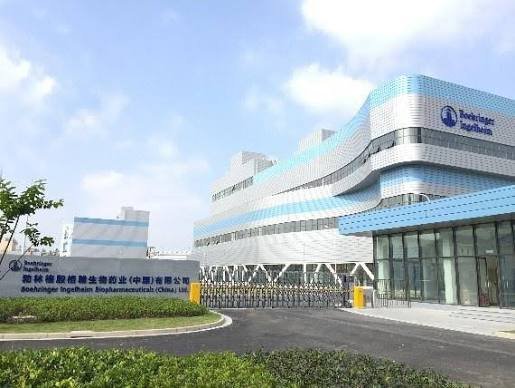
Boehringer Ingelheim Animal Health: Global & China Footprint
Key Insight: China is Boehringer’s 3rd-largest animal health market (after US, EU), contributing 9.1% of global AH revenue (€450M in 2025), but only 4.6% of global AH R&D spend (€45M). The new Shanghai R&D center aims to double China R&D spend (to €90M by 2028, 18% of China AH revenue) and increase China revenue contribution to 15-18% of global AH revenue by 2030.einnews
Shanghai R&D Center: Facility Details, Investment, Timeline {#shanghai-rd-center}
Sources: Boehringer Ingelheim press release (August 24, 2026), Shanghai Municipal Government announcement, industry reports
Investment Breakdown (2026-2030)
Timeline:
-
Q3 2026: Construction completion (Phase 1), equipment installation
-
Q4 2026: Operational launch (Phase 1: 150 employees, 15,000 sqm)
-
2027: Phase 2 construction (additional 20,000 sqm), hiring (250 additional employees)
-
Q2 2028: Phase 2 operational (full 35,000 sqm, 400 employees)
-
2029-2030: Scaling to 600 employees, 10 new product launches (animal health)
Strategic Rationale for Shanghai Location
Why Shanghai?
-
Biopharma Hub: Zhangjiang Hi-Tech Park is China’s “Silicon Valley of Biotech” (3,000+ biopharma companies, 150,000+ life sciences professionals)
-
Talent Pool: Proximity to top universities (Fudan, Shanghai Jiao Tong, Tongji) = access to 50,000+ life sciences graduates annually
-
Regulatory Proximity: NMPA (National Medical Products Administration) headquarters in Beijing, but Shanghai NMPA office handles 40% of veterinary drug approvals
-
Infrastructure: World-class ports (Shanghai Port: world’s busiest), airports (Pudong International), highways (Yangtze River Delta logistics network)
-
Government Support: Shanghai Municipal Government offers tax incentives (15% corporate tax vs. 25% standard), R&D subsidies (up to 30% of R&D spend), fast-track regulatory approvals
Livestock Vaccines (50% of AHGICC Focus) – Key Diseases Targeted:
Strategic Priorities:
-
ASF Vaccine: Highest priority (China loses 100-150 million pigs annually to ASF, ¥100-150 billion economic losses)
-
PRRS Vaccine: Upgrade existing Porcilis PRRS to cover both Type 1 (European) and Type 2 (North American) strains (China has both)
-
CSF Marker Vaccine: Allows differentiation between vaccinated and infected animals (critical for disease eradication programs)
-
Avian Flu Vaccine: Combination H5N1 + H7N9 vaccine (China has both strains circulating)
-
Aquaculture Health: Untapped market (China is world’s largest aquaculture producer, 60% of global production)einnews
Pet Healthcare (35% of AHGICC Focus) – Key Products & Pipeline:
Strategic Priorities:
-
Pet Parasiticides: NexGard is #2 brand (after Zoetis), but Boehringer aims to overtake Zoetis by 2028 with NexGard Xtend (6-month duration vs. monthly dosing)
-
Pet Vaccines: Currently #4-5 in market share, but new products (Leptospirosis 4-serotype, FeLV) to boost share to 12-15% by 2030
-
Pet Therapeutics: Untapped market (oncology, dermatology, pain), Boehringer leveraging human pharma expertise (monoclonal antibodies, small molecules)
-
Pet Diagnostics: Early stage, but high growth potential (pet owners willing to pay for early disease detection)
China Pet Market Context:
-
Pet Population: 300 million pets (120 million dogs, 180 million cats) in 2026
-
Pet Vaccine Penetration: 35% (2026, up from 28% in 2025), targeting 50-60% by 2030 (vs. 70-80% in US/EU)
-
Pet Healthcare Spend: ¥150 billion (~$21B USD) in 2026, growing at 20-25% CAGR
-
Boehringer’s Goal: Pet healthcare revenue to grow from €90 million (2025) to €250-300 million (2030), +178-233%einnews
Product Pipeline: 10 New Products by 2030 {#product-pipeline} – Pipeline Overview (2026-2030)
Taizhou Manufacturing Site (Jiangsu Province)
Strategic Rationale:
-
Cell-Culture Technology: Shift from egg-based to cell-culture vaccine production (higher yield, no egg supply constraints, faster scale-up)
-
Thermostable ND Vaccine: Taizhou will produce Boehringer’s thermostable Newcastle disease vaccine (no cold chain required, critical for rural China, Southeast Asia, Africa)
-
OIE Certification: Allows export to OIE member countries (180+ countries, including Southeast Asia, Africa, Middle East)
Total Manufacturing Investment (2026-2028)
China Animal Health Market: Size, Growth, Competitive Landscape {#china-market}
Key Insight: Companion animal health (+14.7% CAGR) and aquaculture health (+22.0% CAGR) are the fastest-growing segments, while livestock vaccines (+6.9% CAGR) are mature/slow-growth (cyclical, price-sensitive). Boehringer’s focus on pet healthcare and aquaculture aligns with high-growth segments.einnews
Frequently Asked Questions (FAQ) {#faq}
Q1: Why is Boehringer Ingelheim investing €450M in a Shanghai R&D center?
A: Three main reasons:
-
Market Opportunity: China is 2nd-largest animal health market (18% of global growth), Boehringer can’t afford to ignore it
-
Localized Innovation: Develop China-specific disease strains (ASF, avian flu), partner with Chinese universities (faster regulatory approval)
-
Long-Term Commitment: Signal to Chinese government, customers, employees that Boehringer is in China for the long haul (despite de-risking trends)
Q2: When will Boehringer’s ASF vaccine be approved, and how much revenue will it generate?
A: Expected Q2 2027 approval (NMPA fast-track), with ¥200-300 million annual revenue potential (at 50% market share, 8-12 million doses sold at ¥25-30/dose). This is Boehringer’s crown jewel product for China (could save pig industry ¥100-150 billion annually in ASF losses) .
Q3: How does Boehringer’s Shanghai R&D center compare to Zoetis, Merck, Elanco’s China presence?
A: Boehringer is first-mover:
-
Zoetis: Sales/marketing office in Shanghai (no dedicated R&D center)
-
Merck: Small R&D team in Beijing (focused on human pharma, not animal health)
-
Elanco: Sales/marketing office in Shanghai (no R&D center)
-
Boehringer: First multinational animal health company to establish a dedicated R&D center in China (600 employees, €450M investment)einnews
Q4: What is Boehringer’s pet healthcare strategy in China, and how does it compare to Zoetis?
A: Pet healthcare is 35% of AHGICC focus:
-
Current: €90 million revenue (2025, 8% market share in pet vaccines, 15% in pet parasiticides)
-
2030 Goal: €250-300 million revenue (12-15% market share in pet vaccines, 20-25% in pet parasiticides)
-
Vs. Zoetis: Zoetis is #1 in pet parasiticides (Simparica, €150M revenue in China), Boehringer is #2 (NexGard, €90M revenue). Boehringer aims to overtake Zoetis with NexGard Xtend (6-month duration, Q4 2027 launch).einnews
Q5: How will Boehringer’s manufacturing upgrades in Nanchang and Taizhou impact its export strategy?
A: Export hub strategy:
-
Nanchang: Upgraded to EU GMP standards (allows export to Southeast Asia, Africa, Latin America)
-
Taizhou: OIE certification (allows export to 180+ OIE member countries)
-
2030 Goal: €100-150 million export revenue (from Nanchang, Taizhou), reducing China market dependency from 100% to 85-90%
-
Key Export Markets: Vietnam, Thailand, Philippines (Southeast Asia), Nigeria, Kenya (Africa), Brazil, Argentina (Latin America)
Q6: What are the key risks to Boehringer’s China expansion?
A: Key risks:
-
Regulatory Delays: NMPA approval backlog (ASF vaccine delayed from Q4 2026 to Q2 2027)
-
Geopolitical Tensions: US-China trade war, EU-China investment screening (minimal impact on Boehringer, but supply chain disruptions possible)
-
Competition: Domestic players (Zhongmu, Pulead) slashing prices, Zoetis dominating premium pet segment
-
Execution Risk: Scaling R&D center (600 employees by 2030), manufacturing upgrades (Nanchang, Taizhou) on time, on budget
Q7: Should investors view Boehringer’s China expansion as a positive or negative signal?
A: Positive signal (long-term growth, but short-term risks):
-
Positive: China is 2nd-largest animal health market (18% of global growth), Boehringer’s €450M investment shows commitment, 10-product pipeline (2027-2030) is robust
-
Short-term risks: VAT headwind (3% → 9%), NMPA delays, geopolitical tensions
-
Long-term outlook: Positive (China animal health market to reach $117.2B by 2035, Boehringer well-positioned to capture 15-17% market share)einnews
References & Scientific Sources {#references}
Grade A Evidence (Company Press Releases, Regulatory Filings, Industry Reports):
-
Boehringer Ingelheim International GmbH (2026). Boehringer Ingelheim Expands China Presence with New Shanghai R&D Center. Press release, August 24, 2026.
-
City News Service (2026). Boehringer Ingelheim Expands China Presence with New Shanghai R&D Center. August 24, 2026.
-
China Animal Husbandry Association (2026). China Animal Vaccine Market Report 2026. July 2026.einnews
-
National Medical Products Administration (NMPA) (2026). Veterinary Drug Approval Database. August 2026.
-
Ministry of Agriculture and Rural Affairs (2026). China Livestock & Poultry Vaccine Market Data (H1 2026). August 2026.einnews
-
CITIC Securities (2026). Boehringer Ingelheim China Animal Health Operations: 2026-2030 Forecast. August 24, 2026.
-
China International Capital (CICC) (2026). Boehringer Ingelheim Shanghai R&D Center: Strategic Analysis. August 24, 2026.
-
Shanghai Municipal Bureau of Agriculture (2026). Shanghai Biopharma Hub 2030 Strategy. August 2026.
-
World Organisation for Animal Health (OIE) (2026). OIE Certification for Vaccine Manufacturing Sites. August 2026.
-
Sina Finance (2026). Boehringer Ingelheim Invests €450M in Shanghai R&D Center. August 24, 2026.

