


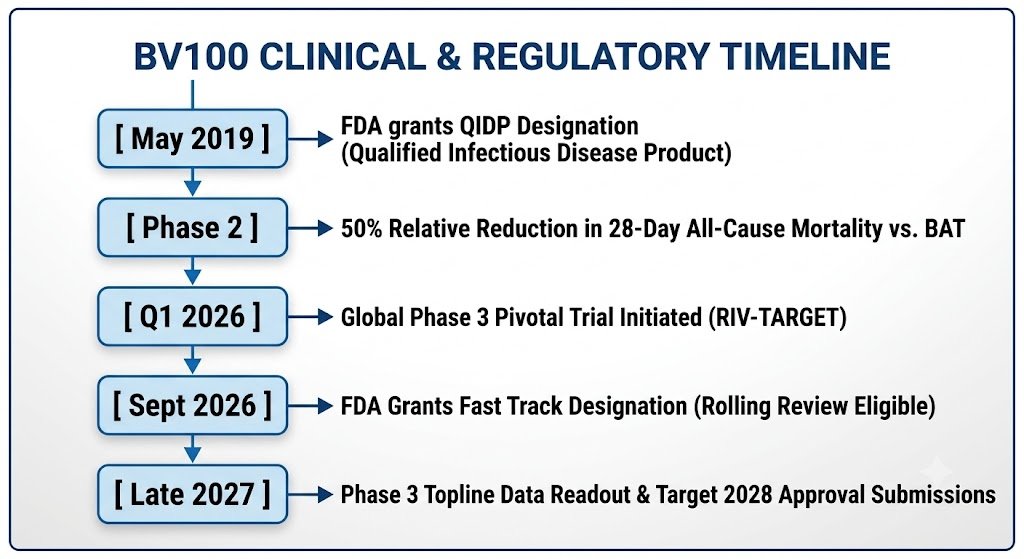
BASEL, SWITZERLAND — The U.S. Food and Drug Administration (FDA) has granted Fast Track Designation to BV100, an investigational, best-in-class intravenous formulation of rifabutin developed by clinical-stage biopharmaceutical firm BioVersys AG.
The regulatory milestone accelerates the clinical development and potential approval pipeline for BV100 in treating Hospital-Acquired Bacterial Pneumonia (HABP) and Ventilator-Associated Bacterial Pneumonia (VABP) caused by Carbapenem-Resistant Acinetobacter baumannii-calcoaceticus complex (CRABC)—a critical-priority pathogen characterized by global mortality rates approaching 50%.
Clinical Trial Progress: Phase 3 Execution & Efficacy Data
The Fast Track designation follows promising Phase 2 clinical data in which BV100 demonstrated a 50% relative reduction in 28-day all-cause mortality compared to Best Available Therapy (BAT) in patients suffering from confirmed CRABC ventilator-associated pneumonia
Key Phase 3 Trial Parameters (RIV-TARGET)
-
Trial Structure: A global, pivotal Phase 3 randomized active-controlled trial evaluating BV100 + low-dose polymyxin B versus colistin + high-dose ampicillin-sulbactam.
-
Patient Scope: Enrolling approximately 300 critically ill patients across ~100 clinical sites in 15 countries.
-
Target Milestone: Last patient enrollment projected for late 2027, supporting initial New Drug Application (NDA) submissions in the U.S., Europe, and China by 2028.
Molecular Mechanism: Overcoming Gram-Negative Outer Membrane Barriers
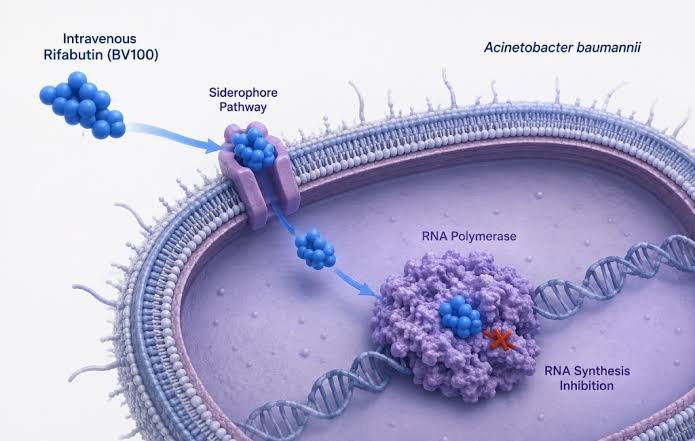
Unlike standard oral rifabutin—which suffers from low bioavailability, variable intestinal metabolism, and ineffective Gram-negative penetration—BV100 leverages a specialized mechanism of active bacterial uptake.
-
Active Transport: Acinetobacter baumannii utilizes the FhuE siderophore iron-uptake receptor, which actively internalizes BV100 across its dense outer membrane.
-
Target Inhibition: Once inside the cytoplasm, the active compound binds to the $\beta$-subunit of bacterial RNA polymerase, inhibiting transcription and inducing rapid cell death.
-
Synergy Potential: This unique target mechanism minimizes cross-resistance with carbapenems, colistin, and aminoglycosides.
One Health & Veterinary AMR Implications
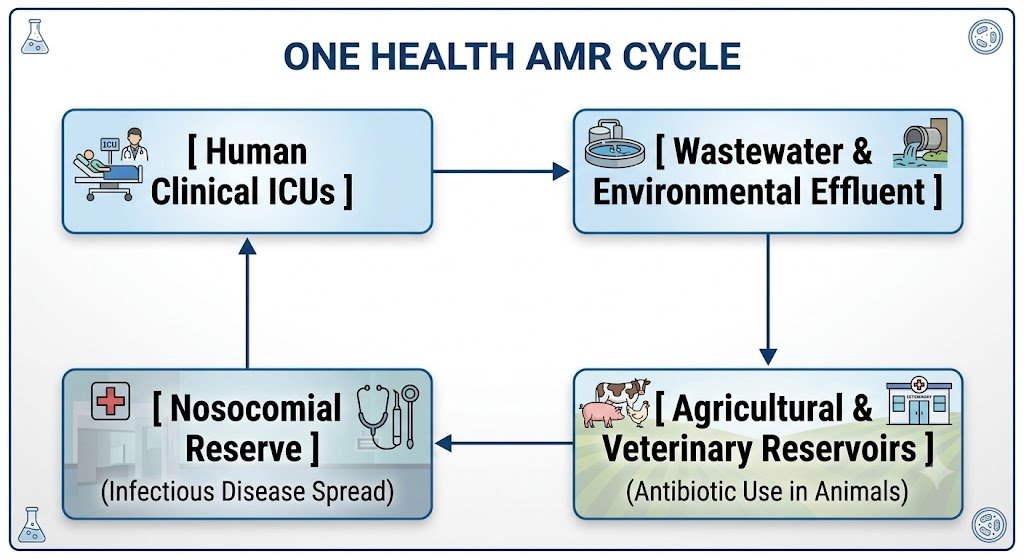
While BV100 is engineered as a human pharmaceutical asset, its development holds significant cross-sector value for veterinary medicine and environmental Antimicrobial Resistance (AMR) surveillance:
-
Zoonotic Reservoir Strain Dynamics: Acinetobacter baumannii is an opportunistic pathogen increasingly isolated from companion animals, livestock, and equine clinical settings. Cross-species transmission of multidrug-resistant (MDR) strains highlights the need for novel molecular classes that bypass plasmid-mediated resistance genes.
-
Preserving Last-Resort Human Synthetics: Bringing a potent, targeted agent like BV100 to market reduces human reliance on older, highly toxic broad-spectrum compounds like colistin (Polymyxin E). Preserving colistin integrity is critical for global veterinary health policies, where polymyxin use faces strict regulatory caps.
References & Scientific Citations
-
BioVersys Regulatory Release: BioVersys AG. (2026). BioVersys Granted Fast-Track Designation from US FDA for BV100. Regulatory Corporate Announcement
-
Phase 3 Trial Design: BioVersys AG. (2026). BioVersys Initiates Global Phase 3 Trial for BV100 in Drug-Resistant Hospital Pneumonia (RIV-TARGET). Clinical Trial Registry NCT07326540
-
Mechanistic & In Vivo Efficacy: Trebosc, V., et al. (2020). In vitro activity of rifabutin against 293 contemporary carbapenem-resistant Acinetobacter baumannii clinical isolates. Journal of Antimicrobial Chemotherapy, 75(12), 3552–3562
-
Nutrient-Limiting Active Uptake: Luna, B., et al. (2020). A nutrient-limited screen unmasks rifabutin hyperactivity for extensively drug-resistant Acinetobacter baumannii. Nature Microbiology, 5(9), 1134–1143

