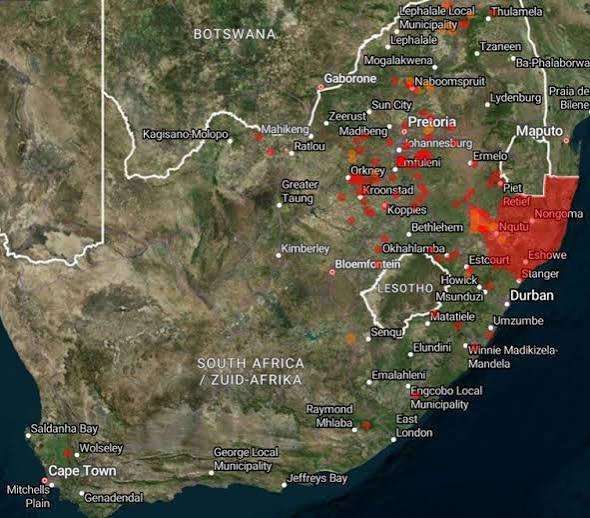


South Africa is facing what has been described as the country’s worst foot-and-mouth disease (FMD) epidemic, with cattle farms suffering major production losses, prolonged movement restrictions and costly herd-management measures. Farmer accounts published this week show that many producers had prepared for an outbreak, but once the virus entered a susceptible herd, farm-level biosecurity alone was often insufficient to contain it.
A Livestock Disease With National Economic Consequences
Foot-and-mouth disease is one of the world’s most contagious livestock diseases. It affects cattle, pigs, sheep, goats and other cloven-hoofed animals and can spread rapidly through infected animals, contaminated equipment, vehicles, clothing and other materials. WOAH classifies FMD as a major transboundary animal disease because outbreaks can sharply reduce production and disrupt domestic and international trade.
South Africa’s current crisis has developed against a much longer background. The country lost its FMD-free status in 2019, and government has subsequently dealt with recurrent outbreaks and expanding disease-management requirements. In December 2025, the agriculture ministry described the livestock industry affected by FMD as an approximately R80 billion sector.
A September 2 investigation by GroundUp now characterises the 2025–26 episode as South Africa’s worst FMD epidemic, reporting widespread disease among cattle farms and severe financial and emotional consequences for producers.
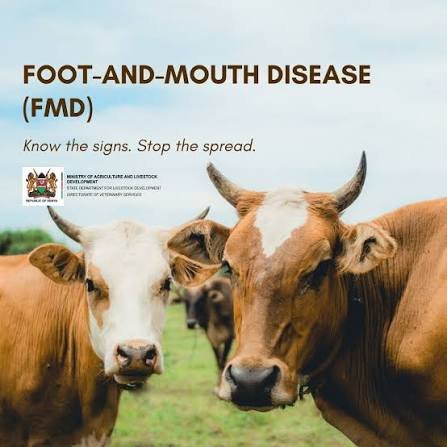
The farm-level numbers illustrate the scale
At Mearns dairy farm in KwaZulu-Natal, farmer James Kean reported that FMD arrived on 23 January 2026. What began with one symptomatic cow developed into an outbreak in which approximately 1,500 of 1,600 cattle became infected — about 94% of the herd.
The economic impact was substantial. Kean estimated the farm’s outbreak cost at least R7 million, including approximately R3 million in medicines, in addition to higher labour costs and sharply reduced milk production.
Another dairy operation in the Kamberg Valley had a markedly different experience after vaccinating its herd shortly before the outbreak. Of thousands of cattle, approximately 125 became ill, illustrating the potential value of vaccination when adequate protection is established before exposure.
Why Farmers Could See the Risk but Still Struggled
The experience highlights a fundamental problem with FMD control: farm biosecurity reduces risk but cannot create an impermeable barrier around a highly transmissible virus when disease pressure is high.
Farmers interviewed by GroundUp described detailed preparedness measures, yet infection still entered farms. Once established, the consequences went well beyond visible mouth and foot lesions. In dairy cattle, FMD can cause:
-
fever and painful oral lesions;
-
lameness from foot lesions;
-
reduced feed intake;
-
teat and udder damage;
-
secondary mastitis;
-
severe reductions in milk production;
-
poor recovery and body-condition loss; and
-
premature culling of animals that fail to return to productive performance.
On the Mearns farm, GroundUp reported that affected cows could reduce feed intake from roughly 15–20 kg/day to only 2–3 kg/day during severe illness, while milk output fell sharply. This is why the economic damage of FMD cannot be measured simply by counting animals that die.
Mortality is only part of the loss
Adult mortality from FMD is generally low, although young animals can experience significant mortality, including from myocarditis. The much larger commercial effect in mature livestock can come from production losses, reproductive disruption, secondary disease, chronic damage and culling. WOAH notes that FMD can severely disrupt livestock production and trade even when mortality in adult animals is limited.
For dairy producers, an animal that survives but suffers permanent udder damage or fails to regain productivity can represent a substantial economic loss.
South Africa’s Vaccination Response Accelerated in 2026
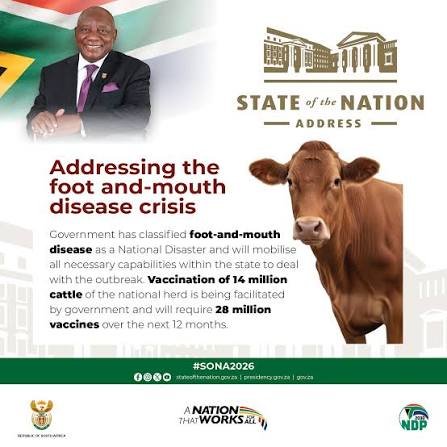
The government’s response expanded dramatically during 2026. By 28 May 2026, South Africa had:
Indicator |
Reported position |
|---|---|
FMD vaccine procured since February 2026 |
13.5 million doses |
Animals vaccinated by 28 May |
Just under 4.4 million |
Government spending on vaccine procurement/deployment |
R494 million |
Biogenesis Bagó doses received in late May |
3.5 million |
Additional Dollvet vaccine approved for import |
14 million doses |
First Dollvet consignment |
4 million doses |
The government described the programme as the largest FMD vaccine acquisition programme undertaken by the South African state.
Vaccination coverage was already concentrated in the highest-risk provinces. By May 28, more than 1.1 million animals had been vaccinated in KwaZulu-Natal, over 720,000 in Eastern Cape, more than 600,000 in Free State, over 430,000 each in Mpumalanga and North West, and more than 350,000 in Limpopo.
The government subsequently reported procuring 13.5 million doses since February and described vaccine availability as having reached unprecedented levels for the country.
The Vaccine Timing Problem
The South African experience also demonstrates why vaccination capacity cannot simply be switched on after an outbreak begins. In December 2025, the government set a target of:
-
approximately 70% reduction in FMD incidents in high-risk areas over 24 months;
-
90% vaccination coverage in targeted communal, commercial and feedlot populations; and
-
100% vaccination of dairy cattle.
By June 2026, the programme had already vaccinated millions of animals, but the government acknowledged that South Africa had historically operated largely through a reactive rather than preventative biosecurity model. It said the new approach required rebuilding vaccine supply chains, surveillance, diagnostics and inter-provincial coordination. That distinction is critical.
FMD control is not simply a question of having a vaccine. It requires the right vaccine match, sufficient supply, timely administration, booster programmes, surveillance and movement controls before the virus reaches susceptible populations.