


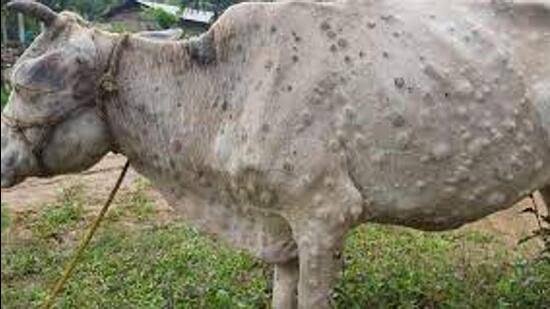
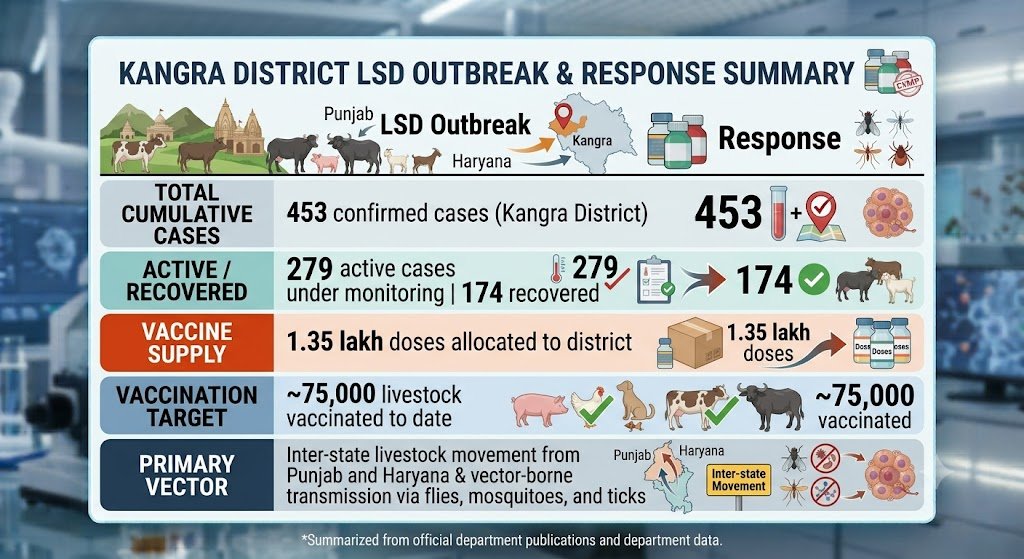
Officials in Kangra district, Himachal Pradesh, have intensified disease containment measures following the confirmation of 453 cases of Lumpy Skin Disease (LSD) across the region. Local veterinary teams report 279 active cases currently under strict observation, while 174 animals have successfully recovered.
In response, the state Animal Husbandry Department has launched a campaign-mode vaccination drive. The district has received 1.35 lakh doses of the goat pox vaccine (used for heterologous protection against LSD), with field staff having vaccinated over 75,000 animals to date to build herd immunity.
1. Cross-Border Movement Drives Regional Surge
Veterinary epidemiologists attribute the surge in Kangra to the unregulated movement and trading of livestock across the state border from neighboring endemic areas in Punjab and Haryana.
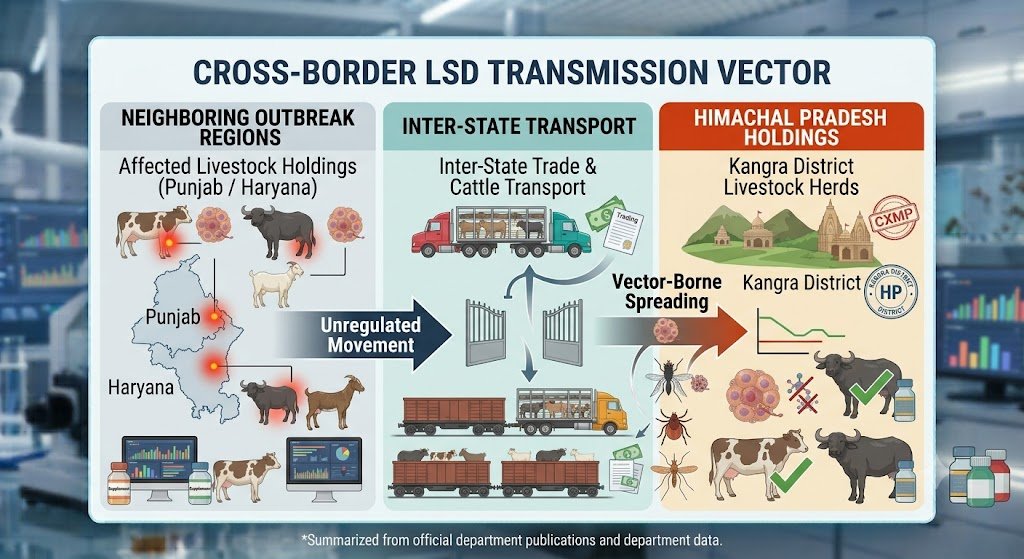
Because LSD is an arthropod-borne viral infection caused by the Capripoxvirus, local transmission within herds is further accelerated by blood-feeding insects, including biting flies, mosquitoes, and ticks, particularly during humid post-monsoon conditions.
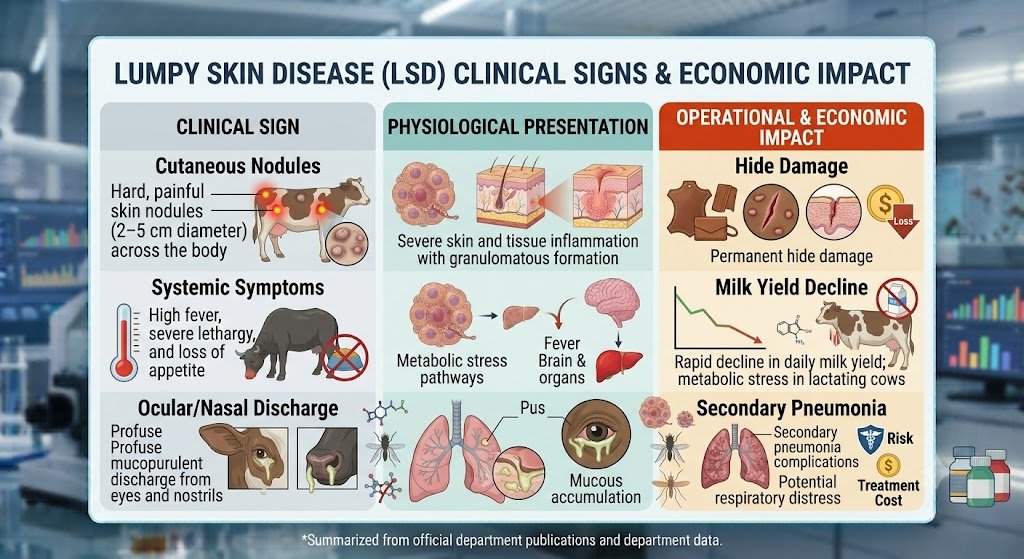
2. Clinical Manifestations & Farmer Advisory
The Animal Husbandry Department has issued a comprehensive clinical advisory to livestock owners, detailing the primary symptoms to monitor:
Containment Protocols for Dairy Farmers
-
Immediate Isolation: Separate symptomatic animals immediately from healthy herds to prevent direct contact transmission.
-
Shed Hygiene & Disinfection: Maintain strict sanitation in cattle sheds using approved virucidal disinfectants (e.g., sodium hypochlorite or ether-based solutions).
-
Vector Control: Apply topical ectoparasiticides and maintain physical barriers to eliminate flies and mosquito breeding sites around farm premises.
-
Trade Restraints: Avoid purchasing new cattle or introducing unverified livestock into existing herds during the active outbreak window.

