


SÃO PAULO — A severe regulatory bottleneck within Brazil’s Ministry of Agriculture and Livestock (MAPA) has frozen an estimated R$ 1 billion (~US$ 180 million) in private sector investments.
During an industry seminar held on September 15, 2026, the National Association of Animal Health Product Laboratories (Sindan) revealed that 372 initial registration dossiers for novel pharmaceuticals, biologicals, vaccines, and advanced antiparasitics remain pending administrative review.
However, a landmark administrative mechanism published by MAPA—establishing a streamlined “tacit licensing” (licença tácita) framework—is set to immediately break the logjam. The rule provides provisional marketing authorizations for dossiers whose statutory review deadlines have expired, unlocking an estimated R$ 300 million (~US$ 54 million) in commercialized assets in the short term.
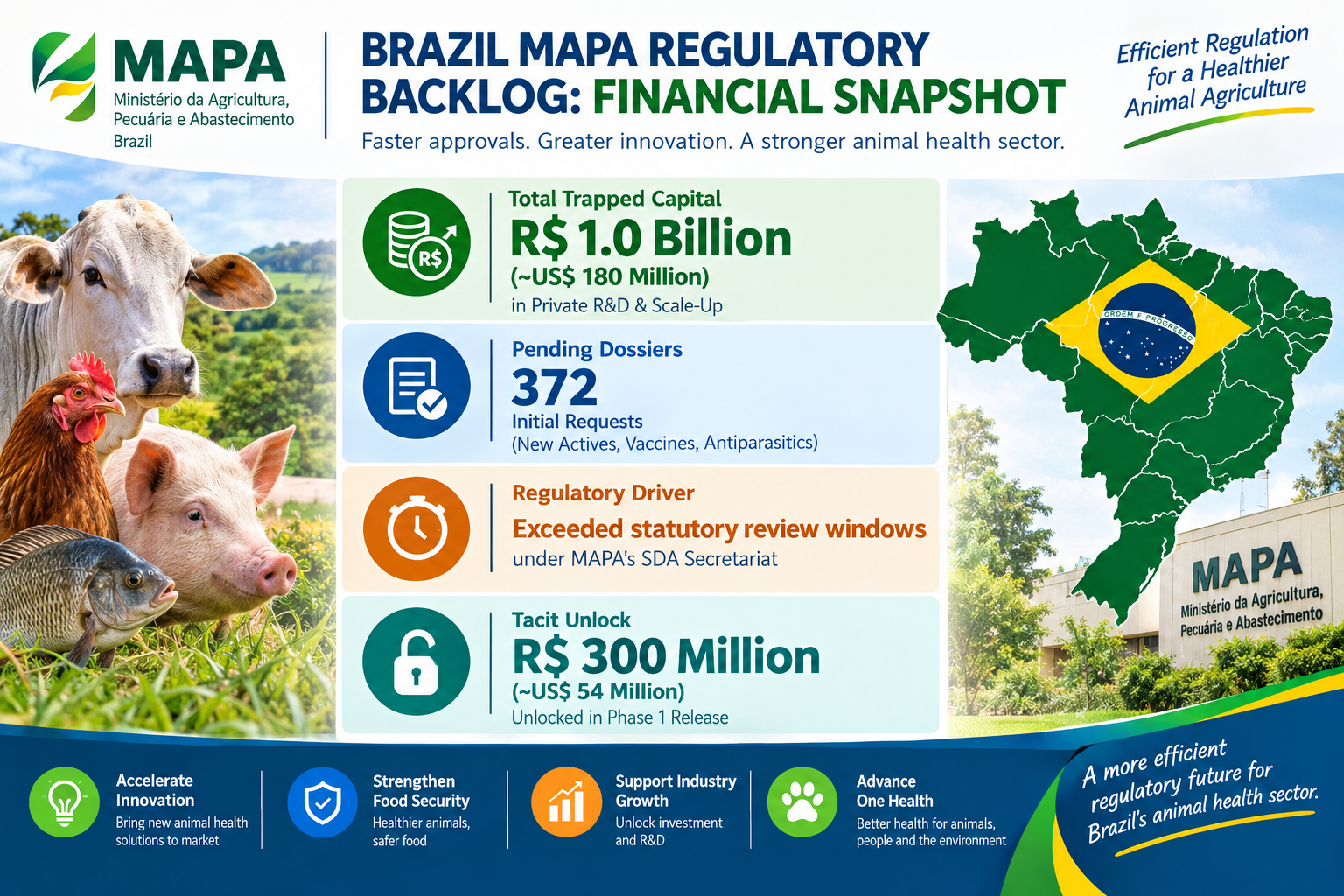
1. Regulatory Bottlenecks vs. The Tacit Licensing Unlock
The backlog stems from an imbalance between rapid research and development investments by domestic and multinational pharmaceutical firms and available technical auditing capacity within MAPA’s Department of Animal Health (DSA/SDA).
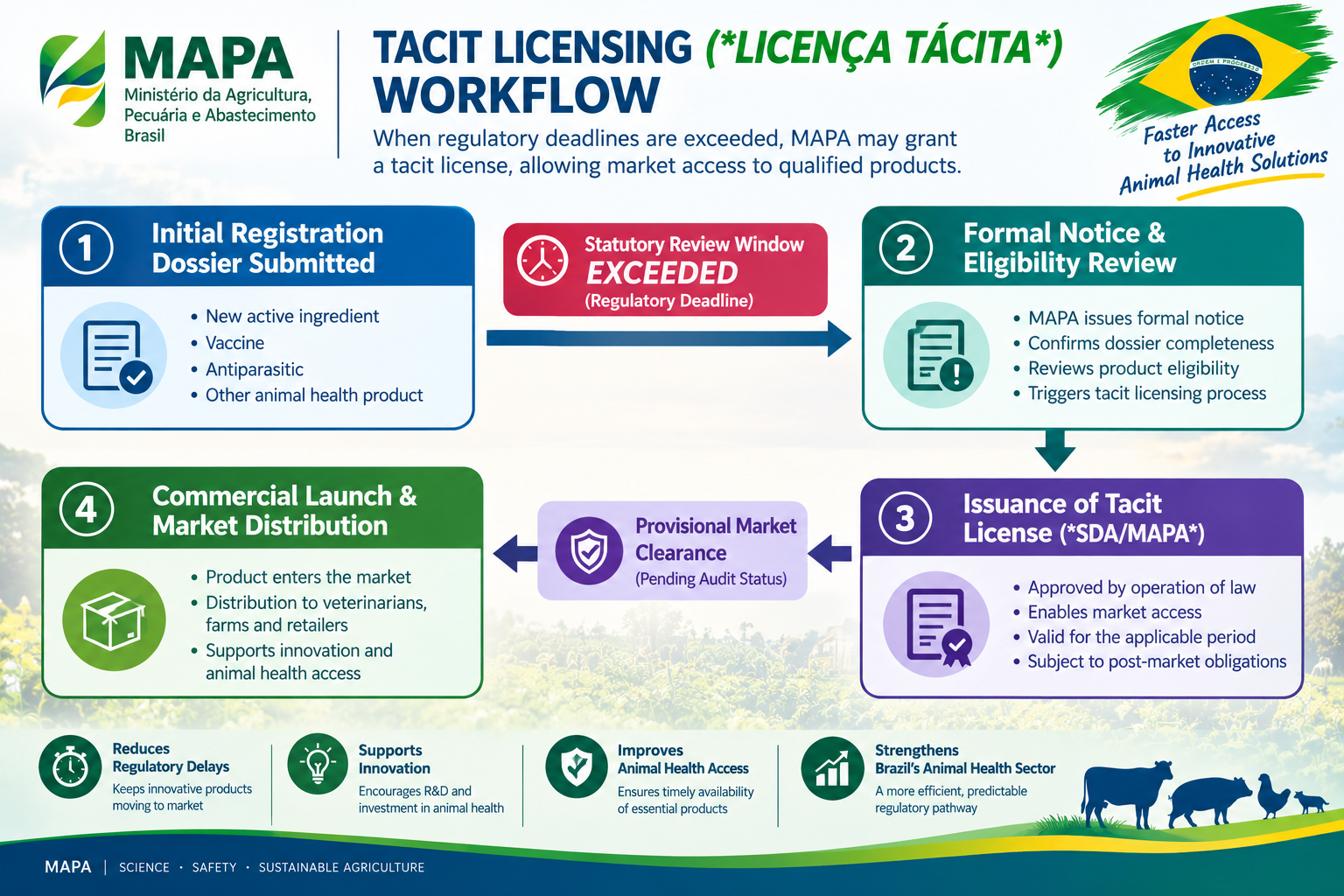
Under MAPA’s operational framework (Ofício-Circular Nº 61/2026/CGIPE/DSA/SDA/MAPA), the tacit approval mechanism functions under strict administrative boundaries:
-
Provisional Validity: Grants temporary commercialization rights for products stuck in extended review queues.
-
Post-Market Surveillance Safety Net: MAPA retains full authority to conduct retrospective technical audits and revoke licenses if safety, efficacy, or residue profiles fall short of national standards.
-
Risk Categorization: Prioritizes lower-risk pharmaceuticals and established formulations, allowing technical teams to concentrate high-level scrutiny on novel biologicals and autogenous technologies.
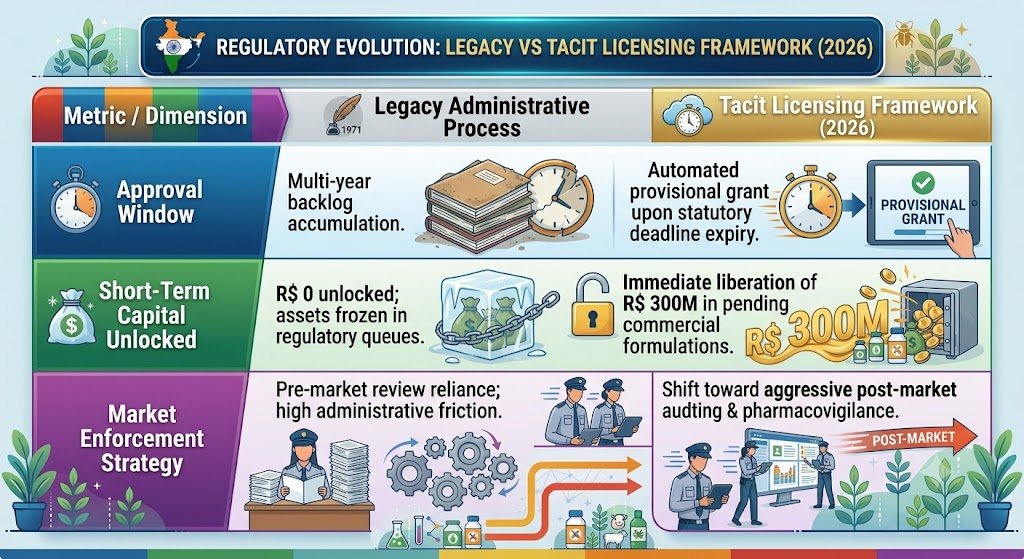
2. Regulatory Transition & Impact Matrix