


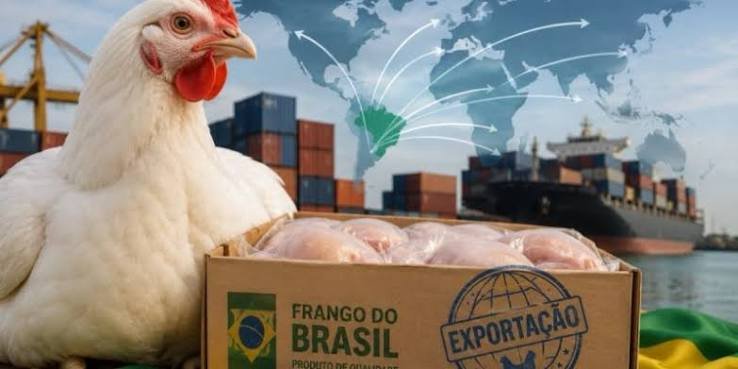
Following a brief suspension, the European Union accepted Brazil’s revised sanitary protocols for poultry. Official communication sent by the European Commission to Brazil’s Ministry of Agriculture (MAPA) confirmed an internal agreement on the documentation and control frameworks, clearing the pathway to resume Brazilian chicken exports.
The resolution addresses a regulatory embargo that came into effect under Implementing Regulation (EU) 2026/1189. The suspension was driven by stringent EU requirements regarding antimicrobial resistance (AMR) and drug-traceability standards, rather than a viral or food safety contamination event.
Key Timeline & Regulatory Milestones
Date |
Milestone / Action |
May 12, 2026 |
EU standing committee removes Brazil from the list of approved third-country suppliers for several animal-origin products due to antimicrobial documentation gaps |
July 1, 2026 |
Brazil’s Ministry of Agriculture deploys a national antimicrobial control and digital farm-to-slaughter traceability protocol |
August 24 – September 5, 2026 |
European Commission auditors conduct on-site technical evaluations of Brazilian poultry processing facilities and regulatory audit trails |
September 3, 2026 |
Formal import suspension takes effect across EU Border Control Posts (BCPs) |
September 14–16, 2026 |
EU formally notifies Brazil of internal agreement on presented sanitary protocols, opening the way for the issuance of the detailed technical protocol and formal relisting on the authorized supplier registry |
The Regulatory Cause: Antimicrobial Stewardship vs. Pathogen Outbreaks
Unlike previous trade disruptions driven by Highly Pathogenic Avian Influenza (HPAI) or Newcastle Disease, this embargo was purely policy- and documentation-driven:
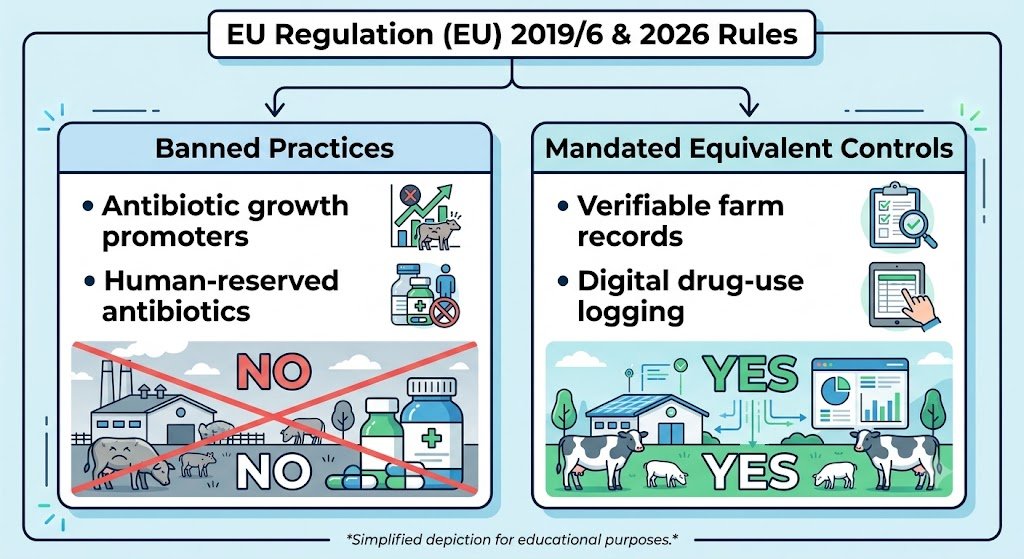
The EU’s updated rules mandate that third-country exporters demonstrate equivalence with internal EU prohibitions against antibiotic growth promoters (AGPs) and the routine use of critically important antimicrobials. Brazil’s implementation of farm-level digital tracking and dedicated, non-antimicrobial export supply chains satisfied European auditors during the late-summer assessment.
Trade Economics & Supply Chain Impacts
Brazil is the world’s largest poultry exporter, shipping nearly $2 billion annually in animal protein products to European markets. The brief trade freeze caused immediate ripple effects across global trade lanes:
-
Short-Term Market Redirection: During the multi-week suspension, major Brazilian processors (including BRF and Seara/JBS) redirected export-dedicated poultry volumes to high-capacity secondary markets across East Asia and the Middle East, creating temporary domestic pricing pressure.
-
EU Importer Relief: The resumption clears supply bottlenecks for European processing plants, food service distributors, and industrial feed/further-processing operations that depend on imported Brazilian breast meat and raw material cuts.
-
Regional Export Hubs: Key producing regions, such as the state of Paraná (which exported over $382 million in chicken to the EU in 2025), are preparing for a rapid ramp-up in logistics once the European Commission publishes the detailed operational protocol.
Impact on Animal Health, Nutrition & Feed Additive Chains
The agreement provides structural stability for international life science, feed, and veterinary suppliers:
-
Normalization of Feed Additive Formulations: Industry-wide alignment with EU-compliant protocols reinforces long-term demand for AGP alternatives—such as phytogenics, organic acids, probiotics, and prebiotics—across Brazilian integrator operations.
-
Preventative Health & Biosecurity Continuity: Stabilizing the export pipeline allows commercial integrators to resume structured, long-range vaccination and flock biosecurity programs without the cash-flow disruptions caused by sudden inventory backlogs.
-
Traceability Infrastructure Spending: To maintain compliance, Brazilian producers are increasing investments in digital farm-management tools, rapid on-farm residue screening kits, and automated veterinary prescription platforms.
Next Steps to Watch
-
Publication of Detailed Protocol: Final clearance hinges on the European Commission publishing the specific administrative guidelines and updating the official list of authorized third-country establishments.
-
Re-listing Scope: Industry groups are monitoring whether secondary product categories (such as beef and honey) will follow chicken on an accelerated reinstatement timeline.

