HomeCorporatePhilippines: African Swine Fever Surveillance Expands Across 18 Barangays in Tabuk City

Philippines: African Swine Fever Surveillance Expands Across 18 Barangays in Tabuk City

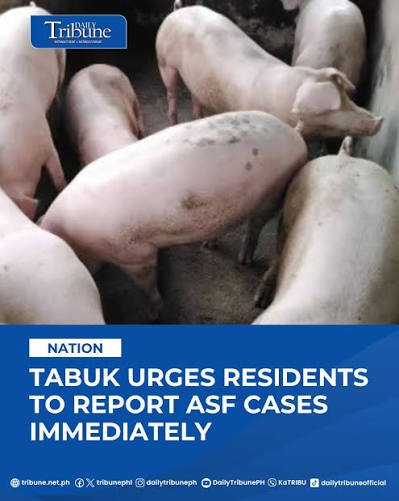
Authorities in Tabuk City, Kalinga, Philippines, have urged pig farmers and community leaders to report suspected African swine fever (ASF) cases promptly as surveillance and verification expand across 18 of the city’s 43 barangays.

Reporting published on 29 September 2026 puts the cumulative number of pigs affected at approximately 580. Local veterinary teams are conducting field inspections, rapid testing and sample collection for laboratory verification. (Daily Tribune report)

Philippines: African Swine Fever Surveillance Expands Across 18 Barangays in Tabuk City

Local Response and Farmer Support

The response includes several measures intended to identify infected premises and reduce the risk of further transmission:

  • Immediate reporting of suspected cases.

  • Veterinary inspection and rapid testing.

  • Blood sampling and laboratory verification.

  • Culling of affected animals where required.

  • Cleaning and disinfection of premises.

  • Coordination with local government and agricultural authorities.

Authorities have also highlighted government compensation for eligible farmers, with amounts differentiated by animal category under the applicable Department of Agriculture guidelines.

Compensation can encourage reporting, although programme eligibility, payment timing and verification requirements influence how effectively it works in practice.

Why ASF Remains a Major Industry Risk

African swine fever is a contagious viral disease affecting pigs and wild suids. It is not considered a human foodborne infection, but outbreaks can cause severe losses for pig producers and disrupt regional pork supply.

The consequences extend beyond mortality to include farm closures, restrictions on animal movement, costs of disinfection, restocking delays and pressure on producer cash flow.

Local surveillance is particularly important because undetected infection and delayed reporting can allow disease to spread before authorities establish the full extent of an outbreak.

Strategic / Analyst View

The Tabuk response illustrates that effective ASF control requires a coordinated package of surveillance, farmer reporting, diagnostics, movement management, culling and disinfection.

For animal-health companies, the development reinforces demand for field diagnostics, sample-transport systems, farm biosecurity support, surveillance software and producer training. Commercial opportunities must be aligned with official control protocols; there is no basis to imply that routine veterinary treatment cures ASF.

Outlook

The key indicators to monitor are the number of newly affected premises, geographic expansion, laboratory-confirmed cases, enforcement of movement controls and the speed at which affected areas can meet official conditions for recovery.

The current reported figure of approximately 580 affected pigs is a local outbreak measure, not a national estimate for the Philippines.

Animal Health India Editorial Team
Animal Health India Editorial Teamhttps://animalhealthindia.com
Animal Health India (AHI) is an independent news and intelligence platform covering the global animal health, veterinary, livestock, poultry, companion animal and pet food sectors. Our editorial team comprises veterinary journalists, animal health professionals, regulatory affairs specialists and industry analysts with over 30 years of combined experience covering India, Asia, Europe and North America. AHI publishes news, regulatory updates, market intelligence and company news drawn from primary sources including DAHD, EMA, USDA, AVMA and leading veterinary publications worldwide.

RELATED ARTICLES