


HomeCorporateWOAH Advances Event-Based Animal Disease Surveillance Across Asia-Pacific

WOAH Advances Event-Based Animal Disease Surveillance Across Asia-Pacific

World Organisation for Animal Health (WOAH) scheduled the second session of its Epidemic Intelligence Webinars: Event-Based Surveillance for Animal Health in the Asia-Pacific for 29 September 2026.

The programme forms part of WOAH’s work to strengthen early threat warning, disease-event reporting and surveillance transparency across the region. It is supported through a voluntary contribution from Australia’s Department of Agriculture, Fisheries and Forestry under WOAH’s Seventh Strategic Plan. (WOAH Asia-Pacific)

What Is Event-Based Surveillance?

Event-based surveillance involves collecting and assessing information from multiple sources—including official notifications and non-official signals—to identify unusual events that may indicate an emerging animal-health threat.

Unlike surveillance based solely on routine testing or scheduled reporting, this approach can help authorities identify signals that warrant verification and investigation.

WOAH’s programme seeks to improve the ability of veterinary authorities and regional focal points to:

  • Detect unusual disease events.

  • Assess the credibility and significance of reports.

  • Verify potential threats.

  • Improve disease notification.

  • Share information across relevant networks.

  • Support timely risk assessment and response.

The webinar series comprises two sessions, with the first held on 27 August and the second scheduled for 29 September 2026. The schedule itself should not be mistaken for a published outcome report.
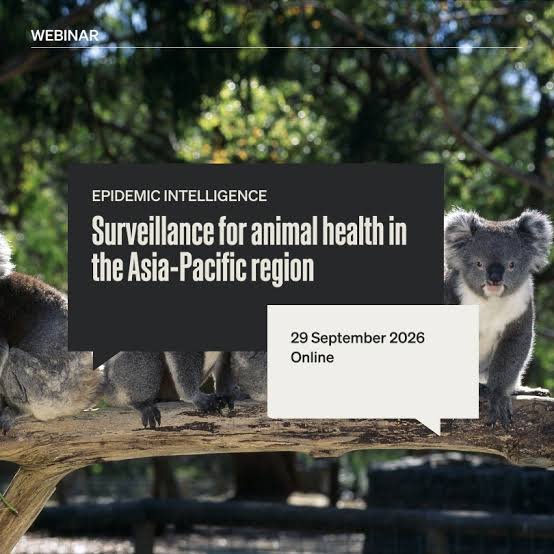
WOAH Advances Event-Based Animal Disease Surveillance Across Asia-Pacific

Why It Matters for Animal Health

Timely information can be critical during outbreaks of transboundary diseases, including avian influenza, African swine fever and foot-and-mouth disease.

A surveillance system’s effectiveness depends not only on laboratory capacity but also on whether field veterinarians, farmers and other stakeholders report unusual events and whether authorities can verify and act on those signals.

Regional coordination is particularly important when livestock, animal products, vectors or wildlife cross administrative and national boundaries.

Strategic / Analyst View

The programme reinforces the growing importance of epidemic intelligence as an operational layer connecting field observation, laboratory diagnostics and official disease-control decisions.

For animal-health companies, potential areas of relevance include diagnostic networks, digital reporting platforms, laboratory information systems, data integration and veterinary training. Technology alone, however, cannot compensate for weak reporting incentives, inadequate field capacity or delays in official verification.

Outlook

The value of the initiative should ultimately be judged by improvements in reporting timeliness, signal verification, surveillance sensitivity and response coordination—not simply by webinar participation.

The next step is to translate surveillance training and shared practices into routine veterinary operations and measurable improvements in early warning.

Animal Health India Editorial Team
Animal Health India Editorial Teamhttps://animalhealthindia.com
Animal Health India (AHI) is an independent news and intelligence platform covering the global animal health, veterinary, livestock, poultry, companion animal and pet food sectors. Our editorial team comprises veterinary journalists, animal health professionals, regulatory affairs specialists and industry analysts with over 30 years of combined experience covering India, Asia, Europe and North America. AHI publishes news, regulatory updates, market intelligence and company news drawn from primary sources including DAHD, EMA, USDA, AVMA and leading veterinary publications worldwide.
RELATED ARTICLES