


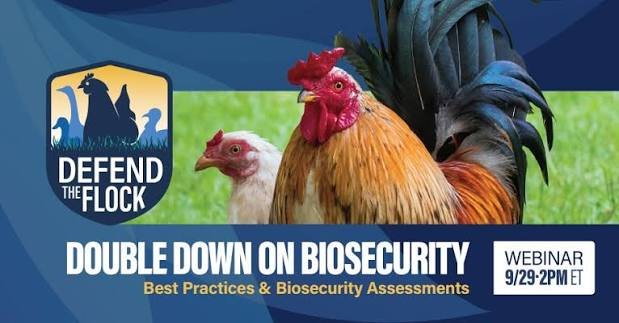
U.S. Department of Agriculture’s Animal and Plant Health Inspection Service (USDA APHIS) scheduled a poultry biosecurity webinar for 29 September 2026, focusing on practical disease-prevention measures and the agency’s biosecurity assessment programme.
The initiative forms part of continuing U.S. efforts to reduce the risk of highly pathogenic avian influenza (HPAI) entering or spreading within commercial poultry operations. (USDA APHIS — Defend the Flock)
What the Programme Offers
APHIS describes two voluntary assessment options for eligible commercial poultry operations that are not affected by HPAI:
-
Wildlife Biosecurity Assessment: identifies ways wild birds and other wildlife may expose flocks to disease.
-
Biosecurity Incentive-Focused Assessment: identifies higher-risk biosecurity gaps and potential improvements.
According to APHIS, the programme can provide assessments and share up to 75% of eligible costs to address the highest-risk biosecurity concerns identified. Eligibility and specific programme conditions apply. Operations affected by HPAI may face a mandatory biosecurity audit before restocking if they are to qualify for applicable indemnity arrangements. (USDA APHIS biosecurity assessments)
Why Biosecurity Matters
HPAI can cause substantial mortality and economic disruption in poultry flocks. Pathogens may be introduced or spread through wild birds, visitors, vehicles, clothing, equipment and other movements between premises.
A farm-level biosecurity programme therefore needs to address more than cleaning. It should include controlled access, separation of clean and potentially contaminated areas, staff training, pest and wildlife management, vehicle protocols and rapid reporting of suspicious mortality.
The APHIS programme is designed to help producers identify vulnerabilities before an outbreak occurs and prioritise practical improvements.
Strategic / Analyst View
The programme illustrates a shift from relying exclusively on emergency response toward preventive biosecurity investment supported by formal assessment and financial incentives.
For the animal-health industry, relevant opportunities include biosecurity consulting, diagnostics, disinfection systems, environmental monitoring, protective equipment, farm-access controls and staff training.
Providers should be able to demonstrate practical risk reduction and align recommendations with official requirements. A technology or product purchase alone does not guarantee adequate biosecurity.
Outlook
The longer-term value of such programmes depends on adoption, implementation quality and whether identified weaknesses are corrected and maintained over time.
The webinar is scheduled for 29 September; this report describes the announced initiative and established APHIS programme, rather than claiming unverified results from the session.
Sources: USDA APHIS — Defend the Flock; APHIS biosecurity assessment programme.

