


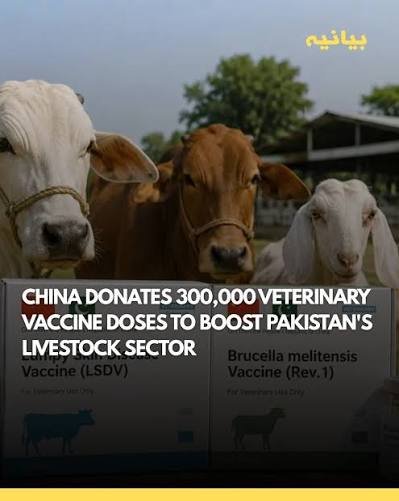
China | Pakistan | Livestock | Vaccines | One Health
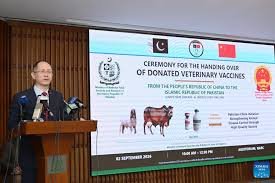
China has provided approximately 300,000 veterinary vaccine doses to Pakistan to support control of lumpy skin disease and Brucella melitensis in livestock.
The initiative comes as Pakistan seeks to strengthen disease prevention and livestock productivity through vaccination, surveillance and veterinary-service infrastructure.
The development is important because vaccination programmes are most effective when they operate within a wider disease-control system.
That includes:
-
reliable cold-chain infrastructure;
-
field-level veterinary services;
-
disease surveillance;
-
diagnostic capacity;
-
animal identification;
-
vaccination coverage monitoring.
The Chinese initiative therefore represents more than the supply of vaccines. It illustrates how animal-health programmes can become part of broader agricultural and diplomatic cooperation.
For Pakistan, livestock disease control has major economic significance because livestock represents a substantial component of agricultural production and rural livelihoods.
For China, the programme provides another avenue for strengthening regional veterinary cooperation and potentially expanding the role of Chinese veterinary products and technologies in South Asian markets.
The development should also be watched by international animal-health companies because government-supported livestock programmes can create long-term demand for vaccines, diagnostics, cold-chain technologies and disease-surveillance systems.
Animal-health industry takeaway
Vaccine donations increasingly function as entry points into broader veterinary-health ecosystems involving diagnostics, surveillance, cold chain and livestock productivity.

