


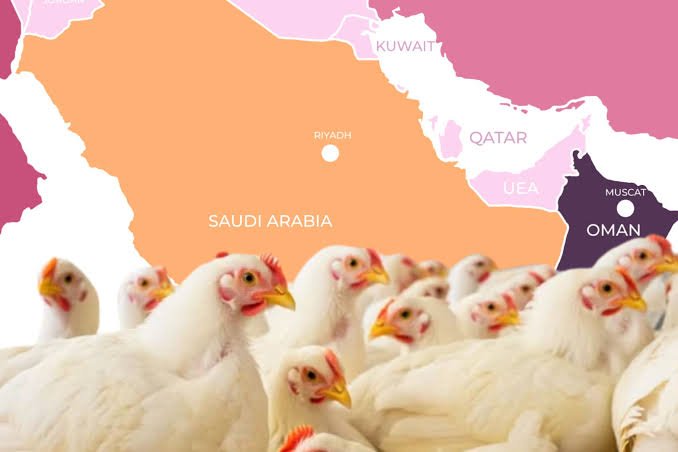
Saudi Arabia’s poultry industry is entering a significantly more mature phase, with broiler production expected to reach approximately 1.4 million tonnes in 2026, while table-egg production exceeds 9 billion eggs. The country’s poultry-meat self-sufficiency rate has reached approximately 80%, while table eggs have achieved 100% self-sufficiency, according to the Ministry of Environment, Water and Agriculture (MEWA).
The figures were presented following the Middle East Poultry Expo 2026, held in Riyadh from 4–6 October, and provide one of the clearest indicators yet of the scale of Saudi Arabia’s poultry localisation strategy.
Five initiatives underpin sector localisation
MEWA attributed the progress to five initiatives designed to localise poultry production, improve production efficiency and strengthen competitiveness.
The policy direction is consistent with Saudi Arabia’s broader food-security strategy under Vision 2030, where poultry is increasingly regarded as a strategic domestic protein industry rather than simply an agricultural subsector.
The 2026 production trajectory is significant because Saudi Arabia must operate under difficult production conditions, including high ambient temperatures, water constraints and substantial dependence on imported feed ingredients and breeding technologies.
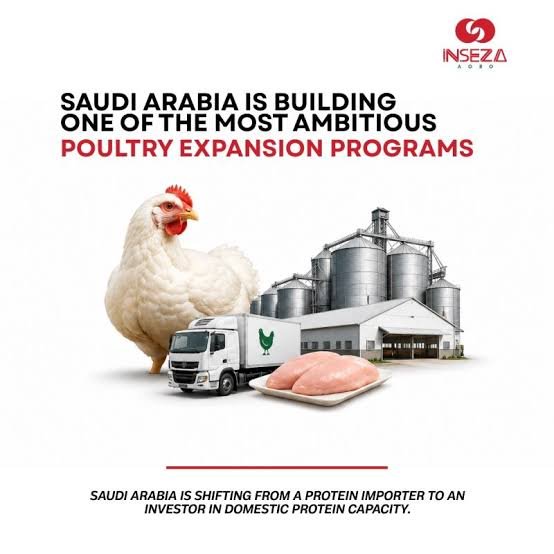
Consequently, improving domestic poultry output requires more than simply adding farms. It requires simultaneous investment in:
-
genetics;
-
feed conversion;
-
farm automation;
-
climate control;
-
disease prevention;
-
vaccination;
-
biosecurity;
-
processing;
-
cold-chain infrastructure;
-
diagnostics.
The scale of the commercial ecosystem is expanding
The Middle East Poultry Expo itself provides an important indicator of industry development.
The 2026 edition attracted more than 400 companies and organisations from 45 countries, compared with approximately 140 companies from 30 countries when the exhibition launched in 2022.
More than 60 Chinese companies participated, while Turkey was the guest of honour. The exhibition also generated more than 400 scheduled business-matching meetings, highlighting the growing international interest in Saudi poultry.
For animal-health companies, this is strategically important
As production becomes larger and more intensive, the economic cost of disease increases. A 1% deterioration in mortality, feed conversion or egg production at national scale can represent a materially larger economic loss than it would in a fragmented production system.
Animal-health implications
Saudi poultry localisation should therefore increase demand for:
vaccines → diagnostics → biosecurity → farm monitoring → intestinal-health products → feed additives → veterinary services
The country’s growing domestic production base also makes disease prevention strategically more important. Commercial poultry systems with high stocking density require sophisticated control of:
-
avian influenza;
-
Newcastle disease;
-
infectious bronchitis;
-
infectious bursal disease;
-
coccidiosis;
-
salmonellosis;
-
antimicrobial resistance.

