


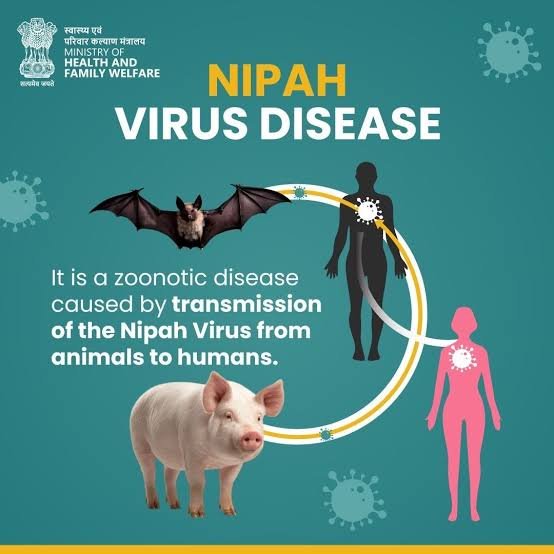
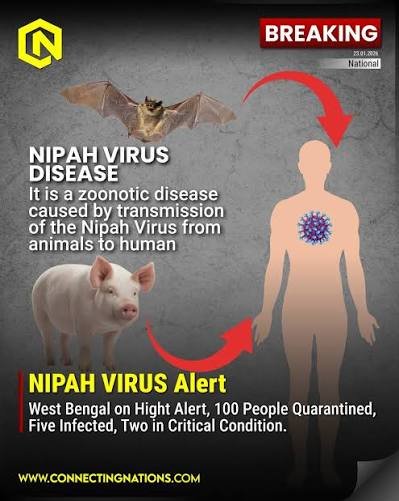
A new open-access paper in BMC Microbiology reports the absence of detected Nipah virus antibodies alongside the detection of porcine kobuvirus, porcine enterovirus-9 and bocavirus in pigs sampled during a Nipah virus outbreak investigation in West Bengal.
The paper is titled Absence of Nipah virus antibodies and detection of Porcine kobuvirus, Porcine enterovirus-9 and Bocavirus in pigs during a Nipah virus outbreak investigation in West Bengal, India.
What the finding means—and what it does not mean
The authors’ findings provide information about the sampled pigs and the viruses detected in their investigation. The absence of Nipah virus antibodies in those samples is not proof that pigs can never become infected, nor does the detection of the other viruses establish that they caused the outbreak under investigation.
The distinction matters because surveillance studies can detect pathogens that are circulating in animals without establishing their contribution to clinical disease or their relevance to a specific human outbreak.
Industry implications
-
Pig producers and veterinarians: surveillance should be guided by competent veterinary and public-health authorities, with suitable sample collection and laboratory testing.
-
Diagnostic laboratories: validated assays and careful interpretation of serological and molecular results remain essential.
-
Research organisations: the findings support continued investigation of viruses detected in pig populations and the evidence required to determine their epidemiological significance.
-
One Health programmes: coordinated human, animal and environmental surveillance is important when investigating suspected zoonotic events.

